Emerge Career Blog.
Guides, stories, and everything you need to know about starting your career.
Emerge Career Went to Fortune's 2026 Tech Fair: From Demo to the Main Stage
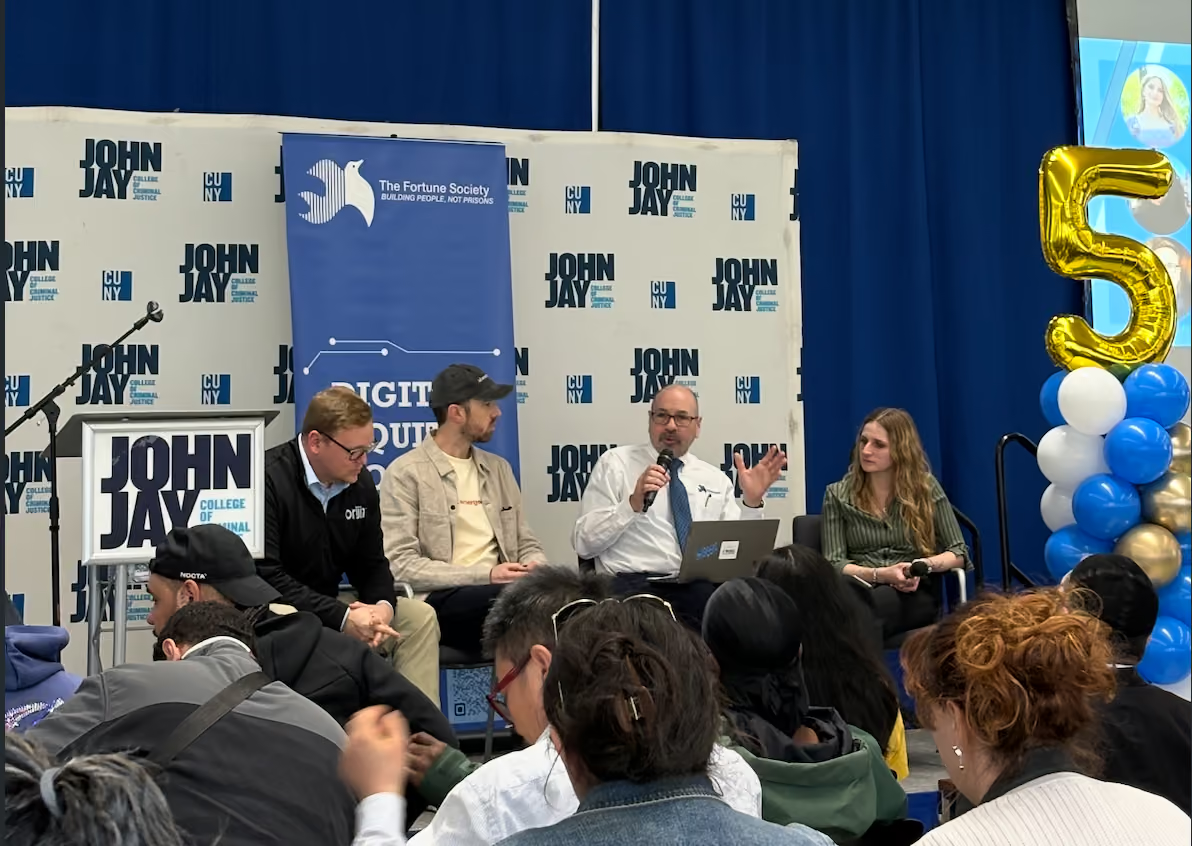
On Wednesday morning around 10am, I set up a demo table for Emerge Career at the Fortune Society's 5th Annual Tech Fair. By the afternoon, I had over 20 business cards in my pocket, 10 warm intros, and was on stage speaking to hundreds of participants.
That's not something I planned. In fact, I asked many times for an opportunity to speak about the amazing work we are doing and was kindly told there wasn't enough space.
But I stayed patient, and optimistic. I felt confident that once people saw and heard about our work, they'd want to get involved and help spread the word, and the work. And I was right. The room recognized what this work is doing across the country.
This year's fair, themed "Using Tech to Rebuild Lives," brought together justice-involved New Yorkers, reentry professionals, and government leaders at John Jay College's Institute for Justice and Opportunity. The energy in that room asked one question louder than any panel ever could: What does a real career pathway look like after incarceration? At Emerge Career, our answer is opportunities in the skilled trades. HVAC technicians. CDL drivers. EV technicians. Diesel mechanics. Electricians. These are careers that AI isn't replacing anytime soon, and in most cases careers where employers are competing more and more aggressively for talent because the demand for labor for exceeds the existing supply.
Our graduates, all of whom are justice-involved, are entering the workforce at $80,000+ starting salaries. Read that again. Over $80,000 for someone with justice involvement is life changing. Not just a safety net, but a foundation. That's on par with a Yale graduate from last year.
None of this happens in a vacuum. It happens because Emerge works with our government partners to build the infrastructure that makes it possible. Agencies like the NYC Mayor's Office of Criminal Justice and the Sacramento Employment and Training Agency don't just check a workforce development box, they change the entire reentry equation. They create the conditions for someone to walk out of incarceration and into a career, not just a job.
That shift, from placement to pathway, is what transforms a program into a movement. To the agencies, workforce development boards, and government offices championing this kind of work: you deserve more public recognition than you receive, but here's some from our recent grads in the meantime. What you are doing is quietly transformative, for individuals, for employers, and for the cities we all share. The reception Emerge Career received at the Tech Fair was a reminder that the ecosystem is ready. Employers are ready. The talent is ready. What we need now is more programs like this, and more partners with the vision and commitment to fund them. I'm proud to be part of it.
Special thanks to The Fortune Society and John Jay College's Institute for Justice and Opportunity for creating a space where this work can speak for itself. And to the NYC Office of Technology and Innovation, Tech:NYC, the NYS Digital Equity Network, and the NYC Alliance for Digital Equity for making the event possible.

How to Schedule a DOT Physical In California
So, you’ve learned what a DOT physical is and why it’s important. Now it’s time to schedule your appointment. Don’t worry—we’ve got you covered with a step-by-step guide to make the process simple and stress-free.
How to Schedule a DOT Physical
So, you’ve learned what a DOT physical is and why it’s important. Now it’s time to schedule your appointment. Don’t worry—we’ve got you covered with a step-by-step guide to make the process simple and stress-free.
Follow this step-by-step tutorial or check out this video on how to schedule and complete your DOT physical:
Step 1: Find a DOT Physical Provider
The first step is locating a certified medical examiner who performs DOT physicals. Here are a couple of tools to help you find a provider near you:
Step 2: Call Ahead
Once you’ve identified a provider, give them a call to confirm the following:
- They offer DOT physicals.
- Their pricing—the exam typically costs between $80 and $145.
Step 3: Indicate Your CDL/CLP Status
When scheduling your appointment or filling out any forms, make sure to indicate that you’re a CDL (Commercial Driver’s License) or CLP (Commercial Learner’s Permit) applicant. This ensures the exam meets federal requirements.
Step 4: Prepare for Your Appointment
To make the process go smoothly, here’s what you should do before your exam:
- Bring a List of Medications: Include dosages and the conditions they treat.
- Hydrate: Drink plenty of water the day before the exam to stay well-hydrated.
- Get Rest: A good night’s sleep will help you feel your best during the exam.
Step 5: After the Exam
Once your DOT physical is complete, you’ll receive a medical certificate if you pass. Be sure to:
- Take a photo of the certificate.
- Submit the certificate and your receipt (if applicable) to your employer or training program.
Why Emerge Career Makes It Easy
At Emerge Career, we’re here to support you every step of the way. If you’re part of our CDL program, we even reimburse the cost of the DOT physical. Just submit your receipt on our website to get started.
The DOT physical is an essential step toward achieving your career goals. By following these tips, you’ll be well on your way to passing the exam and hitting the road with confidence.
Haven't joined our Free CDL Program yet? Apply today!
How to Schedule a DOT Physical In New York
So, you’ve learned what a DOT physical is and why it’s important. Now it’s time to schedule your appointment. Don’t worry—we’ve got you covered with a step-by-step guide to make the process simple and stress-free.
How to Schedule a DOT Physical
So, you’ve learned what a DOT physical is and why it’s important. Now it’s time to schedule your appointment. Don’t worry—we’ve got you covered with a step-by-step guide to make the process simple and stress-free.
Follow this step-by-step tutorial or check out this video on how to schedule and complete your DOT physical:
Step 1: Find a DOT Physical Provider
The first step is locating a certified medical examiner who performs DOT physicals. Here are a couple of tools to help you find a provider near you:
Step 2: Call Ahead
Once you’ve identified a provider, give them a call to confirm the following:
- They offer DOT physicals.
- Their pricing—the exam typically costs between $80 and $145.
Step 3: Indicate Your CDL/CLP Status
When scheduling your appointment or filling out any forms, make sure to indicate that you’re a CDL (Commercial Driver’s License) or CLP (Commercial Learner’s Permit) applicant. This ensures the exam meets federal requirements.
Step 4: Prepare for Your Appointment
To make the process go smoothly, here’s what you should do before your exam:
- Bring a List of Medications: Include dosages and the conditions they treat.
- Hydrate: Drink plenty of water the day before the exam to stay well-hydrated.
- Get Rest: A good night’s sleep will help you feel your best during the exam.
Step 5: After the Exam
Once your DOT physical is complete, you’ll receive a medical certificate if you pass. Be sure to:
- Take a photo of the certificate.
- Submit the certificate and your receipt (if applicable) to your employer or training program.
Why Emerge Career Makes It Easy
At Emerge Career, we’re here to support you every step of the way. If you’re part of our CDL program, we even reimburse the cost of the DOT physical. Just submit your receipt on our website to get started.
The DOT physical is an essential step toward achieving your career goals. By following these tips, you’ll be well on your way to passing the exam and hitting the road with confidence.
Haven't joined our Free CDL Program yet? Apply today!
How to Schedule a DOT Physical In Colorado
So, you’ve learned what a DOT physical is and why it’s important. Now it’s time to schedule your appointment. Don’t worry—we’ve got you covered with a step-by-step guide to make the process simple and stress-free.
How to Schedule a DOT Physical
So, you’ve learned what a DOT physical is and why it’s important. Now it’s time to schedule your appointment. Don’t worry—we’ve got you covered with a step-by-step guide to make the process simple and stress-free.
Follow this step-by-step tutorial or check out this video on how to schedule and complete your DOT physical:
Step 1: Find a DOT Physical Provider
The first step is locating a certified medical examiner who performs DOT physicals. Here are a couple of tools to help you find a provider near you:
Step 2: Call Ahead
Once you’ve identified a provider, give them a call to confirm the following:
- They offer DOT physicals.
- Their pricing—the exam typically costs between $80 and $145.
Step 3: Indicate Your CDL/CLP Status
When scheduling your appointment or filling out any forms, make sure to indicate that you’re a CDL (Commercial Driver’s License) or CLP (Commercial Learner’s Permit) applicant. This ensures the exam meets federal requirements.
Step 4: Prepare for Your Appointment
To make the process go smoothly, here’s what you should do before your exam:
- Bring a List of Medications: Include dosages and the conditions they treat.
- Hydrate: Drink plenty of water the day before the exam to stay well-hydrated.
- Get Rest: A good night’s sleep will help you feel your best during the exam.
Step 5: After the Exam
Once your DOT physical is complete, you’ll receive a medical certificate if you pass. Be sure to:
- Take a photo of the certificate.
- Submit the certificate and your receipt (if applicable) to your employer or training program.
Why Emerge Career Makes It Easy
At Emerge Career, we’re here to support you every step of the way. If you’re part of our CDL program, we even reimburse the cost of the DOT physical. Just submit your receipt on our website to get started.
The DOT physical is an essential step toward achieving your career goals. By following these tips, you’ll be well on your way to passing the exam and hitting the road with confidence.
Haven't joined our Free CDL Program yet? Apply today!
How to Schedule a DOT Physical In Massachusetts
So, you’ve learned what a DOT physical is and why it’s important. Now it’s time to schedule your appointment. Don’t worry—we’ve got you covered with a step-by-step guide to make the process simple and stress-free.
How to Schedule a DOT Physical
So, you’ve learned what a DOT physical is and why it’s important. Now it’s time to schedule your appointment. Don’t worry—we’ve got you covered with a step-by-step guide to make the process simple and stress-free.
Follow this step-by-step tutorial or check out this video on how to schedule and complete your DOT physical:
Step 1: Find a DOT Physical Provider
The first step is locating a certified medical examiner who performs DOT physicals. Here are a couple of tools to help you find a provider near you:
Step 2: Call Ahead
Once you’ve identified a provider, give them a call to confirm the following:
- They offer DOT physicals.
- Their pricing—the exam typically costs between $80 and $145.
Step 3: Indicate Your CDL/CLP Status
When scheduling your appointment or filling out any forms, make sure to indicate that you’re a CDL (Commercial Driver’s License) or CLP (Commercial Learner’s Permit) applicant. This ensures the exam meets federal requirements.
Step 4: Prepare for Your Appointment
To make the process go smoothly, here’s what you should do before your exam:
- Bring a List of Medications: Include dosages and the conditions they treat.
- Hydrate: Drink plenty of water the day before the exam to stay well-hydrated.
- Get Rest: A good night’s sleep will help you feel your best during the exam.
Step 5: After the Exam
Once your DOT physical is complete, you’ll receive a medical certificate if you pass. Be sure to:
- Take a photo of the certificate.
- Submit the certificate and your receipt (if applicable) to your employer or training program.
Why Emerge Career Makes It Easy
At Emerge Career, we’re here to support you every step of the way. If you’re part of our CDL program, we even reimburse the cost of the DOT physical. Just submit your receipt on our website to get started.
The DOT physical is an essential step toward achieving your career goals. By following these tips, you’ll be well on your way to passing the exam and hitting the road with confidence.
Haven't joined our Free CDL Program yet? Apply today!
How to Schedule a DOT Physical
So, you’ve learned what a DOT physical is and why it’s important. Now it’s time to schedule your appointment. Don’t worry—we’ve got you covered with a step-by-step guide to make the process simple and stress-free.
How to Schedule a DOT Physical
So, you’ve learned what a DOT physical is and why it’s important. Now it’s time to schedule your appointment. Don’t worry—we’ve got you covered with a step-by-step guide to make the process simple and stress-free.
Follow this step-by-step tutorial or check out this video on how to schedule and complete your DOT physical:
Step 1: Find a DOT Physical Provider
The first step is locating a certified medical examiner who performs DOT physicals. Here are a couple of tools to help you find a provider near you:
Step 2: Call Ahead
Once you’ve identified a provider, give them a call to confirm the following:
- They offer DOT physicals.
- Their pricing—the exam typically costs between $80 and $145.
Step 3: Indicate Your CDL/CLP Status
When scheduling your appointment or filling out any forms, make sure to indicate that you’re a CDL (Commercial Driver’s License) or CLP (Commercial Learner’s Permit) applicant. This ensures the exam meets federal requirements.
Step 4: Prepare for Your Appointment
To make the process go smoothly, here’s what you should do before your exam:
- Bring a List of Medications: Include dosages and the conditions they treat.
- Hydrate: Drink plenty of water the day before the exam to stay well-hydrated.
- Get Rest: A good night’s sleep will help you feel your best during the exam.
Step 5: After the Exam
Once your DOT physical is complete, you’ll receive a medical certificate if you pass. Be sure to:
- Take a photo of the certificate.
- Submit the certificate and your receipt (if applicable) to your employer or training program.
Why Emerge Career Makes It Easy
At Emerge Career, we’re here to support you every step of the way. If you’re part of our CDL program, we even reimburse the cost of the DOT physical. Just submit your receipt on our website to get started.
The DOT physical is an essential step toward achieving your career goals. By following these tips, you’ll be well on your way to passing the exam and hitting the road with confidence.
Haven't joined our Free CDL Program yet? Apply today!
Roques-CDL-Training-testimonial
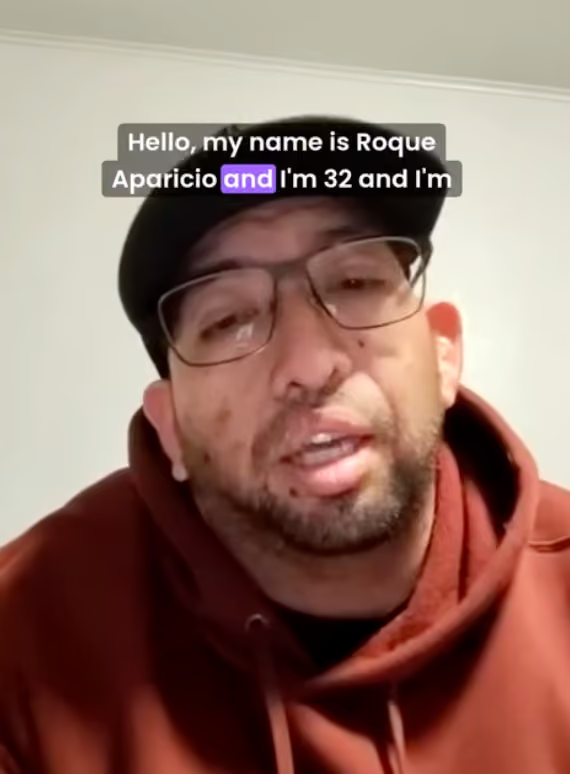
Rocque's Emerge Career CDL Training Testimonial
Roque from Colorado is working towards paying off his home, & keeping himself accountable to show up for himself every day while not procrastinating. This is the type of attitude and determination that makes Emerge Career graduates so successful when they begin their careers.
To watch Roque's story, tap here.
Ready to start your commercial trucking career & get your Free CDL? Apply for our program today.


How To Redefine Trades Education: Inclusivity, Innovation And Impact
How To Redefine Trades Education: Inclusivity, Innovation And Impact

A recent graduate of our vocational program had long dreamed of becoming a driver. Time and time again, she had been turned away—no school would admit her. Without a high school diploma, no financial aid program was available to her. Despite this, her resilience never faltered, and she eventually succeeded and got a job driving an 18-wheeler.
This story is all too common: Across the nation, millions of Americans are seeking pathways out of the suffocating clutches of poverty. At first, I struggled to reconcile how billions of government dollars were being funneled to upskill low-income individuals, yet alternative skilled trade programs often missed the mark.
Over time, I've come to realize systemic flaws contributing to this failure and the urgent need to redefine trade programs to genuinely serve those who need it most.
The Surge In Vocational Training
The long-held belief that a college education is the pathway to upward mobility remains elusive for most Americans, particularly the 37 million living in poverty. A staggering 44% of students do not finish their college programs, with two-thirds hailing from low-income backgrounds.
As an increasing number of individuals question the economic worth of a degree in the face of a student debt crisis surpassing a trillion dollars, more people are exploring alternatives. In response, trades programs have emerged as practical solutions, providing faster completion times, often in just a few months, and being significantly more affordable.
With this evolving landscape, the traditional trades education model faces the imperative to innovate and meet the surging demand. There's a pressing need to bolster recruitment, reshape public perceptions of trades, ensure comprehensive support, streamline funding processes, personalize success strategies and reinforce alumni networks.
Paving The Path Forward: Reinventing The Trades For Marginalized Communities
To modernize and make trades education more inclusive, the following key pillars need attention.
1. Grassroots Recruitment: Modern colleges have been locked in an advertising arms race, spending billions to garner attention. However, trades should opt for a more authentic approach: grassroots recruitment.
By partnering with community-based organizations, they can ensure that opportunities are channeled to the right individuals. Many potential candidates, often sidelined in traditional systems, are unaware of how trades could change their life trajectories.
2. Rebranding: Trades have suffered unjust stigma for too long. Outdated notions portray them as inferior to white-collar jobs, but reality contradicts this misconception. Trades go beyond manual labor; they power our economy, tackle real-world problems and provide deeply fulfilling careers.
The pandemic spotlighted the heroic status of nurses. Few are aware that the average Class A truck driver can earn more than the average college graduate. There are compelling reasons to revamp the image of trades and break free from the shackles of stigma.
3. Individualized Support: The actual training is only half the equation. For trades to truly uplift individuals from marginalized backgrounds, we must look beyond the classroom, offering a comprehensive support system. This involves wraparound services that cater to challenges, both academic and personal, that these individuals face daily. By appointing dedicated coaches trained in culturally responsive trauma-informed practices, we can ensure every student feels seen, heard and supported.
4. Easier Access To Government Funding: Financial constraints shouldn't deter anyone from pursuing their aspiration. While the U.S. earmarks billions of funds for vocational training annually, bureaucratic mazes often put these resources beyond many people's grasp. Academic literature has repeatedly shown the positive effect of transparent processes and guided assistance in benefits enrollment.
This is an area where technological innovation can fundamentally change the status quo at scale. By reviewing individuals' documents and analyzing the self-reported demographic data, we can effortlessly navigate the paperwork, match individuals with suitable funding and present this through a modern, intuitive interface.
Carefully researched design ensures that these platforms can be navigated even by those with minimal digital proficiency, widening the reach of vocational training opportunities.
5. Technology-Powered Training: Technology holds the transformative power to customize education like never before. Imagine a system where students are not just another number, but where each receives an individualized success plan tailored to their unique needs, rather than being funneled through a one-size-fits-all approach, especially for licensing processes that rely heavily on rote learning.
With technological advancements, not only can learning plans be personalized and diagnostic tests be adjusted to fit individual requirements, but a macro view can also be maintained. Such integrated monitoring systems enable instructors and government agencies to track and evaluate cohorts' progress, ensuring that every student receives the tailored guidance and support they need to flourish.
6. Alumni Community: The strength of any educational initiative isn't just in its curriculum but in its community. While universities have long thrived on robust alumni networks, trades have traditionally lagged in this regard. By establishing a transparent alumni community platform where individuals can seamlessly connect based on their shared interests, trade schools can promote mentorship, facilitate job opportunities and nurture a culture of continuous learning and giving back.
In a changing world, the educational model for trades must evolve. The story at the outset of this article, like countless others, highlights the urgency of this transformation. We've seen individuals' unwavering determination to escape poverty, often hindered by an inadequate system.
As we stand at this crossroads, we must recognize that this is our chance to empower marginalized communities to rewrite their narratives and build a world where the pursuit of meaningful, well-paying careers knows no barriers. Together, we can pave the path forward, reinventing the trades to uplift those who need it most, ensuring that the promise of a brighter future becomes a reality for all.
To see the original article, click here.
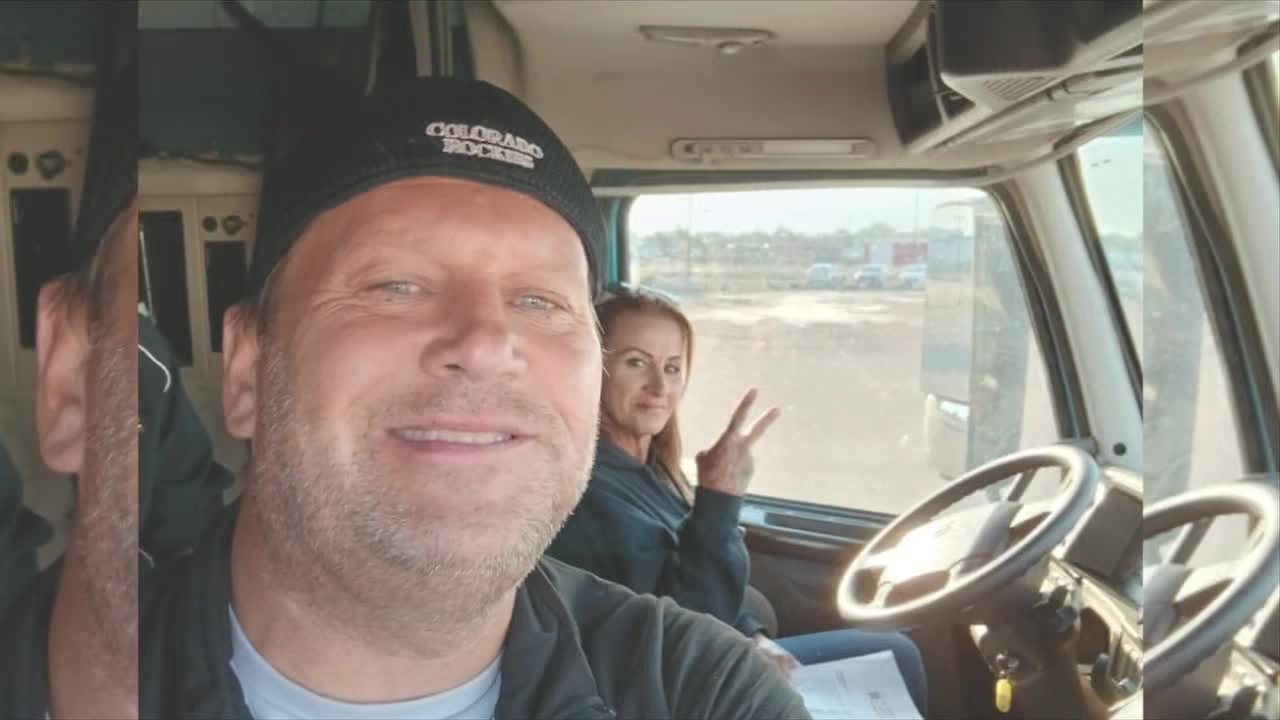
Emerge Career helping formerly incarcerated individuals in Colorado obtain a CDL
DENVER — From behind bars to driving trucks, Emerge Career is helping people formerly in prison or jail get good-paying jobs by becoming truck drivers despite their criminal backgrounds.
DENVER — From behind bars to driving trucks, a technology company is helping people formerly in prison or jail get good-paying jobs by becoming truck drivers despite their criminal backgrounds.
For Jamie Dick, watching a game of football is a reminder of the time he spent on the field as a quarterback. He also worked hard in the classroom, majoring in economics.
From behind bars to driving trucks, a Tech company is helping people formerly in prison or jail get good-paying jobs by becoming truck drivers despite their criminal backgrounds.


"I became a stockbroker. I started with a small regional firm, Edward Jones, out in Arizona, then started my own firm in Las Vegas and was real successful with that," Dick said.
Hearing Dick's story, it seems like he had it all figured out, but then life took a turn for him.
"I got an 18-month sentence, and I spent about eight of that, roughly in Denver County Jail, and then about eight more," Dick said.
While locked up, Dick created a plan to start his own business. Once he left the halfway house, he learned about Emerge Career.
"Emerge Career is an education technology company. It's really focused on providing vocational training and wraparound service support to low-income individuals, in particular, folks who are directly impacted by incarceration," Emerge Career co-founder Zo Orchingwa said.
Since 2022, Emerge Career has helped over 100 people get their CDLs for free by working with local government agencies to train former inmates.
"Everyone deserves a second chance, and because of the social circumstances that we all come from, it'd be unfair to penalize individuals for mistakes that they've made and challenges that they've experienced," Orchingwa said.
Orchingwa hopes to expand the program to more states to help formerly incarcerated people.
To see the original article, click here.

Emerge career program coming to Finger Lakes, NY
Emerge Career is now actively taking students in the Finger Lakes area of New York.
ROCHESTER, N.Y. (WROC) — The Emerge career program is coming to the Finger Lakes.
The program works with people who are incarcerated, or were previously incarcerated, helping them receive training and jobs across a variety of career tracks.
“We are always listening to our users what happened was we spent a lot of time interviewing people who were incarcerated who were formerly incarcerated and workforce development folks and one thing we kept hearing about was trucking, that this was a profession that they had long wanted to get into,” co-founder and CEO Uzoma Orchingwa said. “There are different career tracks that we are going to be rolling out this year and early next year.”
Click here for more information about the program, and to apply.
To see the original article, click here.
Emerging From Incarceration: The Future Of Reentry
How Emerge Career's CEO, Gabe, Describes The Evolution of the Reentry Model
Luis was one of the first justice-involved students we served in California. When he joined our Commercial Driver training program, he had just left an $18/hour job at a waste disposal company. He had inhaled so many toxic fumes that he was placed on temporary medical leave. He was desperately looking for a way out. Luis's story is unfortunately not unique, and it shares similarities with the reality of millions of Americans. The toll of mass incarceration cannot be understated: with 2.3 million individuals currently incarcerated, 600,000 cycling in and out of jail every year, and 70 million living with arrest or conviction records. 95% of these individuals will eventually rejoin our communities. They will become our neighbors, coworkers and fellow citizens, shaping the future of our shared environment. Yet, despite this potential for transformation, our country is failing them in a critical regard. A staggering 60% of the justice-involved population remains without work, while 27% struggle with unemployment. These aren't just faceless numbers—they embody real lives, individuals who deserve the chance to rise above their pasts and forge new paths forward. Faced with these pressing realities, the urgency to redefine reentry strategies has never been more palpable.
The Justice-Involved Are Excluded From The Workforce
With unemployment rates surpassing those of the Great Recession, the urgency to equip individuals for reintegration into the workforce is undeniable. Over 80% of incarcerated people enter incarceration with no pre-incarceration earnings, making vocational readiness a paramount goal of any reentry model. Yet, the existing framework falls woefully short. Job training opportunities are severely limited, with only one-third of incarcerated people ever participating. The available prison jobs offer meager wages, often less than $1 per hour, further entrenching the cycle of poverty. The vast majority of re-entrants are under the age of 55, at the peak of their productive years, but upon release, many face a bleak reality, armed with nothing more than a bus voucher, a nominal release check, and the daunting challenge of rebuilding their lives. These disheartening statistics underscore the imperative to overhaul the reentry system, investing in comprehensive programs that equip individuals with the tools necessary for post-incarceration success.
The Evolution of the Reentry Model
The future of the reentry model is built on four essential pillars.
1. More Job Opportunities
First, central to the new paradigm is the expansion of vocational training opportunities. This begins with strategic pre-release vocational preparation that serves as a cornerstone for success. Across the country, various skilled trades are grappling with labor shortages, prompting desperate employer searches for new hires. Many of these trades don't demand high educational attainment for entry-level positions; however, they offer wages that elevate individuals well above the poverty line. Numerous vocations present ample training opportunities before release—whether it's aiding individuals in grasping vocational demands, acquiring essential career readiness skills, rebuilding resumes, or gaining digital literacy skills that bolster job performance and life capabilities. If individuals are afforded a head start, along with a clear comprehension of how their chosen vocation can evolve into a career, and a solid plan in hand.
2. Tech-Driven Reentry
Second, the integration of technology is pivotal in empowering reentry initiatives and expanding their reach. The Michigan Vocational Village serves as a prominent example of a successful prison-to-employment program across the country. While its results are impressive, its capacity is limited, accommodating only 165 vocational trade students. Correctional facilities have inherent spatial constraints, hindering scalability. However, technology presents an opportunity for exponential growth. The advent of the COVID-19 pandemic expedited the integration of technology within the corrections system, creating an opportune moment to embrace technology as a fundamental element in reenvisioning reentry planning. Technology can effectively deliver educational training, empower correctional and government personnel to oversee programs and provide tailored educational support based on individual student journeys.
3. Empowering the Movement
Third, the adage "it takes a village" holds, particularly in reentry contexts. Often, we come across nominal partnerships listed on correctional department websites. Yet, by harnessing pre-release information, we can dynamically link individuals with the right Community-Based Organizations (CBOs), forging a collaborative network that caters to their unique needs as they embark on the reentry journey. This extends beyond organizational collaboration, encompassing an array of wraparound services that address re-entrants' attitudes and beliefs about crime, mental health issues, mentorship, education, job training, and connections with community resources. These wraparound services form a strong foundation, serving as protective factors.
4. Data-Driven Reentry
Fourth, the integration of technology into the future of re-entry brings data to the forefront of the discussion of effective programming. Currently, disjointed endeavors across government agencies culminate in isolated information pockets and redundant processes, exacerbating challenges for individuals seeking essential services. Furthermore, this decentralization exacerbates the lack of comprehensive insights, a longstanding predicament in the criminal justice sector that hampers informed policy-making. The evolution of reentry programming introduces transparency as multiple agencies and organizations intersect with reentrants. This transparency lays the foundation for collaborative synergy among stakeholders, working collectively to empower reentrants on their journey toward a fresh start.
In the journey to reform reentry, we need to recognize that our mission is not solely about overhauling systems; it's about transforming lives. Through the pillars of vocational empowerment, technology integration, and collaborative networks, we're crafting a path of opportunity, growth, and redemption. We're not just reimagining the framework; we're igniting hope and possibility. As we press forward, we cannot forget that the statistics we aim to change are reflections of real stories, and the impact of these discussions reaches far beyond policy adjustments. By championing reentry, we're championing individuals like Luis, giving them the chance they deserve to rise, thrive, and make a positive mark on the world.
This article was originally published on Forbes and can be seen here.

OTR vs Regional vs Local Truck Driving
In this blog post, we'll explore the different types of trucking jobs available and provide tips on which type might be best for you. We'll also cover some key aspects of each type of job that are not often discussed in other resources. So read on as we learn more about the fascinating world of OTR, regional, and local truck driving!
You're likely aware that there are several different types of truck driving jobs available. The three most common types are Over The Road trucking (OTR), Regional trucking, and Local Trucking.
At first glance, the differences between OTR, regional, and local truck driving may seem straightforward. OTR truck drivers spend more time on the road, while local drivers stay close to home, right? Well, it's not always that simple. In fact, there are several differences between these types of truck driving that may surprise you.
In this blog post, we'll explore the different types of trucking jobs available and provide tips on which type might be best for you. We'll also cover some key aspects of each type of job that are not often discussed in other resources. So read on as we learn more about the fascinating world of OTR, regional, and local truck driving!
What Does OTR Mean in Trucking?
Over-the-road trucking (OTR), also known as long-haul trucking, involves driving long distances across the country, often for several weeks at a time.
Truck driving isn't just a job – it's a way of life. As an OTR driver, you have the freedom and independence to explore the country, experiencing its diverse landscapes and cultures firsthand. OTR truck driving typically pays more than regional or local truck driving. OTR drivers are often paid per mile, so the more miles they drive, the more money they can make. One of the biggest advantages of OTR trucking is that you spend less time at sites, facilities, and docks and more time turning miles.
OTR drawbacks
When it comes to OTR trucking, you're in for a wild ride. You'll be spending a lot of time away from home, dealing with different time zones, and facing extreme weather conditions like snow and ice. Plus, you'll be driving on unfamiliar roads and highways, which can be stressful and challenging. And if that wasn't enough, you'll also have to deal with language barriers and cultural differences in different regions, making communication with customers and shippers a bit of a hurdle. But hey, if you're up for the challenge, OTR trucking can be a thrilling and rewarding career path. You'll need to be adaptable, resilient, and skilled to succeed, but if you're cut out for it, you'll be in for one heck of an adventure.
Who OTR is good for
Despite the unique challenges that come with OTR trucking, it's a great option for people who love adventure, enjoy exploring new places, or want to experience the freedom of the open road. As an OTR driver, you'll get to see the country in a way that most people never will. You'll travel through different states and regions, experiencing the unique cultures and landscapes that make America so diverse. Plus, if you're someone who values independence and autonomy, OTR trucking can be a dream come true. You'll be able to make your own decisions, set your own schedule, and enjoy the freedom that comes with being your own boss on the road. Many companies allow you to bring family members along for the ride which can make it a great way to spend quality time together while earning a living.
And let's not forget about the financial rewards. OTR drivers typically earn more money than local drivers, which can be a significant advantage for those who are looking to build a solid financial future. So, if you're someone who's up for an adventure, values independence, and wants to earn a good living while seeing the country, OTR trucking could be the perfect fit for you.

What is Regional Truck Driving?
As a regional driver, you'll stay within a specific region of the country, like the Midwest or Northeast. One of the best things about regional truck driving is that you'll spend more time at home than OTR drivers. You'll still hit the road for a few nights each week, but you'll usually make it back home for the weekend or every few days. That means you can still see your family and friends regularly and maintain a work-life balance.
Regional trucking drawbacks
However, there are also some drawbacks to regional trucking that drivers should be aware of. For one, regional drivers may not earn as much as OTR drivers, as they typically cover fewer miles. Additionally, drivers may still have to deal with city traffic and congested highways, which can be stressful and time-consuming. Finally, while regional trucking does offer more time at home, drivers may still have to spend several nights away from home each week, depending on their specific route and schedule.
Who regional trucking is for
Regional truck driving offers a balance between the adventurous lifestyle of OTR trucking and the stability of local driving. While it may not offer the same financial rewards as OTR trucking, regional trucking can be a great option for those who want to be closer to home and still earn a good living. Plus, you'll have a better chance of developing relationships with regular customers and shippers in your region, which can help to make the job more enjoyable.
Of course, it's not all about the job - you have to consider your personal life too. If you want to be closer to your family and friends and don't want to spend weeks on end on the road, regional truck driving might be the perfect fit for you. But if you're the adventurous type and want to see the whole country while earning a good living, OTR trucking might be a better option.
In the end, it's all about what works best for you.
What is Local Truck Driving?
Local truck driving is a fantastic option for drivers who want to be close to their families and maintain a regular work schedule. You'll be driving within a certain radius of your home, which means you won't be away from home for extended periods. You'll make deliveries and pickups to businesses and customers in your area, making several stops throughout the day. You may even develop a rapport with the people you see regularly, which can make the job more enjoyable. Additionally, local drivers don't have to deal with the same extreme weather conditions or long periods of time away from home that OTR or regional drivers do.
Local truck driving pros and cons
One of the most significant benefits of local truck driving is that you'll spend more time at home. This can be particularly crucial for drivers with families or other responsibilities that require them to be present. Local drivers also have the advantage of a predictable schedule, which can help them better plan their personal lives. However, keep in mind that local drivers may not earn as much money as OTR or regional drivers, as they typically cover fewer miles. Local drivers may also have to deal with traffic and other obstacles that can make driving in urban areas stressful and time-consuming.
In summary, local truck driving can be an excellent option for those who prioritize stability, predictability, and spending time with family and friends. However, it may not offer the same financial rewards or sense of adventure as OTR trucking. Ultimately, the choice between OTR, regional, and local driving depends on whether you want to spend most of your time on the highway or make frequent stops and assist with loading and unloading
Choosing which type of truck driving position
Choosing which type of truck driving position to pursue can be a tough decision, but with a bit of research and self-reflection, you can find the perfect fit. Start by thinking about your lifestyle preferences: are you a homebody or a road warrior? If you want to spend more time with family and friends, local truck driving may be the right choice for you. But if you crave adventure and independence, regional or over-the-road trucking might be a better fit.
OTR vs. Regional vs. Local: Financial aspects
Next, take a look at the financial aspects. Compare pay rates, benefits, and opportunities for growth in each type of truck driving. Keep in mind that different positions may have varying costs associated with them, such as travel expenses, equipment costs, and maintenance fees.
OTR vs. Regional vs. Local: Physical & mental demands
Physical and mental demands are also important to consider. Long-haul trucking can be physically demanding and require extended periods of concentration and alertness. Make sure you're prepared for the rigors of the job, both physically and mentally.
OTR vs. Regional vs. Local: Cargo type
Cargo type is another factor to think about. Do you want to transport specialized cargo, like hazardous materials or oversized loads, or are you content with more standard cargo? Different types of cargo can present unique challenges, so make sure you choose a role that aligns with your skills and interests.
OTR vs. Regional vs. Local: Seek advice
Whether you're just starting out or considering a change in your career, talking to someone who has been there can be incredibly helpful. Talking to experienced truck drivers is a great way to get an idea of what to expect in the industry. They have a wealth of knowledge and can provide valuable insights into the different types of truck driving jobs available. So, don't be afraid to reach out to experienced truck drivers and ask for their advice.
Remember, there is no one-size-fits-all answer, and the key is to find a role that aligns with your values and interests. With the right mindset and a bit of research, you can set yourself up for a successful and fulfilling career as an “all over the road” driver.
Pros and cons of truck driving
Choosing the right type of truck driving position is a big decision, but with the help of experienced drivers and some research into the various types available, you can find one that fits your lifestyle. OTR trucking offers adventure and independence while local trucking jobs provide stability and predictability. Regional trucking combines both elements in an attractive way for many people. Consider all aspects such as pay rate, benefits, cargo type, physical demands, the mental focus required, and other factors to make sure you’re making the best choice for yourself or your family. Whatever you decide, remember that the trucking industry is an essential part of the economy and offers a wide range of career opportunities. With the right mindset, determination, and willingness to adapt, you can enjoy a successful and fulfilling career as a truck driver.
We hope you've enjoyed this blog post and that it's given you a new perspective on the world of truck driving. So hit the road, keep your eyes on the horizon, and drive safely!
Ready to Start Your Trucking Journey?
If you're an individual with a history of criminal justice involvement including: incarceration, probation, parole, diversion programs looking for a new beginning, then Apply for your Free Scholarship Today.
Thank you! Your submission has been received!
Case Studies.
AI-proof careers in industries with critical labor shortages.
This is a “win-win.” Many formerly incarcerated individuals have trouble finding work upon release, which can drive them back into crime.
.avif)
The data is also showing us that our investments in Emerge Career are paying immense dividends, in real second chances and wealth creation for some of our city’s most disadvantaged communities.
.avif)