Emerge Career Blog.
Guides, stories, and everything you need to know about starting your career.
Emerge Career Went to Fortune's 2026 Tech Fair: From Demo to the Main Stage
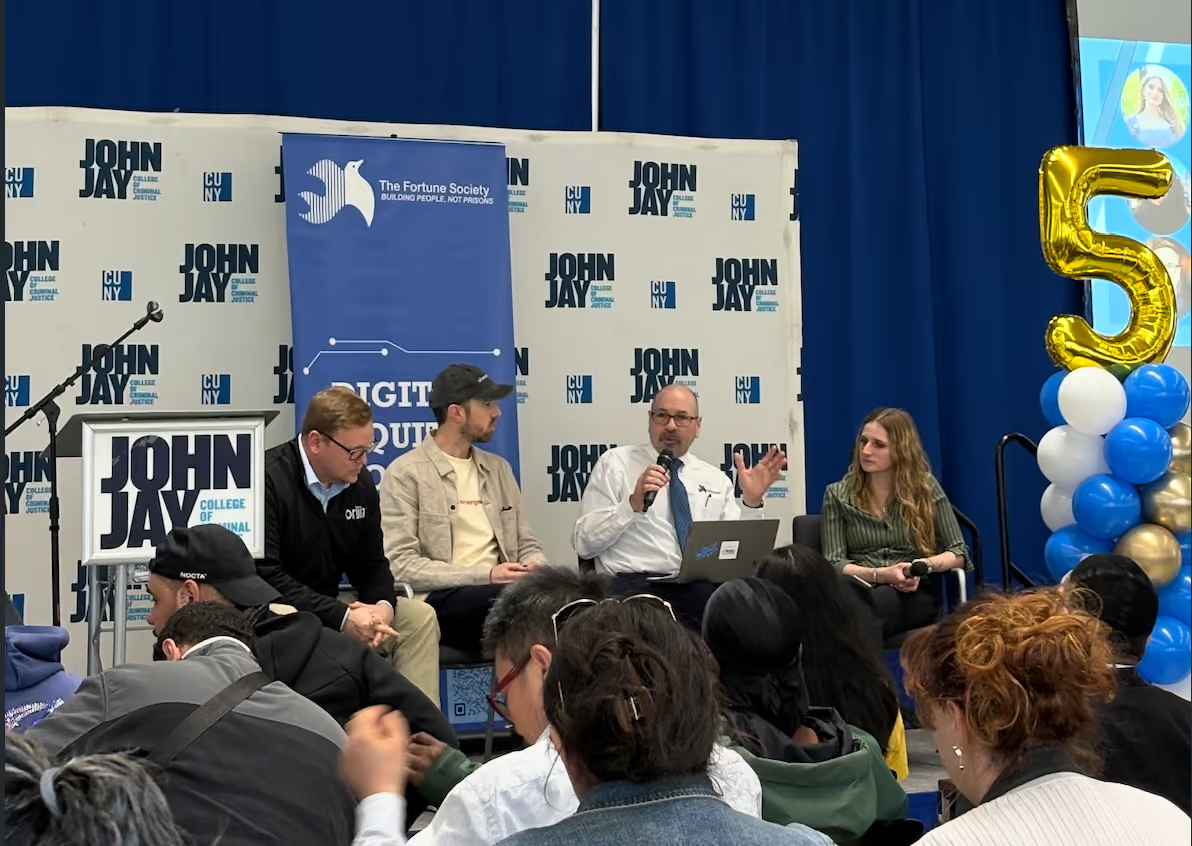
On Wednesday morning around 10am, I set up a demo table for Emerge Career at the Fortune Society's 5th Annual Tech Fair. By the afternoon, I had over 20 business cards in my pocket, 10 warm intros, and was on stage speaking to hundreds of participants.
That's not something I planned. In fact, I asked many times for an opportunity to speak about the amazing work we are doing and was kindly told there wasn't enough space.
But I stayed patient, and optimistic. I felt confident that once people saw and heard about our work, they'd want to get involved and help spread the word, and the work. And I was right. The room recognized what this work is doing across the country.
This year's fair, themed "Using Tech to Rebuild Lives," brought together justice-involved New Yorkers, reentry professionals, and government leaders at John Jay College's Institute for Justice and Opportunity. The energy in that room asked one question louder than any panel ever could: What does a real career pathway look like after incarceration? At Emerge Career, our answer is opportunities in the skilled trades. HVAC technicians. CDL drivers. EV technicians. Diesel mechanics. Electricians. These are careers that AI isn't replacing anytime soon, and in most cases careers where employers are competing more and more aggressively for talent because the demand for labor for exceeds the existing supply.
Our graduates, all of whom are justice-involved, are entering the workforce at $80,000+ starting salaries. Read that again. Over $80,000 for someone with justice involvement is life changing. Not just a safety net, but a foundation. That's on par with a Yale graduate from last year.
None of this happens in a vacuum. It happens because Emerge works with our government partners to build the infrastructure that makes it possible. Agencies like the NYC Mayor's Office of Criminal Justice and the Sacramento Employment and Training Agency don't just check a workforce development box, they change the entire reentry equation. They create the conditions for someone to walk out of incarceration and into a career, not just a job.
That shift, from placement to pathway, is what transforms a program into a movement. To the agencies, workforce development boards, and government offices championing this kind of work: you deserve more public recognition than you receive, but here's some from our recent grads in the meantime. What you are doing is quietly transformative, for individuals, for employers, and for the cities we all share. The reception Emerge Career received at the Tech Fair was a reminder that the ecosystem is ready. Employers are ready. The talent is ready. What we need now is more programs like this, and more partners with the vision and commitment to fund them. I'm proud to be part of it.
Special thanks to The Fortune Society and John Jay College's Institute for Justice and Opportunity for creating a space where this work can speak for itself. And to the NYC Office of Technology and Innovation, Tech:NYC, the NYS Digital Equity Network, and the NYC Alliance for Digital Equity for making the event possible.

Student Success Story: How Michael D. Transformed His Future Through CDL Training with Emerge Career
Michael D. transformed his life through Emerge Career’s CDL training program, going from incarceration and unemployment to launching a stable, high-growth trucking career with Schneider. His journey shows how dedication and the right support can create real second chances.
When Michael D. arrived at Emerge Career, he was standing at a pivotal crossroads. At 28, an arrest had reshaped the trajectory of his life, leading to years of incarceration and the difficult reality of reentering the workforce with a criminal record. Unemployed and searching for real stability, Michael knew he didn’t just need a job—he needed a career path that could offer structure, growth, and a true second chance.

Finding a New Direction Through CDL Training
Like many returning citizens, Michael faced the barriers that come with starting over. But everything changed when he discovered the Commercial Driver’s License (CDL) training program through Emerge Career. Determined to break old cycles and build a stable future, he committed fully from day one.
Throughout his time in the Massachusetts CDL program, Michael:
- Attended every single session
- Studied after hours to master course material
- Reached out for help whenever he needed support
His dedication was undeniable. But the road to success wasn’t without challenges.
Overcoming Setbacks with Resilience and Support
In October, during his first CDL test, nerves got the better of him—especially during the air brakes section. Many students would have given up. Michael didn’t.
Instead, he texted his coach:
“I was so scared and nervous, but I know I know everything perfectly—just gotta calm down.”
With renewed focus, continued coaching, and the determination that had carried him through the program, Michael retested. Within weeks, he passed his second attempt with flying colors.
From Incarceration to a High-Quality Job in Trucking
Just two days after graduating in November, Michael received life-changing news: he had secured a job as an OTR truck driver at Schneider, one of the nation’s largest and most respected transportation companies. This wasn’t just a job—it was a gateway to a living wage, long-term stability, and a career with real upward mobility.
Michael’s gratitude spoke volumes:
“Thank you for everything. I’m so glad I got to have a second chance through Emerge. I am really excited to start my new career and am going to do my best and be the safest I can.”
A Second Chance, Earned Through Hard Work
Michael’s journey from incarceration and unemployment to professional success in the trucking industry is a powerful reminder of what’s possible when determination meets opportunity. With the right support system and the structure of a high-quality CDL training program, he transformed his future—one test, one session, and ultimately, one job offer at a time.
Today, Michael is on the road, building a career he’s proud of. His story reflects exactly what Emerge Career stands for: second chances, career-focused training, and real pathways to economic mobility.
💪 Ready to start your own journey? Apply today to learn how we can help you take the next step.

How Emerge Career Helped, Josh From Massachusetts, Become a CDL Truck Driver
Joshua P, a justice-impacted job seeker, transformed his life through Emerge Career’s accelerated CDL training—overcoming a failed first exam, persistent job search barriers, and years of underemployment to become a high-earning OTR driver with Western Express. His story shows how second-chance workforce programs can turn determination into long-term economic mobility.
From Incarceration to Opportunity: Joshua’s Reentry Journey
When Joshua P was released from prison in 2016 after seven years of incarceration, he faced an uphill climb that thousands of justice-impacted job seekers know well. Despite his determination to rebuild his life, years of low-wage work and financial strain kept him from finding real stability. He needed more than a job—he needed a pathway.
That’s when he discovered Emerge Career’s CDL training program, designed specifically to help justice-involved adults access high-paying careers in months, not years.
Why CDL Training Matters for Justice-Impacted Individuals
Commercial driving offers one of the strongest second-chance employment opportunities in the United States. With high demand, strong starting wages, and accessible training, CDL jobs provide a path to economic mobility for people historically excluded from opportunity.
Emerge Career specializes in helping learners overcome the barriers that keep many from traditional career pathways—barriers Joshua felt every day.
Overcoming Setbacks: Failing the First CDL Exam
Joshua entered Emerge Career motivated and hopeful. But in October, he failed his first CDL exam. For many returning citizens, a setback like this can feel like confirmation of every societal doubt placed on them.
But Joshua pushed forward.
His Emerge coach, Jonathan, encouraged him to stay focused. Joshua studied harder, practiced longer, and came back more prepared than ever. In October 2025, he passed the Massachusetts CDL exam—one of the hardest in the country.
This wasn’t just a test result—it was a turning point.

The Tough Reality of the Job Search for Justice-Impacted Job Seekers
With his license in hand, Joshua entered the most challenging part of the journey: finding a job as a new CDL driver with a criminal record. He applied daily, facing technical issues, rejections, and questions about his employment gap from 2009 to 2016.
But he kept going.
When employers pushed back, he stayed honest and persistent. When online systems glitched, he found workarounds. His consistency paid off when Western Express offered him a position as an Over the Road (OTR) driver.
Today, Joshua is earning strong income, traveling the country, and building the stable future he spent years fighting for.
How Emerge Career Supports Justice-Impacted Learners
Emerge Career provides:
- Accelerated CDL training that prepares learners in weeks
- Dedicated career coaches who support learners through setbacks
- Job placement assistance with second-chance employers
- Wraparound reentry support built for justice-impacted adults
We don’t just teach people how to drive trucks—we help them rebuild confidence, stability, and purpose.
A True Second-Chance Employment Success Story
Joshua’s experience proves that a criminal record does not define someone’s future. With the right structure, support, and career pathway, justice-impacted individuals can earn strong wages and break cycles of poverty.
Emerge Career helped Joshua see what he was capable of—and he did the rest.
Conclusion: CDL Training Offers a Lifeline for Reentry Success
Joshua’s story is more than a single success—it’s an example of what’s possible when reentry workforce training programs truly invest in people. CDL careers offer a dignified, high-earning path forward, and Emerge Career is proud to help learners like Joshua access it.
Second chances aren’t given—they’re built. Joshua built his, and we helped him get there.
💪 Ready to start your own journey? Apply today to learn how we can help you take the next step.
Should I become a diesel technician?
What is diesel mechanic work?
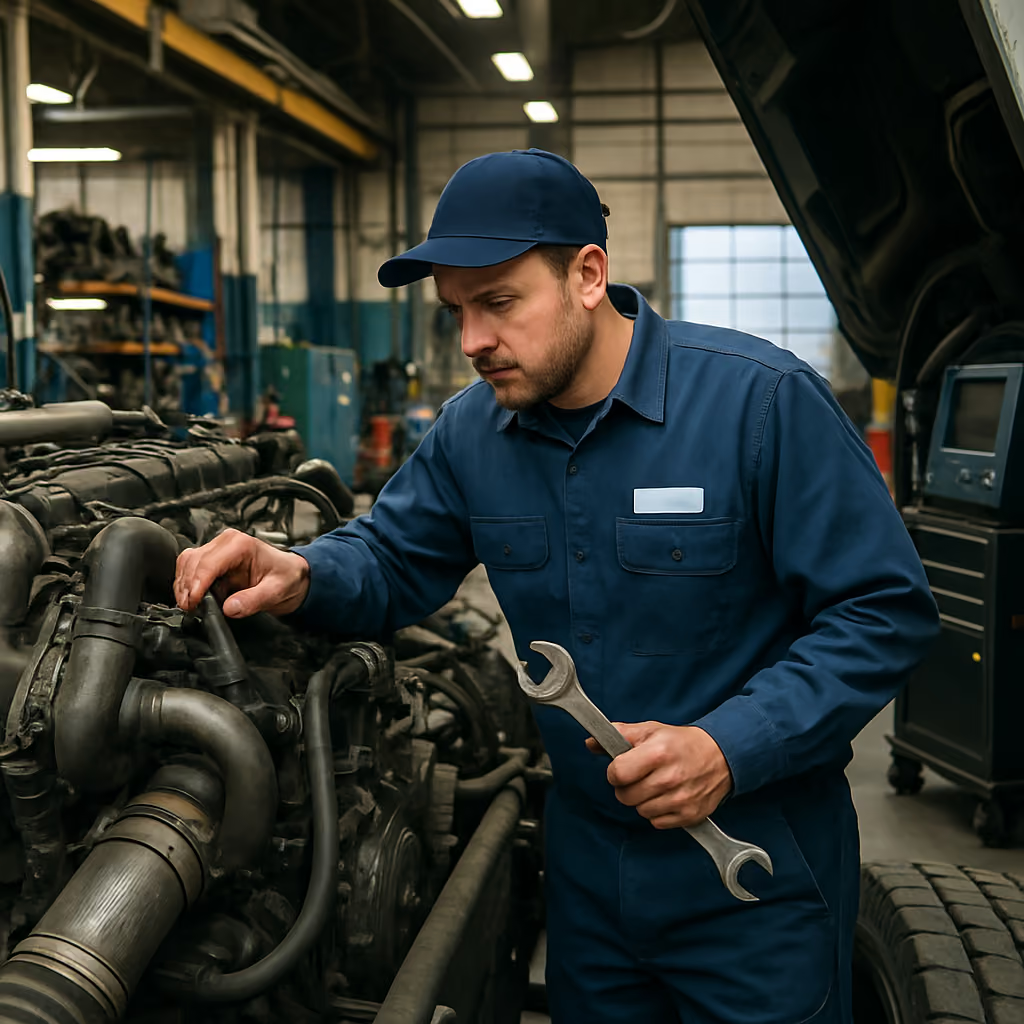
Diesel technicians (also called diesel mechanics) repair and maintain anything that runs on diesel fuel, like semi-trucks, buses, construction equipment, agricultural machinery, emergency vehicles. You diagnose problems, fix what's broken, and keep these machines running.
What diesel technician work actually involves
What you work on:
- Semi-trucks and tractor-trailers
- Buses (school buses, transit buses, coach buses)
- Construction equipment (excavators, bulldozers, loaders)
- Agricultural machinery (tractors, combines, harvesters)
- Emergency vehicles (fire trucks, ambulances)
What you actually do:
- Diagnose engine, transmission, and electrical problems using computer diagnostic tools
- Repair or rebuild diesel engines, transmissions, and brake systems
- Perform preventive maintenance (oil changes, inspections, fluid checks)
- Replace worn parts and components
- Test drive vehicles to verify repairs
- Document all work for customer and DOT records
Where you work:
- Repair shops (independent shops or dealerships)
- Trucking company maintenance facilities
- Construction company yards
- Agricultural equipment dealers
- Government/municipal vehicle maintenance departments
What a typical day looks like: You clock in at the shop, check the work board to see which trucks or equipment are assigned to you, and get to work. Maybe you're diagnosing why a semi won't start (could be electrical, fuel system, or computer issue). Then you're rebuilding a transmission on a dump truck. Then performing a DOT inspection on a school bus.
It's physical work—you're on your feet all day, lifting heavy parts, working in awkward positions under vehicles. But it's also technical work. Modern diesel engines are controlled by computers, so you're reading diagnostic codes, using scan tools, and troubleshooting electrical systems as much as you're turning wrenches.
Is diesel right for you?
Diesel is a good fit if:
- You like figuring out how things work and solving mechanical puzzles
- You're comfortable with physical work and getting dirty
- You want clear career progression with increasing pay
- You're reliable and willing to show up every day
- You can pass a drug test and have (or can get) a driver's license
- You want to earn while you learn instead of spending years in school
Diesel might not be right if:
- You have physical limitations that prevent heavy lifting or prolonged standing
- You want office work or less physically demanding careers
- You don't have a Driver’s License or reliable transportation to get to work
- You're not interested in continuous learning (technology evolves constantly)
If yes, get free diesel technician training in Worcester County
Emerge Career is offering 30 spots for diesel technician training in Worcester County, Massachusetts. If you qualify, we'll train you for free, help you get certified, and connect you directly with diesel shops and trucking companies ready to hire.
Here's how it works:
- Fill out this quick application (takes 10 minutes): link
- Learn the basics online (on your own schedule)
- Get hands-on training in person
- We help you land a job
You must live in Worcester County to qualify. Only 30 spots available.
Apply for diesel training today → Application here.
How can I get into HVAC in MA?
The path from training to working
Here's the realistic timeline from "I'm interested" to "I'm getting paid":
Step 1: Get basic training (2-6 months)
You need to learn the fundamentals: how HVAC systems work, safety procedures, basic electrical knowledge, and hands-on skills. Training options include:
- Trade schools and community colleges (6 months to 2 years for a certificate or associate degree)
- Workforce development programs (2-6 months of focused training)
- Apprenticeships (learn on the job while getting paid, typically 3-5 years total)
Start by applying for Emerge Career’s FREE HVAC Technician Training now: click here.
Step 2: Get your entry-level certifications (immediate)
Emerge Career helps you get required certifications even before you finish training:
EPA Section 608 Certification (required)
- Allows you to handle refrigerants legally
- Costs around $150-$200
- Can complete in a few days to a few weeks
- Absolutely necessary for HVAC work
OSHA-10 Safety Certification (recommended)
- Covers workplace safety standards
- Takes 10 hours to complete
- Costs around $30-$50
- Shows employers you take safety seriously
Step 3: Start working (immediately after training)
With basic training and EPA 608 certification, you can work as:
- HVAC helper or assistant
- Apprentice technician
- Entry-level service technician (depending on the company)
You'll work under supervision while you build experience and skills.
Start now with free HVAC training in Massachusetts
Emerge Career is offering a FREE HVAC training program. If you qualify, we'll train you for free, help you get certified, and connect you directly with employers who are ready to hire.
If HVAC sounds like a fit, apply for Emerge Career’s FREE HVAC training program today →
Do diesel companies hire people with felonies?
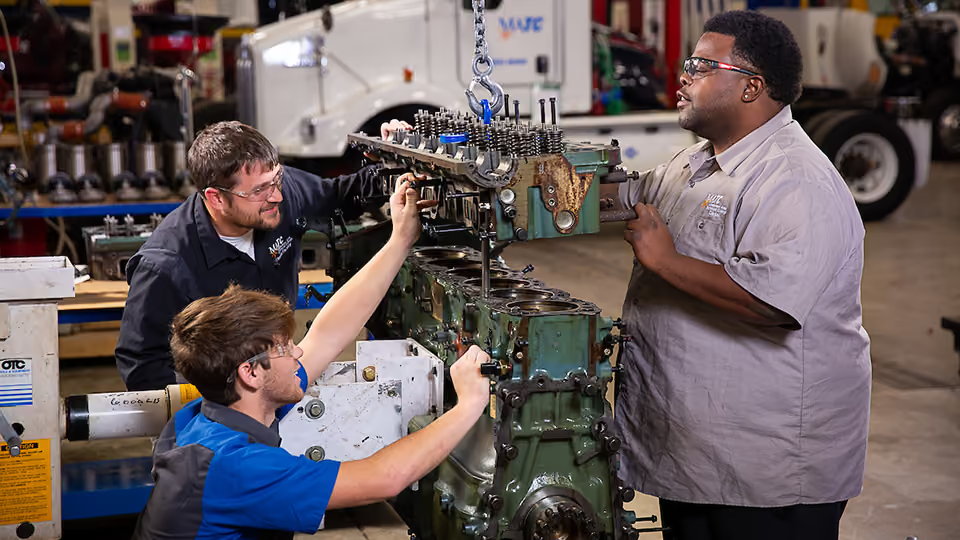
Yes. Diesel repair shops, trucking companies, and equipment dealers across the country are hiring diesel technicians with criminal records. The industry faces a critical shortage of skilled workers—the Bureau of Labor Statistics projects 28,000+ diesel technician job openings every year through 2032—and employers can't afford to automatically rule out qualified candidates with records.
Why diesel companies are hiring people with records
The trucking and logistics industry is booming. E-commerce boom means more delivery trucks. Infrastructure spending means more construction equipment. All of it runs on diesel. All of it breaks down. All of it needs trained mechanics.
1. The industry desperately needs you
The Bureau of Labor Statistics projects over 28,000 diesel technician job openings every year through 2032. Nearly every diesel repair facility in the country is struggling to find qualified technicians. When shops have bays sitting empty because they can't find mechanics, hiring managers start looking at candidates they might have passed over five years ago.
Many current diesel technicians are aging and retiring, and fewer new trainees are entering the workforce, leading to significant gaps. A report from the American Transportation Research Institute highlights that 65.5% of shops are understaffed in 2025, with nearly 19.3% of positions unfilled. Training new technicians is expensive and time-consuming, complicating efforts to fill vacancies.
In Massachusetts, the labor shortage is even more acute. Worcester County—a major hub for manufacturing, logistics, and construction—has dozens of diesel shops, trucking fleets, and equipment dealers competing for the same small pool of trained technicians.
This shortage works in your favor if you have a record. Employers care more about whether you can diagnose a bad injector or rebuild a transmission than what happened in your past—as long as you can prove you're reliable and trained.
2. No state license required
Unlike trades that require state licensing (where your criminal record gets scrutinized by a licensing board), diesel techs don't need state licenses. The industry uses ASE certifications to verify skills, and a valid driver’s license. ASE doesn't care about your criminal history.
You take tests that prove you know diesel engines, brakes, electrical systems, etc. Pass the tests, get certified. No background check. No licensing board review.
This removes a major barrier that people with records face in other skilled trades.
3. Massachusetts pays diesel techs well
The national median salary for diesel technicians is around $57,000. In Massachusetts, it's closer to $76,000 due to higher cost of living and strong demand—especially in Worcester County, which is a major hub for logistics, manufacturing, and construction.
Real salary progression:
- Shop helper: $35,000-$42,000 (entry level, no experience)
- Certified diesel tech: $50,000-$65,000 (with ASE certs, 1-3 years experience)
- Experienced technician: $70,000-$85,000 (multiple certs, 5+ years)
- Master tech/shop foreman: $90,000+ (leadership or specialized skills)
Many shops pay "flat rate"—you get paid per job completed, not hourly. Faster, more skilled techs make significantly more money.
4. You can start earning quickly
Unlike careers that require years of school, diesel mechanics offers fast entry points:
- Shop helper roles (no experience required—you learn while earning)
- Entry-level tech positions (with basic training or certifications)
- Apprenticeships (get paid while you train)
You can be earning money within months, not years.
5. Job security is real
Trucks and equipment don't maintain themselves. As long as we have construction, agriculture, and trucking (which isn't going anywhere), we need diesel mechanics.
This work can't be outsourced overseas or easily automated. Every local economy needs diesel techs.
Get free diesel technician training in Worcester County
Emerge Career has 30 scholarship spots for diesel technician training in Worcester County, Massachusetts.
If you qualify, we'll train you for free, help you get certified, and connect you directly with diesel shops and trucking companies ready to hire.
Here's how it works:
- Fill out this quick application (takes 10 minutes): [Application link]
- Learn the basics online (on your own schedule)
- Get hands-on training in person
- We help you land a job
You must live in Worcester County to qualify. Only 30 spots available—apply now.
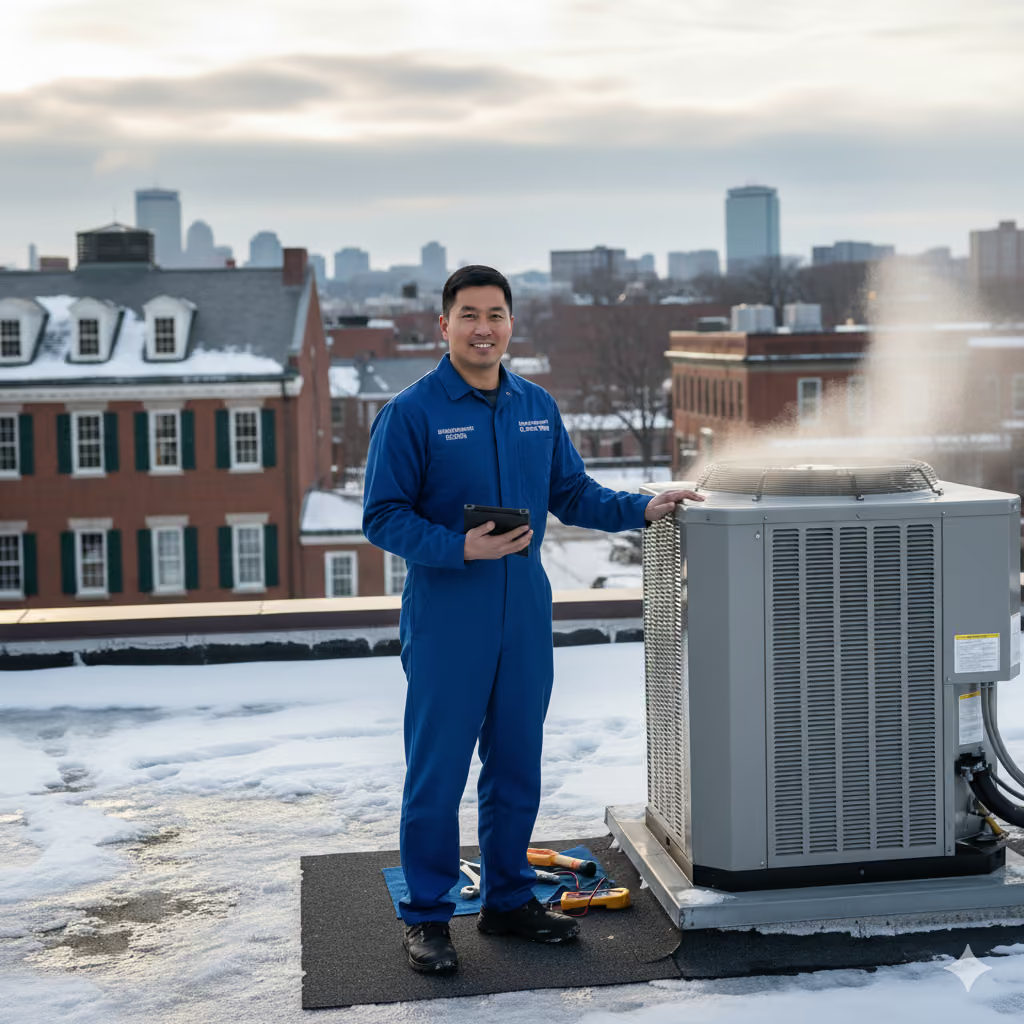
Should you get a HVAC job in MA?
Yes, you should seriously consider it. HVAC is one of the best career paths for people with criminal records who want stable work, decent pay, and a real future. The industry desperately needs workers, employers are hiring people with felonies, and the work itself doesn't require a college degree—just training, hustle, and a willingness to learn. Here's what you need to know about HVAC careers, what the job actually involves, and whether it's the right move for you.
What is HVAC?
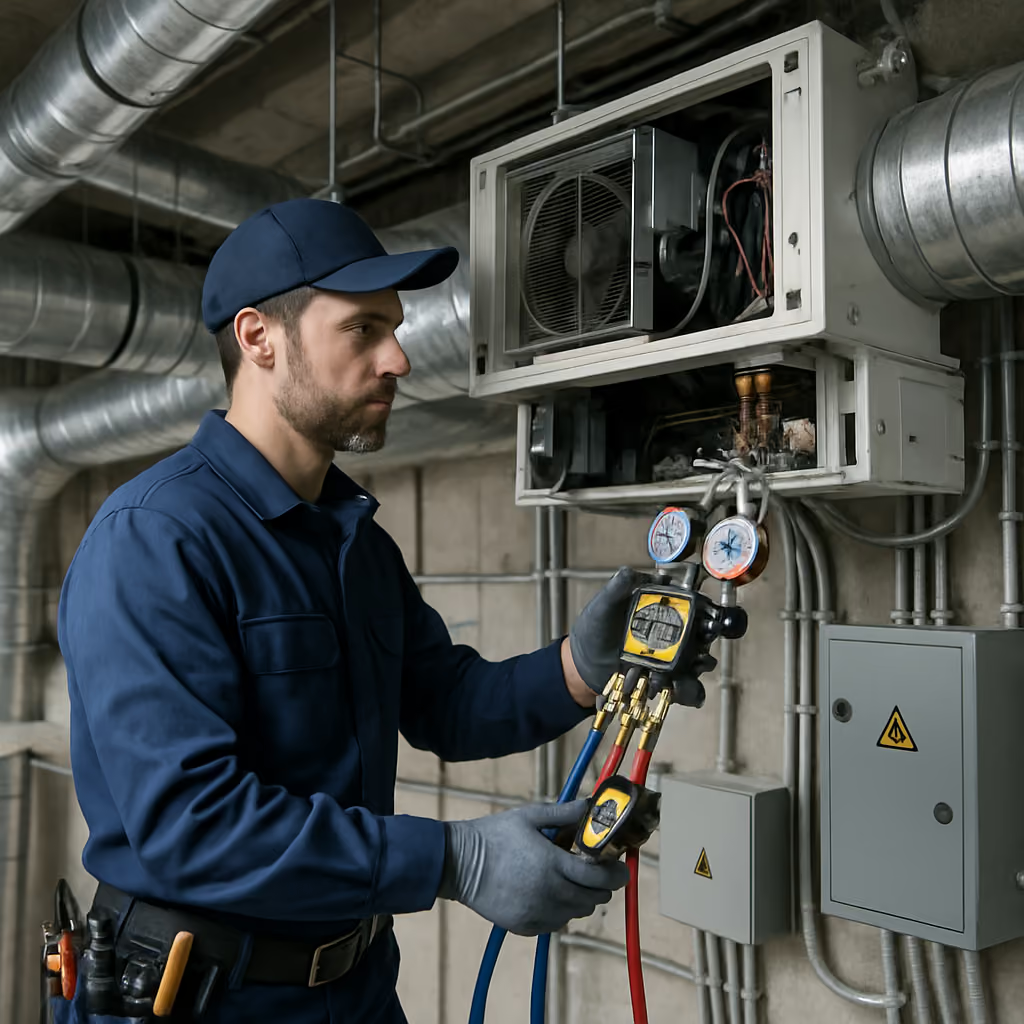
HVAC stands for Heating, Ventilation, and Air Conditioning. HVAC technicians install, repair, and maintain the systems that keep buildings comfortable—furnaces, air conditioners, heat pumps, ventilation systems, and thermostats.
What you actually do:
- Install new heating and cooling systems in homes and businesses
- Connect HVAC equipment to fuel, water, or refrigerant sources
- Perform routine maintenance, changing filters, cleaning ducts, or refilling refrigerants
- Install, connect and adjust thermostats, humidistats, timers
- Diagnose problems, testing electrical circuits and connections
- Read blueprints and follow technical specifications
- Use power tools, hand tools, and diagnostic equipment
Where you work:
- Industrial facilities
- Data centers
- Commercial (offices, schools, hospitals) and residential homes (crawl spaces, attics, basements
What a typical day looks like:
You start your morning at the shop or directly at a job site. You might spend the day installing a new air conditioning unit in someone's house, troubleshooting why an office building's heat isn't working, or doing seasonal maintenance on multiple systems. You're driving between jobs, working with your hands, problem-solving, and talking to customers.
It's physical work. You're lifting equipment, climbing ladders, and working in tight spaces. You're also using your brain—electrical systems, refrigerant chemistry, airflow calculations, and diagnostic tools all require technical knowledge.
Why HVAC is a solid choice for people with records
1. The industry needs you
HVAC companies across the country need over two million workers in the coming years. In Massachusetts alone, the clean energy sector—which includes HVAC work on heat pumps and energy-efficient systems—needs to fill 34,000 jobs in the next six years.
The demand for qualified HVAC professionals often outstrips the supply. When employers can't find enough workers, they start looking at candidates they might have passed over before. That includes people with criminal records.
2. Massachusetts law is on your side
Massachusetts has some of the strongest fair chance hiring laws in the country. Employers can't ask about your criminal history on initial job applications ("ban the box"), and they have to consider the nature of your offense, how long ago it happened, and what you've done since. Plus, many HVAC companies understand the importance of rehabilitation and community support. This gives you a real shot to prove yourself based on your skills and training before your record enters the conversation.
3. You can earn while you learn
HVAC work is a skills-based industry, prioritizing practical skills, technical knowledge, and a strong work ethic. Many roles can be learned through vocational training programs like what Emerge Career offers, apprenticeships, and on-the-job experience, rather than solely relying on traditional academic qualifications.
Unlike careers that require four years of college before you can start working, HVAC offers multiple entry points:
- Helper/apprentice roles (no experience required)
- Entry-level technician positions (with basic training)
- Licensed technician roles (with certification and experience)
You can start earning money quickly in a helper role while you build toward higher-paying licensed positions. With experience and further training, technicians can advance to supervisory roles, specialize in certain areas, or even start their own businesses.
4. The pay is real
According to the U.S. Bureau of Labor Statistics, HVAC technicians can earn a median salary of around $73,000 per year.
5. Hard to outsource, always in demand
Every building needs heating and cooling. Systems break down, new construction needs installations, and old equipment needs replacing. This work happens locally—it can't be shipped overseas or automated away. Even during economic downturns, people still need their heat fixed in winter and their AC working in summer.
Is HVAC right for you?
HVAC is a good fit if:
- You like working with your hands and solving problems
- You're okay with physical work in all conditions
- You want a career with clear advancement (helper → apprentice → journeyman → master)
- You're reliable and willing to show up every day
HVAC might not be right if:
- You have physical limitations that prevent lifting, climbing, or working in tight spaces
- You are uncomfortable in high temperature conditions
- You can’t handle night shifts well or wish to have free weekends
- You want office work or a less physically demanding career
- You can't commit to the training and certification process
- You don't have reliable transportation (at least initially)
Your next steps
Emerge Career offers a FREE HVAC training program. If you qualify, we'll train you for free, help you get certified, and connect you directly with employers who are ready to hire.
If HVAC sounds like a fit, apply for Emerge Career’s FREE HVAC training program today!
.avif)
Do HVAC companies hire felons in MA?
Yes. HVAC companies across the country—including Massachusetts—are hiring people with criminal records. The industry needs over two million workers in the coming years, and employers can't afford to automatically rule out qualified candidates with records. Here's what actually matters: the type of felony, how long ago it happened, and whether you can get licensed in your state. This guide breaks down what you need to know about HVAC careers with a criminal record, including the real barriers you might face and how to work around them.
Why HVAC companies are hiring people with records
The numbers tell the story. Virginia's Department of Corrections tracked graduates from their HVAC training programs and found that only 5.6% returned to prison—helping Virginia maintain the lowest recidivism rate in the country at 23%. Programs in other states report similar results.
Employers are paying attention. When your industry is desperate for workers and the data shows that people coming out of HVAC training programs stay out of trouble and show up for work, it changes the hiring conversation.
In Massachusetts specifically, the clean energy sector needs to fill over 38,000 jobs in the next six years. According to the state's clean energy center, nearly 90% of clean energy employers report difficulty finding workers. That includes HVAC technicians working on heat pumps, geothermal systems, and energy-efficient building systems.
The Massachusetts opportunity: clean energy jobs
Massachusetts is investing heavily in clean energy, and HVAC work is at the center of it. The state needs heat pump installers, geothermal technicians, and energy efficiency specialists to meet climate goals, cutting greenhouse gas emissions in half by 2030 and reaching net zero by 2050.
Training programs across the state are specifically recruiting from populations underrepresented in the existing workforce, including people with criminal records. Organizations like Emerge Career are not only training people for these jobs, but we’re working directly with employers to help place students after the program.
The skilled trades are one of the few career paths where your hustle, your hands, and your willingness to learn matter more than your resume. HVAC companies need people who show up, work hard, and can learn the technical skills. If that's you, you have a real shot.
State licensing requirements vary widely
In Massachusetts:
- No absolute ban on licensing for people with felonies
- Licensing boards consider the type of crime, how long ago it happened, and evidence of rehabilitation
- Generally, you need significant time since your release—often five years or more
- Completing a recognized training program helps your case
See if you qualify by applying here: ___
Looking for free HVAC training in Massachusetts?
Emerge Career offers FREE HVAC training for people building careers in the skilled trades. If you qualify, we'll train you for free, help you get certified, and connect you directly with employers who are ready to hire.
Here's how it works:
- Fill out this quick application (takes 10 minutes): link
- Learn the basics online (on your own schedule)
- Get hands-on training in person
- We help you land a job
Apply for Emerge Career’s FREE HVAC training program today →

No SNAP Benefits? We've Got You
For the month of November 2025, Emerge Career is offering $300 to the first 40 eligible students who earn their Commercial Learner's Permit (CLP).
Program Overview
Emerge Career is offering a $300 stipend to the first 40 eligible students who obtain their Commercial Learner's Permit (CLP) during November 2025. This program is designed to support students during the SNAP funding freeze and help maintain momentum toward career opportunities in the trucking industry.
Reward Details
Stipend Amount: $300 per eligible student
Program Cap: Limited to the first 40 eligible students who complete all requirements
Payment Method: Funds will be distributed via Tremendous Visa Digital Gift Cards. These digital gift cards can be used in two ways:
- Add to your mobile wallet (Apple Pay or Google Wallet) for in-person and online purchases
- Use the card number directly to make purchases online wherever Visa is accepted
Payment Timing: Gift cards will be distributed after the enrollment interview stage, after all requirements have been met and eligibility has been verified.
Requirements
To receive the $300 stipend, students must:
- Obtain their Commercial Learner's Permit (Class A) during November 2025
- Complete Emerge Career's online theory training course
- Pass the Class A permit exam
- Submit permit documentation via their student profile
- Complete an enrollment interview with Emerge Career
- Meet all eligibility requirements (see below)
Eligibility Requirements
This stipend is only available to students who meet Emerge Career's program eligibility requirements. These requirements reflect what trucking employers typically look for when hiring, and we want to ensure you don't invest time and effort into getting your permit only to face employment challenges later.
Justice Involvement
- You must have experienced arrest, probation, parole, or incarceration at some point (even if charges were dropped or it occurred as a youth)
Driving Record
- Valid driver's license (required)
- No at-fault accidents in the past 3 years
- No more than 2 accidents total in the past 7 years
- No major traffic violations including: reckless driving, DUI/DWI, having alcohol in vehicle, hit and run, driving on a suspended license, or fleeing from police
Criminal History
- All pending legal cases must be resolved
- No DUIs in the past 7 years
- No more than 1 DUI in your lifetime (multiple DUIs disqualify you from holding a CDL)
- No sex or sex-related offenses
- No drug trafficking convictions (note: this is different from drug possession or distribution)
- No history of failing a DOT drug test
- No multiple violent felonies
Other Requirements
- Must be a U.S. citizen or permanent resident
- For NYC students: Must meet income eligibility based on MIT Living Wage standards: https://livingwage.mit.edu/states/36
- For NYC students: Must be willing and able to cross state lines and do OTR (over-the-road) trucking, which requires being away from home for at least 1 week at a time
Please note: While this list covers the main eligibility factors, it may not be exhaustive. Every situation is unique. If any of these criteria apply to you, if your situation has changed, or if you're unsure about your eligibility, please contact Emerge Career immediately.
In some cases—such as certain criminal history or driving record issues—we may be able to work with you if you can provide a pre-hire offer letter from an employer. This helps ensure you'll be able to secure employment after completing training.
Important Notes
- This promotion is open to both new students and existing students in the Emerge Career program
- Available regardless of whether you receive SNAP benefits currently
- Eligibility will be verified before rewards are distributed
- Students who do not meet eligibility requirements will not receive the stipend
- Emerge Career reserves the right to verify all information provided and may request additional documentation
- The program may end earlier than November 30, 2025 if the 40-student cap is reached
Questions?
If you have questions about the November Permit Stipend Program or your eligibility, please contact Emerge Career at success@emergecareer.com

Meet Radasha, Emerge Career’s First Female CDL Graduate in NYC
From reentry to the open road — Radasha is inspiring the next generation of female truck drivers
Meet Radasha, Emerge Career’s First Female CDL Graduate in NYC
At 20 years old, Radasha faced a turning point that would define her next chapter. A gun charge led to her arrest and two weeks at Rikers Island while she was still in college. That time shattered the momentum she'd built, but it also became her wake-up call. Years of moving past that record and showing up consistently at work proved something important to her: there's light at the end of the tunnel. For eight years, she drove small box trucks, staying stable and keeping her head down. When she discovered Emerge Career's CDL program, she knew it was time to level up. Radasha was surviving on $2,200 a month in unemployment benefits while covering $2,300 in rent alone, watching her dreams stay out of reach.
The road to her CDL wasn't smooth. Radasha lost her grandmother during training, her biggest source of motivation and encouragement. Her uncle followed shortly after, and depression nearly pulled her under. But Radasha kept showing up. She showed up to every single training session, tackled tough skills like backing maneuvers, rescheduled her DOT card appointment, and pushed through the self-doubt. When she hit obstacles with exam scheduling and pre-trip inspections, she leaned on the support around her and kept fighting. On October 6th, 2025, Radasha became the first woman to graduate from Emerge Career's CDL program in New York City. She earned her Commercial Driver's License and with it, access to jobs that pay significantly more than the unemployment she'd been surviving on. Radasha is now job searching and ready to try long-haul trucking, turning her decade-old dream into her reality.
💪 Ready to start your own journey? Apply today to learn how we can help you take the next step.
How Emerge Career Empowers Veterans with Vocational Training and Career Pathways to Employment
Transitioning from military service to civilian life can be daunting. Many veterans face challenges such as unemployment, underemployment, or struggles with mental health and substance use. At Emerge Career, we believe every veteran deserves not just a job, but a sustainable career path that brings purpose and stability. Through vocational training and dedicated career coaching, we help veterans build skills, regain confidence, and achieve long-term employment success.
A Fresh Start for Veterans
Transitioning from military service to civilian life can be daunting. Many veterans face challenges such as unemployment, underemployment, or struggles with mental health and substance use. At Emerge Career, we believe every veteran deserves not just a job, but a sustainable career path that brings purpose and stability. Through vocational training and dedicated career coaching, we help veterans build skills, regain confidence, and achieve long-term employment success.
Meet Michael Dimick: A Veteran’s Journey to Renewal
One of the most inspiring success stories is that of Michael Dimick, a veteran who was determined to rebuild his life and career. Before connecting with Emerge Career, Michael had nearly given up on himself:
“Before meeting, Eric, I had pretty much given up on everything. I didn’t look forward to Christmas, to holidays. I was just done. He introduced me to this program and I feel like I have a whole new chapter, which wasn’t previously there before, to write in my life. Driving is something I’ve always done, I’ve always excelled at, and I know I would be an excellent driver. I just kind of want to be employee of the month, every month. That would make me absolutely happy.”
Michael’s words capture the heart of why Emerge Career exists: to provide opportunities and second chances to people who are ready to step into a brighter future.

Coaching That Makes a Difference
Behind every success story is a team member dedicated to walking alongside our learners. For Michael, that was Eric, one of Emerge Career’s success coaches. Eric shared this heartfelt reflection:
“Michael Dimick is the best. His story made me cry. He’s a veteran who’s worked through substance abuse problems in the past and was really looking for a fresh start—with employment and his family. His journey is incredibly inspiring”
This connection between learner and coach is what sets Emerge Career apart. Our coaches don’t just prepare people for the workforce—they inspire hope and provide accountability every step of the way.
Building Skills for Sustainable Employment
Through Emerge Career’s vocational training programs, Michael and other veterans gain access to:
- Industry-recognized training that leads directly to high-demand jobs.
- Personalized coaching to build confidence, accountability, and a clear plan for success.
- Employment support that connects them to real opportunities with employers who value veterans’ skills and work ethic.
For Michael, driving became more than just a skill—it became a pathway to stability, dignity, and a renewed sense of purpose.
The Bigger Picture: Veterans Thriving with Emerge Career
Michael’s journey is just one example of how Emerge Career helps veterans nationwide. Each story is unique, but the mission remains the same: empowering individuals to transform their lives through training, coaching, and career opportunities.
For veterans like Michael, the impact extends beyond employment. It means rediscovering joy during the holidays, rebuilding relationships with family, and believing in a future full of possibility.
Conclusion: Hope, Skills, and a New Chapter
Veterans bring discipline, resilience, and experience that are invaluable in the workforce. At Emerge Career, we are proud to provide the tools, training, and coaching that help them thrive.
Michael’s story reminds us that it’s never too late to start a new chapter—and with the right support, that chapter can be filled with success, stability, and pride.
If you’re a state government leader seeking innovative ways to better serve veterans, Emerge Career is ready to partner with you. Our proven vocational training programs and personalized career coaching help veterans transition successfully into the workforce and build meaningful futures. To explore how we can support your state’s efforts, please reach out to us at sales@emergecareer.com.

Emerge Career's CDL Program Requirements
This article outlines the key eligibility requirements for Emerge Career's CDL training program. Please note this is not an exhaustive list—additional requirements may apply based on your individual circumstances.
Basic Eligibility
Income Requirements
You are categorically eligible if you:
- Receive public benefits (SNAP, unemployment insurance, etc.), OR
- Have household income below government thresholds based on your household size
Income guidelines vary by location:
- NYC and California: MIT Living Wage guidelines (NYC, California)
- Massachusetts: USDA/SAIPE Median Household Income guidelines
You'll need to provide documentation of income/benefits later in the enrollment process.
Justice System Involvement
You must have been directly involved with the justice system through at least one of:
- Previous incarceration
- Previous arrest(s)
- Current or past probation/parole
- Participation in a pretrial diversion program
- In some cases: having a close family member affected by incarceration
Geographic Eligibility
You must live in one of our service areas:
- Massachusetts (multiple locations)
- New York City (all 5 boroughs)
- Sacramento, California
- Other locations as our job training programs expand
CDL License Requirements
Legal Authorization
- Must have an active driver's license
- Must be a U.S. citizen or legal resident (as of September 29, 2025, work authorization alone is not sufficient)
Language Requirement
- Must speak English proficiently
Medical Requirements
You must be able to pass a DOT Medical Physical Examination. Certain health conditions may require medical clearance from your doctor, including:
- Epilepsy
- Recent heart attack, stroke, or heart surgery
- Very high blood pressure
- Sleep apnea (without proper treatment documentation)
- Vision or hearing loss that cannot be corrected
- Use of certain medications like:
- Anti-seizure medications
- Medical or recreational marijuana
- Opioid pain medications (including Suboxone, buprenorphine, methadone)
- ADHD medications (Adderall, Vyvanse, etc.)
- Benzodiazepines (Xanax, Valium, Ativan, Klonopin, etc.)
If you take these medications, the DOT Medical Examiner may require a clearance letter from your doctor stating you're cleared to operate a commercial vehicle.
Driving Record Requirements
DUI/DWI Restrictions
- Cannot have more than 1 DUI/DWI/OUI in your lifetime
- Cannot have any DUI/DWI/OUI within the past 7 years
- Must not have failed a DOT-administered drug test in the past
Traffic Violations & Accidents
In the past 7 years, you cannot have:
- More than 1 accident
- Any serious driving violations (reckless driving, hit-and-run, evading/not stopping for police, driving with suspended license, etc.)
- License suspension due to points
In the past 3 years, you cannot have:
- Any accidents where you were at fault
What if my driving record doesn't meet these guidelines?
If your driving record includes issues beyond what's listed above, your application will be placed on hold. This doesn't mean you're disqualified—it means we need you to secure a pre-hire offer letter from an employer in our network who is aware of your driving history and willing to hire you once you complete CDL training. This step protects your time and ensures you have a real pathway to employment after graduation.
Criminal History Requirements
Pending Cases
- No pending criminal cases (must be resolved before enrollment)
Conviction Volume
In the past 7 years, you cannot have:
- More than 2 felony convictions
- More than 4 misdemeanor convictions
In the past 3 years, you cannot have:
- More than 2 violent felony convictions
Disqualifying Convictions
You cannot have convictions for:
- Vehicular homicide or murder
- Arson, terrorism, or treason
- Kidnapping or assault with intent to murder
- Felonies committed using a commercial motor vehicle
- Human trafficking, slavery, or sex offenses
- Drug trafficking (possession with intent to sell at scale)
- Leaving the scene of an accident
- Sex-related offenses
Note: Some drug-related felonies may be acceptable (excluding trafficking). Sex offense convictions create significant employment barriers.
What if my criminal history doesn't meet these guidelines?
If your background includes convictions beyond the limits listed above—but not the disqualifying offenses—your application will be placed on hold. Being on hold isn't a rejection. It means you'll need to work with us to secure a pre-hire offer letter from a trucking employer who understands your background and is ready to hire you after you complete training. This process ensures that your time and effort in our program leads to real employment, not just a certificate.
Additional Requirements
Over-the-Road (OTR) Availability
- Must be willing and able to work Over-the-Road (OTR), which requires traveling across state lines for extended periods
- If you're currently on probation or parole, you'll need written confirmation from your supervision officer at the time of enrollment that you're authorized to cross state lines for employment purposes
Drug Testing & Marijuana Use
- Must be clear of marijuana use for the past 3 months minimum
- If you've used marijuana within the past 6 months, you'll need to test negative on a drug screen before enrollment in trucking school
- You'll be subject to random DOT drug testing once you begin training at the yard. Failing a DOT-administered drug test will create a permanent barrier to CDL employment in the industry
Financial Obligations
- Must be current on child support payments or on a payment plan (being behind can result in license suspension)
Required Disclosures
You'll need to provide information about:
- Employment status and work history
- Public assistance received in past 6 months
- Household size and number of dependents
- Transportation and housing situation
- Time served in correctional facilities (if applicable)
If you have any questions about our CDL program or other vocational program offerings, please email support@emergecareer.com.
Read about how our CDL program works here.

What Being ‘On Hold’ for Medical Clearance Means
Being put “on hold” for medical clearance doesn’t end your CDL journey—it just means you need a doctor’s note confirming you’re fit to drive. This post explains why holds happen, which health issues or medications may trigger them, and how to get cleared so you can pass the DOT Physical and move forward with confidence.
At Emerge Career, our mission is simple: help people get trained, licensed, and employed as CDL truck drivers — with a real career waiting at the end of the process.
Every student we enroll in trucking school must be able to pass the DOT Physical, which is required for all commercial drivers. This isn’t just about checking a box — it’s about making sure you’ll be safe on the road, meet federal requirements, and avoid being held back later in the process.
Why you might be placed “on hold” for medical clearance
Sometimes, information you provide about your health or medications suggests you may have difficulty passing a DOT Physical without extra documentation. This isn’t a personal judgment, and it’s not Emerge making our own rules — it’s based on federal DOT medical standards and current industry safety requirements.
Common reasons for being placed on hold for medical clearance include:
- Medications: Anti-seizure drugs, marijuana or illegal drugs, opioid pain meds, medications for opioid use disorder (Suboxone/buprenorphine/methadone), stimulants (including ADHD meds), or benzodiazepines.
- Health conditions: Vision problems (even with correction), sleep apnea, epilepsy, oxygen use for lung conditions, recent heart attack, stroke, heart surgery, or very high blood pressure.
- Vision concerns: Not being able to pass a vision test, even with corrective lenses.
The pathway forward: get a letter from your doctor
Being “on hold” for medical clearance doesn’t mean the end of your CDL journey. It just means we need confirmation from your doctor that you’re medically fit to operate a commercial vehicle before we can move forward.
Here’s how to do it:
- Download the doctor’s letter template [linked here] (Click “File” → “Make a copy” or “Download” as a .doc)
- Make an appointment with your primary care provider or the doctor managing your condition.
- Show them the template and ask them to write you a similar one, confirming you are medically cleared to operate a commercial motor vehicle.
- Send us the signed letter at support@emergecareer.com with the subject line: “Medical Clearance Letter – [Full Name]”
What happens next
Once we receive your doctor’s letter, our team will:
- Review the letter for completeness.
- Confirm the provider’s credentials.
- Move you forward toward trucking school enrollment if everything checks out.
Why this matters
The DOT Physical is a federal requirement — if you can’t pass it, you can’t get your CDL. By getting medical clearance now, you’re making sure there are no surprises later and protecting your time, effort, and investment.
We believe in second chances, persistence, and preparation. If you take the steps now, you’ll be ready to succeed when it counts.
Let’s get to work.
Thank you! Your submission has been received!
Case Studies.
AI-proof careers in industries with critical labor shortages.
This is a “win-win.” Many formerly incarcerated individuals have trouble finding work upon release, which can drive them back into crime.
.avif)
The data is also showing us that our investments in Emerge Career are paying immense dividends, in real second chances and wealth creation for some of our city’s most disadvantaged communities.
.avif)