Thank you! Your submission has been received!
There is a version of workforce development that happens on paper, in RFPs, in job centers, in outcome reports that get filed and forgotten. And then there is what we saw last week inside Rikers Island.
This is a story about that second kind.
Through the partnership between New York City Mayor Mamdani, MOCJ Director Deanna Logan, DOC Commissioner Stanley Richards, and Emerge Career, Next Mile NYC, the City's CDL training program, if offered to people in custody at Rikers Island.
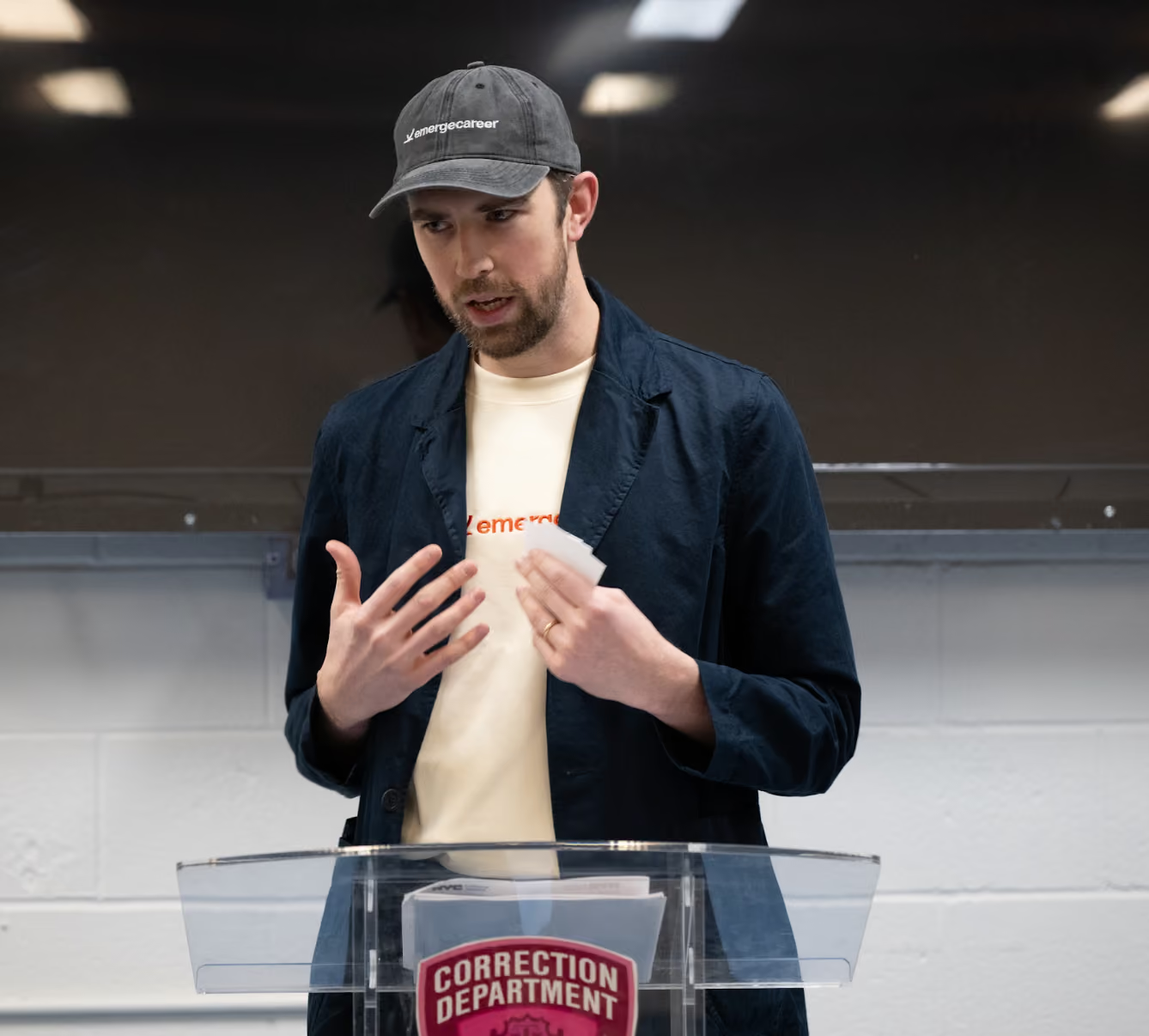
On regular basis the team at Emerge goes to Rikers to share the opportunity with eligible people in the facility and help them sign up if they're interested. We get to see what this partnership actually looks to folks awaiting their release.
Walking onto Rikers Island is not like walking into a conference room. The security process alone changes your orientation. You become acutely aware that every minute you spend in that facility matters to the people there. One of the most energizing aspects of the time we spend comes from the energy in the programs room.
Participants, people who, statistically, face enormous barriers to employment the moment they walk out, were engaged, asking great questions, joking with each other about how they'll spend their money.
One guy stuck out though.
When we first walked into the room he was in the front row. He had his arms crossed, and a look on his face that said, "idk why I'm even here." When we started the presentation, the first slide in our deck says that the average graduate makes over $85,000 starting salary. The guy in the front row looked around and almost yelled, “ whatever I can make that kinda money selling drugs though!” He almost walked out of the room.
We told him the truth: This is the fastest path to making 6 figures LEGALLY. And in a couple years he could potentially own a couple trucks and even have people working for him.
We finished explaining the steps of the program and the amazing people from Emerge who'd be working with him along his journey. By the end of the presentation he was excited about the program and was the first one to finish his application.
Here is what I think every workforce development board, every DA's office considering reentry partnerships, and every government procurement official should understand:
The "after release" model is broken.
The traditional reentry pathway asks people to prove themselves after the hardest transition of their lives: juggle family life again, find housing, manage supervision requirements, navigate benefit systems, and somehow also show up job-ready on day one. Over 60% of formerly incarcerated people remain unemployed a year after incarceration, seeking work but not finding it, and workforce development programs are severely limited inside facilities, with only one-third of incarcerated people ever participating. What Emerge and MOCJ built together combines technology-driven vocational training, personalized virtual intensive success coaching, holistic wrap-around services, stipend incentives, and direct employment placements.
The results speak for themselves: over 90% job placement rate and average starting salary of over $85,000.
The MOCJ team deserves a ton of credit for building a government partnership model that holds everyone accountable to real results. And the same goes for DOC Commissioner Stanley Richards and his team for making on-facility access possible. Real program quality requires real access, and that trust is not taken lightly.
If you're a labor agency, DA's office, public safety organization, or economic development group exploring what second-chance hiring actually looks like in the skilled trades I'd welcome a conversation! The infrastructure to make it work is already built.
What we learned at Rikers last week is that hope is still out there when folks are given real opportunities.
That's where the journey really begins.
Jason | Government Partnerships, Emerge Career