Emerge Career Blog.
Guides, stories, and everything you need to know about starting your career.
Emerge Career Went to Fortune's 2026 Tech Fair: From Demo to the Main Stage
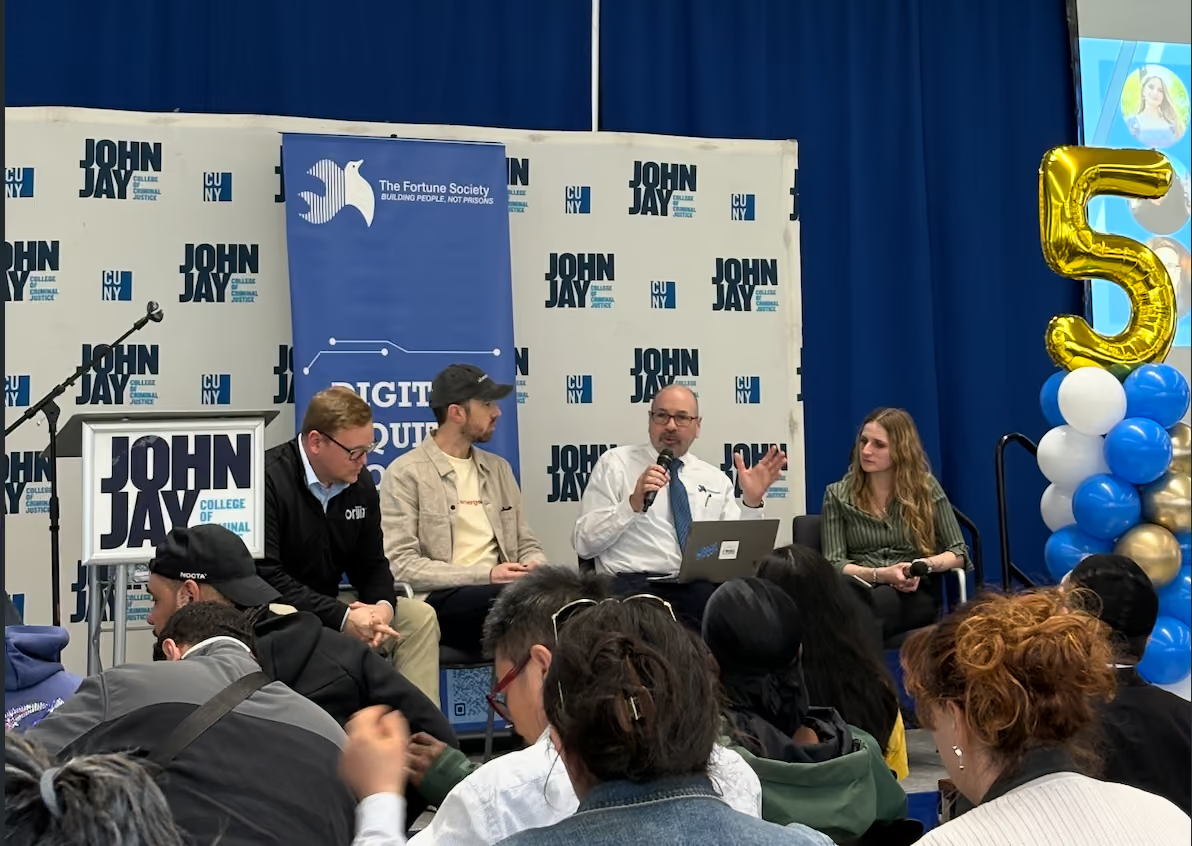
On Wednesday morning around 10am, I set up a demo table for Emerge Career at the Fortune Society's 5th Annual Tech Fair. By the afternoon, I had over 20 business cards in my pocket, 10 warm intros, and was on stage speaking to hundreds of participants.
That's not something I planned. In fact, I asked many times for an opportunity to speak about the amazing work we are doing and was kindly told there wasn't enough space.
But I stayed patient, and optimistic. I felt confident that once people saw and heard about our work, they'd want to get involved and help spread the word, and the work. And I was right. The room recognized what this work is doing across the country.
This year's fair, themed "Using Tech to Rebuild Lives," brought together justice-involved New Yorkers, reentry professionals, and government leaders at John Jay College's Institute for Justice and Opportunity. The energy in that room asked one question louder than any panel ever could: What does a real career pathway look like after incarceration? At Emerge Career, our answer is opportunities in the skilled trades. HVAC technicians. CDL drivers. EV technicians. Diesel mechanics. Electricians. These are careers that AI isn't replacing anytime soon, and in most cases careers where employers are competing more and more aggressively for talent because the demand for labor for exceeds the existing supply.
Our graduates, all of whom are justice-involved, are entering the workforce at $80,000+ starting salaries. Read that again. Over $80,000 for someone with justice involvement is life changing. Not just a safety net, but a foundation. That's on par with a Yale graduate from last year.
None of this happens in a vacuum. It happens because Emerge works with our government partners to build the infrastructure that makes it possible. Agencies like the NYC Mayor's Office of Criminal Justice and the Sacramento Employment and Training Agency don't just check a workforce development box, they change the entire reentry equation. They create the conditions for someone to walk out of incarceration and into a career, not just a job.
That shift, from placement to pathway, is what transforms a program into a movement. To the agencies, workforce development boards, and government offices championing this kind of work: you deserve more public recognition than you receive, but here's some from our recent grads in the meantime. What you are doing is quietly transformative, for individuals, for employers, and for the cities we all share. The reception Emerge Career received at the Tech Fair was a reminder that the ecosystem is ready. Employers are ready. The talent is ready. What we need now is more programs like this, and more partners with the vision and commitment to fund them. I'm proud to be part of it.
Special thanks to The Fortune Society and John Jay College's Institute for Justice and Opportunity for creating a space where this work can speak for itself. And to the NYC Office of Technology and Innovation, Tech:NYC, the NYS Digital Equity Network, and the NYC Alliance for Digital Equity for making the event possible.
From a Fortune Society referral to a Bartlett Dairy apprentice
Shawn Gilchrist is 25 and from the Bronx. By the time he walked into Emerge Career last December, The Fortune Society had already done the hard work before the hard work — the housing, the behavioral health, the readiness — that made everything downstream possible. Five months later, he's a CDL Driver Apprentice at Bartlett Dairy.
In five months, Shawn Gilchrist went from a Fortune Society referral to a full-time CDL Driver Apprentice role at Bartlett Dairy — the family-owned, minority-owned New York milk company opening a new 54,000-square-foot distribution center in Jamaica, Queens. He's earning $65,000 base plus $25.50/hour.
This is the story of how that happened — and why the most important part of it took place before he ever walked through our door.
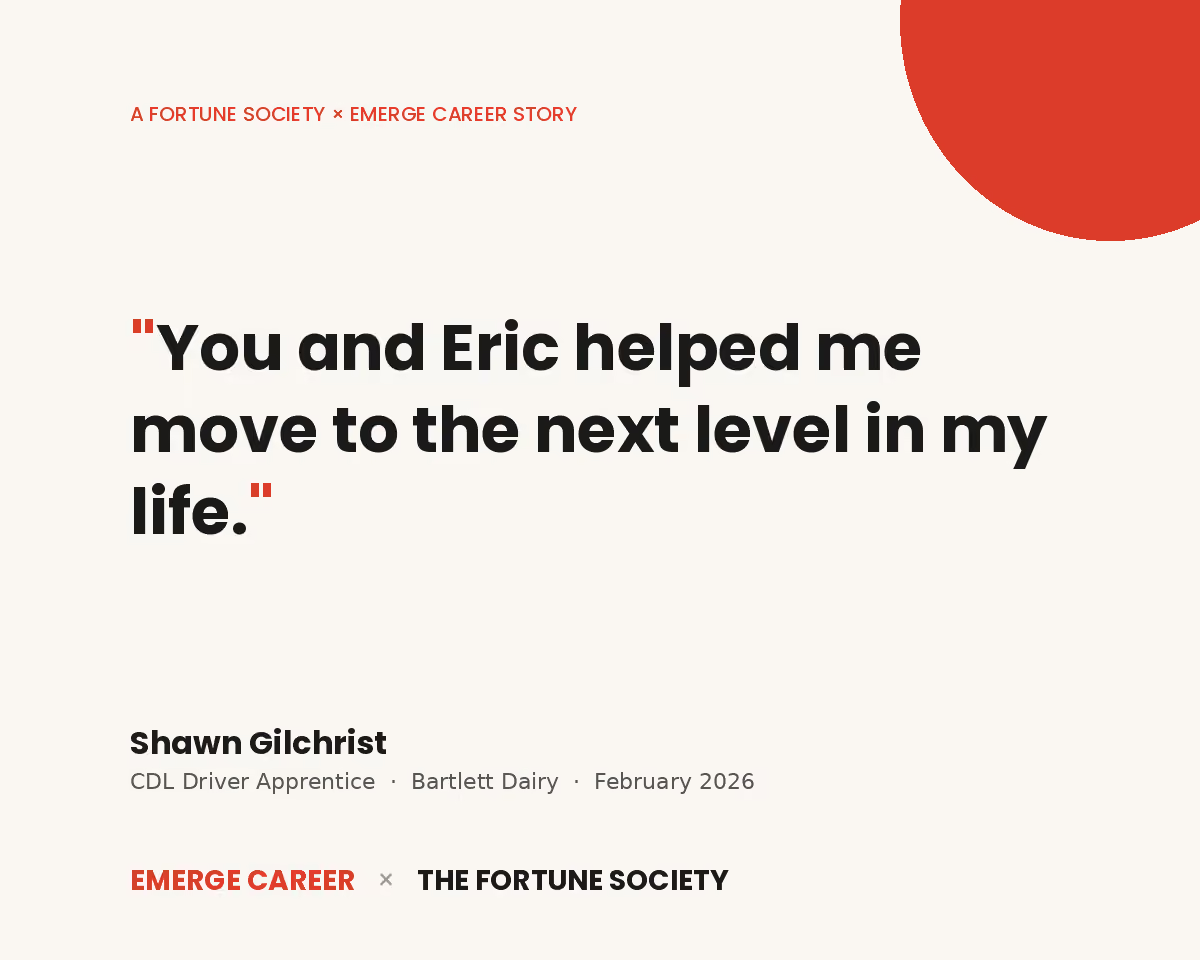
"You and Eric helped me move to the next level in my life."
That's how Shawn put it. The rest is just how it happened.
The Fortune Society
By December 22, 2025 — the day Shawn applied to our CDL program — The Fortune Society had already done the work that makes a story like this possible. Stable housing. Behavioral health support. Employment readiness. Parole compliance support. Trust with a system that had given him every reason to opt out.
This is the part of reentry that doesn't make press releases. It's also the part that determines whether anything that comes next is possible.
The Fortune Society has been doing this work in New York City for nearly six decades — housing, behavioral health, alternatives-to-incarceration programming, employment services, advocacy — and they do it better than almost anyone. Their mission, plainly stated, is Building People, Not Prisons. When Shawn was referred to us, he wasn't a candidate we had to assess for readiness. He arrived ready.
At Emerge
What the next five months looked like:
- December 22, 2025 — Applied to our CDL program
- February 7, 2026 — Licensed Class A CDL through Sunny Truck Driving School in the Bronx
- May 12, 2026 — Signed his offer letter with Bartlett Dairy
Compensation: $65,000 base plus $25.50/hour.
Five months from intake to a career.
Our part of the work is straightforward: CDL instruction at a partner driving school in the Bronx, individualized success coaching with Coach Beto Garza and Skills Trainer Eric Saito, employer matching, and 30/60/90-day support post-hire. It's good work. It's also the easy part, relative to what came before it.
After Emerge
Bartlett Dairy — the family-owned milk company that started with one truck in 1963 and now employs roughly 500 people across three locations — doesn't hire on a maybe. When they signed Shawn, they were trusting the full chain that produced him: The Fortune Society's readiness work, Emerge's training, and Shawn's own grit.
Their new 54,000-square-foot Jamaica facility brought 165 good-paying jobs back to Queens at an average wage of $70,000. Shawn is part of that homecoming.
One licensed driver, vouched for by two organizations that don't put their name on a candidate they aren't confident in.
That's the model. The Fortune Society prepares. Emerge trains. Employers like Bartlett Dairy hire. Each link is only as strong as the one before it, and the one before Emerge is the one most workforce programs skip.
What's next for the Emerge Career × Fortune Society partnership
Shawn is one of several. He won't be the last.
Over the coming months, we're scaling the referral pipeline between The Fortune Society and Emerge Career — moving from one-off success stories to a repeatable pathway that any Fortune Society client ready for a vocational career can step into.
What that looks like in practice: a clear referral process for Fortune Society case managers and employment specialists, dedicated intake support on our side, and continued coordination on the wraparound services that make outcomes like Shawn's possible.
If you're a Fortune Society client ready for what comes next — or a case manager with someone in mind — visit emergecareer.com or reach out directly. We're building this pipeline together, and we're just getting started.
#ReentryWorks #CDL #BuildingPeopleNotPrisons #NewYorkCity #WorkforceDevelopment #FortuneSociety
About Emerge Career
Emerge Career is a public-benefit corporation building the workforce development infrastructure that justice-impacted New Yorkers deserve. Through our partnership with the New York City Mayor's Office of Criminal Justice and our network of community-based partners — including The Fortune Society — we deliver Commercial Driver's License (CDL), HVAC, diesel technician, and construction trades training, with end-to-end support from intake through 30/60/90-day post-hire retention. Learn more at emergecareer.com.
About The Fortune Society
The Fortune Society was founded in 1967 and is one of the nation's most respected organizations supporting successful reentry from incarceration and promoting alternatives to incarceration. Headquartered in Long Island City, Queens, Fortune Society delivers a continuum of services — housing, behavioral health, employment, advocacy, ATI programming — that has helped hundreds of thousands of New Yorkers come home and stay home.
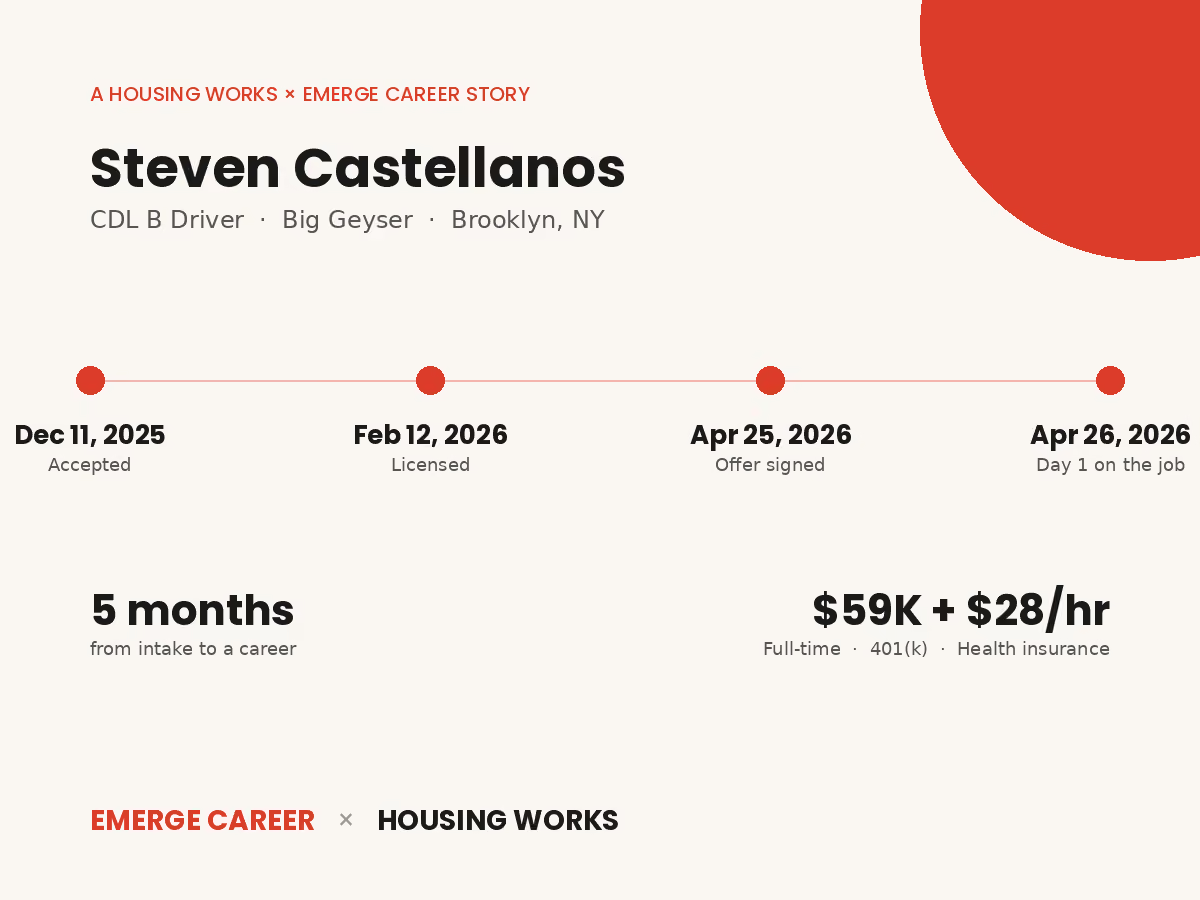
Five months from intake to a CDL career
Steven Castellanos is 42 and from Brooklyn. By the time he walked into Emerge Career last December, Housing Works had already done the hard work before the hard work — the housing, the healthcare, the readiness — that made everything downstream possible. Five months later, he's a full-time CDL B Driver at Big Geyser.
In five months, Steven Castellanos went from Housing Works intake to a full-time CDL B Driver role at Big Geyser, one of New York City's largest beverage distributors. He's earning $59,000 base plus $28/hour, with 401(k) and health insurance.
This is the story of how that happened — and why the most important part of it took place before he ever walked through our door.
Housing Works
By December 11, 2025 — the day Steven applied to our CDL program — Housing Works had already spent months building the foundation a story like this requires. Stable housing. Active healthcare. The right ID. Completion of Ready For Work, their eight-week workforce development course. A four-week internship under his belt. Trust with a system that had given him every reason to opt out.
This is the part of reentry that doesn't make press releases. It's also the part that determines whether anything that comes next is possible.
Housing Works has been doing this work in New York City for more than three decades — housing, healthcare, harm reduction, advocacy, workforce services — and they do it better than almost anyone. When Steven was referred to us, he wasn't a candidate we had to assess for readiness. He arrived ready.
At Emerge
What the next five months looked like:
- December 11, 2025 — Applied to our CDL program
- February 12, 2026 — Licensed Class A CDL through Ferrari Driving School in Brooklyn
- April 25, 2026 — Signed his offer letter with Big Geyser
- April 26, 2026 — First day on the job
Compensation: $59,000 base plus $28/hour, with 401(k) and health insurance.
Two months from license to first paycheck. Five months from intake to a career.
Our part of the work is straightforward: CDL instruction at a partner driving school, individualized success coaching, employer matching, and 30/60/90-day support post-hire. It's good work. It's also the easy part, relative to what came before it.
After Emerge
Big Geyser — the family-owned NYC distributor behind Snapple, Arizona, and most of the beverages in your bodega — doesn't hire on a maybe. When they signed Steven, they were trusting the full chain that produced him: Housing Works' readiness work, Emerge's training, and Steven's own grit.
One licensed driver, vouched for by two organizations that don't put their name on a candidate they aren't confident in.
That's the model. Housing Works prepares. Emerge trains. Employers like Big Geyser hire. Each link is only as strong as the one before it, and the one before Emerge is the one most workforce programs skip.
What's next for the Emerge Career × Housing Works partnership
Steven is the first. He won't be the last.
Over the coming months, we're scaling the referral pipeline between Housing Works and Emerge Career — moving from one-off success stories to a repeatable pathway that any Housing Works participant ready for a vocational career can step into.
What that looks like in practice: a clear referral process for Housing Works case managers, dedicated intake support on our side, and continued coordination on the wraparound services that make outcomes like Steven's possible.
If you're a Housing Works participant ready for what comes next — or a case manager with someone in mind — visit emergecareer.com or reach out directly. We're building this pipeline together, and we're just getting started.
#ReentryWorks #CDL #NewYorkCity #WorkforceDevelopment #HousingWorks
About Emerge Career
Emerge Career is a public-benefit corporation building the workforce development infrastructure that justice-impacted New Yorkers deserve. Through our partnership with the New York City Mayor's Office of Criminal Justice and our network of community-based partners — including Housing Works — we deliver Commercial Driver's License (CDL), HVAC, diesel technician, and construction trades training, with end-to-end support from intake through 30/60/90-day post-hire retention. Learn more at emergecareer.com.
About Housing Works
Housing Works is a healing community of people living with and affected by HIV/AIDS, committed to ending the dual crises of AIDS and homelessness through relentless advocacy, the provision of lifesaving services, and entrepreneurial businesses that sustain its efforts. Its workforce development programs — including Ready For Work — provide New Yorkers with the foundation for sustainable careers.
Building the AI That Builds Second Chances
What happens when the people building AI tools for workforce development are also people who would have been served by them? A note from inside my first month as Emerge Career's RFP Lead.
Liz Phillips is RFP Lead at Emerge Career.
Last week our team had something we call Claude & Tell — an internal show-and-tell where someone walks the rest of us through what they've been building with AI. It was my turn. I demoed the custom skills I've been writing in Cowork to automate the RFP work I now own. One of my colleagues said something I haven't been able to put down since: that's an Emerge journey story; you should write about it.
So I'm writing about it.
Two years ago, I applied for this job at Emerge Career. They said no.
How I got here
I spent five years in prison. While I was there, I went to college through Ashland University, took notes by hand, and wrote my essays on a tiny keyboard hooked into a tablet on weekends and at night.
I also had a tech job inside — Televerde, a company that operates call centers inside U.S. prisons. One of the only websites we could reach on the work terminals was Fortune.com. That's where I first read about ChatGPT. An officer walked past while I was doing my schoolwork one day and said, “Too bad you guys are in here doing school the hard way — now there's ChatGPT.” He meant it as a joke. I took it as a tip.
When I came home, I used the only tool I'd started to understand. I used ChatGPT to write my resume, to prep for interviews, to structure my thinking when I sat down to apply for jobs.
In March 2024, I applied for a state engagement role at Emerge Career. I used ChatGPT to draft my work trial. The role went to someone else — the candidate they hired had “more extensive experience in the government sector and RFP writing.”
I came back in July 2024 as a business development rep. In my first year on the team, I went from booking meetings to running the full RFP cycle — sourcing, qualifying, writing, pricing, submitting. I taught myself the things that, two years earlier, had been the reason I didn't get the role: indirect rates, cost narratives, MOAs. I helped win multi-year contracts in our key states.
This month, I was promoted to RFP Lead. The function I'd been told I wasn't ready for two years ago is now mine to run.
What I'm building now
I used to spend Sunday nights writing the Monday priorities brief by hand, working through our tracker line by line, deciding what to flag for the team huddle. I don't anymore.
Inside Cowork, I've built a set of custom skills that handle the parts of my job that used to live in a notebook and in my own head. Scoring new opportunities against our fit framework before we waste a week on a bad one. Pulling structured compliance checklists out of 80-page solicitations in about a minute. Drafting technical narratives from anchor language in our prior winning proposals across Massachusetts, New York, California, and Colorado. Deep research agents prospect employer partners and CBOs while I sleep.
What these skills replace is the part of the work that wasn't really the work — the formatting, the cross-referencing, the where did I save that section tax. What I get back is the time to do the actual job: building the right partnerships in the right states for the right opportunities, and making sure our proposals tell the truth about what we can deliver for justice-involved learners across CDL, HVAC, diesel tech, and construction trades.
A question worth sitting with
When we talk about who's using AI to solve workforce problems, we usually mean the people at the top of the org chart. What happens when the people building the tools are also people who would have been served by them?
I notice it in the small decisions. The eligibility gates I weighted heavily in our scoring framework came from places I personally know cost real time. The defaults I wrote for partner outreach assume our learners are workers, not statistics. None of that is unique to me, but it isn't accidental either. I'm one of a small number of people writing these kinds of skills who has worked from both sides of this work.
This July, I'll be in Washington, D.C. as a Jobs for the Future fellow, joining a workshop on workforce legislation across Massachusetts, California, and Arizona. The week ends with a day on Capitol Hill. I'm going because the people writing workforce policy are still mostly not the people the policy is for. That's a gap I want to help close.
The work is the same
Emerge Career trains justice-involved people for CDL, HVAC, diesel tech, and construction trades careers across Massachusetts, New York, California, and Colorado. I'm one of those people.
The first time I applied here, I was using AI to keep up with a world that had moved without me. I'm still using AI to keep up. The difference is that what I'm keeping up with now is the work — not the world.
The tools are different now. The work is the same.
— Liz Phillips, RFP Lead, Emerge Career
If you're an employer, workforce board, CBO, or funder thinking about what a partnership with Emerge Career could look like, we'd love to hear from you. Reach out through emergecareer.com.

How Much Does CDL Training Cost? The Real Price Breakdown for 2026
CDL training costs $3,000 to $10,000 at most schools. But government-funded programs, community colleges, and company-sponsored options can cut that to zero. Here's what each path actually costs and what you give up in return.
Most CDL training programs cost between $3,000 and $10,000 out of pocket. Some cost nothing. The difference depends on who's paying, what strings are attached, and whether you know where to look. This guide breaks down every option so you can compare them honestly.
The short answer
A Class A CDL will run you $3,000 to $10,000 at a private school. Community colleges charge less, usually $1,500 to $5,000. Company-sponsored programs cost $0 upfront but come with contracts. And government-funded programs, like the one we run at Emerge Career, are free with no contract, no payback, no catch.
That range is wide enough to be useless on its own. So here's what actually matters: what you're paying for, what you're giving up, and what you're getting in return.
Option 1: Government-funded programs ($0)
Programs funded by city, state, or federal agencies cover the full cost of CDL training for eligible participants. No tuition. No repayment. No employment contract.
Emerge Career is one of these. We're funded by the NYC Mayor's Office of Criminal Justice and train students for a Class A CDL at zero cost. That includes permit prep, skills training, DOT physicals, and job placement support. Graduates land jobs averaging $77K in annual salary.
Similar programs exist through WIOA (Workforce Innovation and Opportunity Act), which funds CDL training through local American Job Centers in every state. If you're unemployed, underemployed, or recently laid off, WIOA can cover 100% of tuition, testing fees, and sometimes even your DOT physical. It's a grant, not a loan. You don't pay it back.
The catch with most government-funded programs is availability. WIOA funding depends on your local workforce board. Some regions have long waitlists. Others don't list CDL training on their approved provider list. You have to call your local American Job Center and ask.
Programs like Emerge are even more specific. Ours serves people with justice involvement in New York City. Other cities and states run similar programs, but they're not everywhere yet.
Who this works for: Anyone eligible. If you qualify for a free program, take it. You get trained, you owe nothing, and you pick your employer.
Option 2: Community college CDL programs ($1,500 to $5,000)
Community colleges offer the second-cheapest path. In-state tuition for a Class A program typically falls between $1,500 and $3,500, though some run higher depending on the state. They're accredited, which means you can use financial aid (Pell Grants, WIOA vouchers) to offset or eliminate costs.
Community college programs tend to run longer (8 to 16 weeks vs. 3 to 4 at a private school). That slower pace means more seat time behind the wheel. Most public programs train on manual transmissions, which gives you an unrestricted license. That matters. An automatic-only restriction limits which carriers will hire you.
The downsides: waitlists. Popular programs fill up months in advance. Start dates are fixed to the academic calendar. And the scheduling is less flexible than a private school.
Who this works for: People who have time, want to keep costs low, and don't mind waiting for a seat.
Option 3: Private CDL schools ($3,000 to $10,000)
Private schools are the fastest route. Most programs run 3 to 8 weeks. You pick a start date, show up, train, and test. Class A programs cluster around $4,000 to $7,000, with some in high-cost markets (California, the Northeast) reaching $10,000.
The speed is the selling point. If you need a CDL fast and can pay upfront, private schools get you there. Many also partner with carriers for tuition reimbursement after graduation, which brings the effective cost down.
Quality varies. A lot. Some private schools pack classrooms and limit your actual driving time. Others run small cohorts with strong instructor ratios. Before you sign up, ask three questions: How many hours of behind-the-wheel time will I get? What's the student-to-instructor ratio? And do you train on manual or automatic?
Who this works for: People who can pay (or finance) upfront and want speed. Best when paired with a tuition reimbursement deal from a carrier.
Option 4: Company-sponsored training ($0 upfront, but read the contract)
Large trucking carriers like Swift, Werner, CRST, and C.R. England may offer CDL training at no upfront cost. They cover tuition, sometimes housing and meals, and guarantee you a job at graduation.
In exchange, you sign a contract. Typically 12 to 24 months. If you leave before the contract ends, you owe the full or prorated training cost. That repayment can run several thousand dollars. Some contracts include interest. Some carriers report contract breaches to DAC (the trucking industry's background check database), which can follow you to future employers.
The other cost is less visible. Company-sponsored drivers typically start at lower pay rates than graduates who trained independently. Over a full year, that gap can add up to tens of thousands in lost earnings. The training is "free" on paper, but you pay for it through reduced wages and restricted job mobility.
This isn't a scam. For someone with no savings, no access to WIOA, and no other way in, company-sponsored training is a real path into the industry. But you should read the contract line by line. Know the repayment terms. Know the minimum pay. Know what happens if you get hurt, get fired, or just can't stand the job.
Who this works for: People who have no other funding option and are comfortable committing to one carrier for a year or more.
The costs nobody talks about
Tuition is the headline number, but it's not the only number. Budget for these regardless of which path you choose:
- DOT physical: $75 to $150 (required before you can get your permit)
- Drug screening: $30 to $100
- Commercial Learner's Permit (CLP): $10 to $100 depending on the state
- CDL skills test fee: $50 to $250
- CDL license issuance: $20 to $120
- Endorsements (HazMat, tanker, doubles/triples): $5 to $100 per endorsement, plus possible background check fees
Total for fees alone: somewhere between $200 and $700 for most people.
Some programs bundle these into tuition. Some don't. Ask before you enroll.
How to figure out which option is available to you
Start here:
Check if you qualify for a government-funded program in your area. If you're in New York City with justice involvement, Emerge Career is free and has no contract. For everywhere else, search for your local American Job Center at CareerOneStop.org and ask about WIOA-funded CDL programs.
If no funded program is available, look at community colleges in your state. Check whether they're on the WIOA Eligible Training Provider List, which could let you use workforce grants to cover tuition.
If you need to move fast and can afford it, compare private schools. Prioritize programs with manual transmission training, high behind-the-wheel hours, and carrier partnerships for tuition reimbursement.
If none of the above work, then evaluate company-sponsored programs. Compare contracts from multiple carriers. Don't sign the first one a recruiter puts in front of you.
The math that matters
A CDL Class A driver can expect to earn $50,000 to $80,000 in their first year, with experienced drivers and specialized endorsement holders earning six figures. Even at the high end of training costs ($7,000 to $10,000 at a private school), most drivers recoup their investment within a few months of steady work.
At the low end, including free programs, the ROI is immediate. You spend nothing. You earn a credential. You start working.
The real question isn't whether CDL training is worth the money. It is. The question is whether you're paying more than you need to.
Free Job Training Programs in NYC: What's Actually Worth Your Time
There are hundreds of free job training programs in New York City. Most can't tell you how many graduates got jobs. Here's how to sort the real ones from the rest.
There are hundreds of "free job training programs" in New York City. Google it and you'll get a list from a city agency page that hasn't been updated since 2023, a library guide with 40 phone numbers and no context, and a handful of program websites that all say the same thing: "free training, career support, job placement assistance."
None of that tells you whether the program works.
So here's a different kind of guide. I'm going to walk you through the major categories of free training in NYC, who funds them, what they actually train you to do, and the one question you should ask every single program before you enroll.
The question
Does this program publish its job placement rate?
Not "we help with job placement." Not "career services available." A number. What percentage of people who started this program ended up in a job in that field? And what do those jobs pay?
If a program can't answer that, or won't, that's information.
How NYC's free training landscape breaks down
The city's free programs cluster into four broad categories: commercial driving and transportation, tech, healthcare, and construction trades. The funding, the program structures, and the outcomes vary wildly across them.
Commercial driving (CDL)
CDL training puts you behind the wheel of a commercial truck or bus. The training is short (weeks, not months), the jobs pay well, and demand for drivers has been high for years.
Programs to know:
Emerge Career (Next Mile NYC) -- Funded by the Mayor's Office of Criminal Justice (MOCJ). Free CDL Class A training for justice-involved and housing-insecure NYC residents. Self-paced online permit prep, then in-person driving instruction through partner schools citywide. Publishes outcomes: graduates have earned average starting salaries of $80K, with some reaching six figures. The program grew from a 20-person pilot to serving hundreds of participants. Eligibility requires justice system involvement and NYC residency.
Red Hook on the Road (Brooklyn Workforce Innovations) -- Free four-week CDL program: one week classroom, three weeks behind the wheel. Open to unemployed New Yorkers. Trains roughly 25 people per month. Graduates get placed into school bus, coach bus, Access-A-Ride, and truck driving jobs. Two years of post-placement career coaching included. BWI is one of the most respected workforce orgs in the city.
Commonpoint (Bronx) -- DYCD-funded CDL program in the Bronx for ages 18-40. Includes free CDL license, paid work experience, and job placement assistance.
SBS Workforce1 Industrial and Transportation Career Center -- The city's own pipeline. SBS partners with training providers to offer no-cost CDL and commercial driving courses through the Workforce1 system. You'll need to register as a Workforce1 member.
Tech
Tech training programs have exploded in NYC over the past decade. Most are bootcamp-style: full-time, several weeks to a few months, focused on getting you a certification and into an entry-level role.
Programs to know:
Per Scholas -- Headquartered in the South Bronx, now in 25+ cities. Free full-time training in cybersecurity, software engineering, cloud DevOps, data engineering, and more. Per Scholas is one of the few programs in the city with independent, federally funded research backing its outcomes. An MDRC study found that participants earned significantly more than a control group. The organization reports that over 80% of graduates find jobs within a year. They've trained over 30,000 people nationally. The bar to entry includes an assessment exam and interview. This is a rigorous program, not a rubber stamp.
NPower -- Free tech training for young adults (18-25) and military veterans. Programs in cybersecurity, cloud computing, and IT. Operates in NYC and nationally.
Pursuit -- Free, intensive software engineering fellowship based in Long Island City. Longer commitment (about a year) with a post-placement income share agreement. Strong alumni network and employer partnerships.
Healthcare
Healthcare is the largest employment sector in NYC. The free training options here are plentiful, but the range in quality is wide.
Programs to know:
1199SEIU / CHCA (Cooperative Home Care Associates) -- Free HHA/PCA training through the union and its affiliated agencies. CHCA runs a four-week dual PCA/HHA training program in the Bronx that leads directly to employment. This is one of the most established healthcare pipelines in the city.
SBS Workforce1 Healthcare Career Center -- Operates in partnership with the New York Alliance for Careers in Healthcare (NYACH). Offers no-cost CNA, HHA, and other healthcare credential programs. Available across the five boroughs.
Commonpoint (Queens and Bronx) -- Runs CNA and EKG/Phlebotomy training through DYCD funding for ages 18-40. Includes paid work experience and job placement.
Selfhelp Community Services -- Free HHA and PCA training in English, Spanish, and Russian, with jobs offered to graduates directly through Selfhelp's home care operations.
The reality of healthcare training in NYC: many of the free HHA programs are run by home care agencies that will train you for free on the condition that you work for them after certification. That's not necessarily a bad deal. But it means your "free training" comes with strings. Ask about them upfront.
And know what you're signing up for economically. HHA starting wages in NYC sit around $19/hour. That's a living, but it's a tight one in this city. CNA and phlebotomy certifications open slightly higher-paying doors in clinical settings.
Construction trades
Construction training in NYC is shaped by two forces: the city's building boom and Local Law 196, which requires Site Safety Training (SST) cards for workers on large job sites.
Programs to know:
Construction Skills (CSKILLS) -- Pre-apprenticeship program that's been running since 2001. Places NYC residents into union apprenticeships through the Building and Construction Trades Council. Has placed over 2,500 people. 90% of participants come from communities of color across the five boroughs.
SBS Construction Site Safety Training -- Free 40-hour SST training for NYC residents 18+. This is the baseline credential you need to work on most large construction sites in the city.
Building Skills NY -- Partners with LaGuardia CC, Bronx CC, and City Tech on Construction Career Accelerator classes. Free training in skilled trades through a DOL-supported initiative.
Nontraditional Employment for Women (NEW) -- Prepares and places women in careers in construction, utility, and maintenance trades. One of the only programs in the city specifically designed for women entering the trades.
Helmets to Hardhats and various union apprenticeship programs -- If you're a veteran, there are direct pathways into union construction apprenticeships. Most pay you while you train.
How the money works
Free training programs in NYC are funded through a patchwork of city, state, and federal sources. Knowing who's paying matters because it affects who's eligible and how the program is structured.
MOCJ (Mayor's Office of Criminal Justice) -- Funds reentry-focused programs. Eligibility typically requires justice system involvement.
SBS (Small Business Services) -- Runs the Workforce1 system and Individual Training Grants (ITGs). Broad eligibility: NYC residents looking for work or earning under $91K/year.
DYCD (Department of Youth and Community Development) -- Funds youth and young adult programs, usually ages 18-24 or 18-40 depending on the contract.
WIOA (Workforce Innovation and Opportunity Act) -- Federal money that flows through state and local workforce boards. Funds ITGs and many of the programs listed above.
Employer-sponsored -- Some programs (especially in healthcare and tech) are funded directly by the employers who will hire graduates.
What to actually ask before you enroll
Five questions. Any good program should answer all of them without hesitating.
- What percentage of people who start this program finish it?
- What percentage of graduates get a job in this field within six months?
- What's the average starting salary or hourly wage?
- Is the program full-time? Can I work while enrolled?
- What happens after I graduate? Is there career coaching, job placement, follow-up?
If a program gives you vague answers, deflects to testimonials, or says "it depends," keep looking. The programs that work know their numbers and share them.
The bottom line
NYC has real, well-funded programs that train people for real jobs. The problem isn't supply. It's navigation. The city's workforce system is fragmented across agencies, boroughs, and funding streams, and the information online is a mess.
This guide isn't exhaustive. Programs change, new cohorts open, eligibility shifts. But the framework holds: pick a vocation with clear demand, find a program with published outcomes, and ask the hard questions before you commit your time.
If you're considering CDL training and you're eligible, Emerge Career is actively enrolling for Next Mile NYC. The application takes less than 10 minutes.
Jonathan Pierre is a Program Manager at Emerge Career, a free CDL training program funded by the NYC Mayor's Office of Criminal Justice. He runs growth and recruitment operations across New York City.
What Jobs Can You Get with a CDL Class A License? Salary, Hours, and Career Paths
A CDL Class A opens more doors than most four-year degrees. The average starting salary for Emerge graduates is $77K. Here's what the actual career paths look like, from OTR trucking to municipal government jobs.
What Jobs Can You Get with a CDL Class A License? Salary, Hours, and Career Paths
A CDL Class A opens more doors than most four-year degrees. The average starting salary for Emerge graduates is $77K. No student loans. No unpaid internships. And the career paths from here are wider than most people realize.
The Class A license is the top-tier commercial driver's license. It lets you operate any combination vehicle with a gross weight rating above 26,001 pounds, which covers the majority of trucking and heavy vehicle jobs in the country. What you do with it from there depends on what kind of life you want to build.
Over-the-Road (OTR) Trucking
This is what most people picture when they think CDL. Long-haul routes, cross-country freight, days or weeks on the road.
OTR pays well. Nationally, Class A drivers earn $60K to $95K, with top earners clearing six figures. In the New York metro area, averages run closer to $80K. Major carriers like J.B. Hunt, Swift, and Schneider hire aggressively and often take new CDL holders right out of training.
The tradeoff is time. OTR drivers are typically out 2 to 3 weeks at a stretch, home for a few days, then back out. It works well for people without caregiving obligations or who want to stack income fast. Many drivers use OTR as a launchpad: drive hard for a year or two, build experience, then pivot to a local or regional route.
Time to first paycheck: Fast. Some carriers will hire you before you finish training.
Local and Regional Delivery
If you want to sleep in your own bed every night, local delivery is the move. Think FedEx Freight, XPO, UPS Freight, Sysco, and dozens of regional carriers.
Pay ranges from $55K to $85K depending on the employer, route, and metro area. Hours are more predictable: early mornings are common (4 or 5 AM starts), but you're home by afternoon or early evening. Some routes are Monday through Friday. Regional runs might have you out for 2 to 3 days at a time, but never more than that.
This is the most common path for Emerge graduates. It combines strong pay with a schedule that lets you live a normal life.
Time to first paycheck: 1 to 4 weeks after getting your CDL, depending on the employer's onboarding process.
Tanker and Hazmat
This is where the money starts climbing. Hauling fuel, chemicals, or other hazardous materials requires additional endorsements on your CDL (a tanker endorsement, a hazmat endorsement, or both). Those endorsements involve extra written tests and a TSA background check for hazmat.
The extra barrier to entry is exactly why it pays more. Tanker/hazmat drivers earn $65K to $100K nationally. Experienced drivers in high-demand areas regularly clear $100K.
Companies like Kenan Advantage Group, Coastal Plains Trucking, and CP Energy Transportation are always looking. The work is steady because fuel and chemicals move regardless of economic cycles.
Time to first paycheck: A few months after your CDL, once you've earned your endorsements and found a carrier willing to train you on tanker operations.
Municipal and Government Jobs
This is the path people sleep on. City and state agencies need CDL holders, and the benefits packages are hard to beat.
MTA (Bus Operator): The New York MTA starts bus operators around $29/hour, scaling to $41/hour by year six. With overtime and differentials, total compensation often exceeds $90K. You also get a pension, full health insurance, and paid time off. The MTA runs a civil service exam process, so there's a wait, but the job security is real.
DSNY (Sanitation Worker): New York's Department of Sanitation starts workers around $45K to $48K, but pay scales to over $92K by year 5.5. With overtime (especially during snow season), the average experienced sanitation worker takes home around $117K. Top earners clear $150K. Add the pension, and this is one of the best total compensation packages available to someone without a college degree in New York City.
Other municipal CDL jobs include school bus drivers, city maintenance vehicle operators, and water/wastewater utility drivers. These vary by city and county but consistently offer stability, benefits, and retirement plans that the private sector rarely matches.
Time to first paycheck: Longer. Civil service exams, background checks, and hiring lists mean 6 to 18 months from application to start date. Plan accordingly.
Owner-Operator
This is the entrepreneurial path. You buy or lease your own truck, find your own loads (or contract with a carrier), and run your own business.
The gross revenue numbers look massive: owner-operators commonly gross $200K to $350K per year. But the net is a different story. After fuel, insurance, truck payments, maintenance, and taxes, most solo owner-operators take home $60K to $90K. Some do much better. Some don't survive the first two years.
This is not a year-one play. It requires at least 1 to 2 years of driving experience, significant capital or good financing, and the discipline to run a small business. But for drivers who build toward it, it's the highest-ceiling path on this list.
Time to first paycheck: 2 to 3 years from CDL, realistically. You need experience and capital first.
How to Think About This
The CDL Class A is a platform, not a destination. Your first job won't be your last. The most common progression looks something like this:
- Get your CDL and land a local or OTR job immediately
- Drive for 1 to 2 years, build experience, save money
- Pick up additional endorsements (tanker, hazmat, doubles/triples) to unlock higher-paying roles
- Move into specialized freight, municipal work, or owner-operator status
The starting line is the same for everyone. Where you go from there is up to you.
Emerge Career is a free CDL Class A job training program in New York City. 89% of our students graduate. 92% get placed in jobs. The average starting salary is $77K. If you or someone you know is interested, apply here.
How to Get a CDL in NYC with a Criminal Record
A felony doesn't disqualify you from getting a CDL in New York. Federal law is clear on this. Here's the NYC-specific guide to eligibility, the CLP process, and the realistic timeline from application to first paycheck.
A felony doesn't disqualify you from getting a CDL in New York. But nobody tells you that until you've already given up.
We train hundreds of justice-involved New Yorkers a year at Emerge Career. Most of them believed, at some point, that their record made a CDL impossible. It doesn't. The rules are specific, the process is clear, and the timeline from start to first paycheck is shorter than most people think.
Here's the real deal.
What actually disqualifies you (and what doesn't)
Federal law (FMCSA, 49 CFR 383.51) controls CDL eligibility. The FMCSA has said it directly: a felony conviction does not prohibit a driver from operating a commercial motor vehicle unless the offense involved the use of a motor vehicle.
That means assault, theft, drug possession (not involving a CMV), burglary, fraud, and most other felony convictions do not automatically bar you from a CDL. Period.
What does disqualify you:
- Using any motor vehicle to commit a felony (1 year for first offense, lifetime for second)
- Using a CMV to manufacture or distribute controlled substances (lifetime, no reinstatement)
- DUI/DWI while operating a CMV (1 year, 3 years if hauling hazmat)
- Leaving the scene of an accident involving a CMV
- Causing a fatality through negligent CMV operation
New York follows the federal minimums on these. The NY DMV can also deny your application if your license is currently suspended or revoked, but that's a separate issue from your criminal record (more on that below).
If your conviction doesn't involve a vehicle, you're eligible. Full stop.
The suspended license question
This is where it gets tricky for a lot of people. Your felony might not bar you from a CDL, but if you have a suspended or revoked license in New York, you need to clear that first.
Common reasons for suspension: unpaid tickets, unpaid child support, failure to appear in court, DWI-related revocations, lapsed insurance. Some of these are fixable in a single DMV visit. Others take longer.
Steps to clear a suspension in New York:
- Check your record through MyDMV (dmv.ny.gov) or call (518) 474-0774
- Resolve the underlying issue (pay fines, file paperwork, complete any required programs)
- Pay the suspension termination fee ($50 for most definite suspensions, $100 for Zero Tolerance violations)
- If revoked, apply for restoration through the DMV Driver Improvement Unit
If your CDL and non-CDL privileges are both revoked, you restore the non-CDL first, then the CDL at the end of its revocation period. You'll need to go to a NY DMV office in person to get your CDL back; that part can't be done online.
Bottom line: a suspended license is a speed bump, not a dead end. But you have to deal with it before starting the CDL process.
The actual steps: CLP to CDL in NYC
Here's the timeline, roughly 8 to 12 weeks from zero to hired.
Step 1: DOT physical
You need a medical certificate (Form MCSA-5876) from a certified examiner on the FMCSA National Registry. The exam covers vision (20/40 each eye), hearing, blood pressure, and general fitness.
In NYC, Emerge partners with CityMD for DOT physicals. Walk in, get examined, walk out with your medical card. No appointment hassle, no navigating the system blind.
Step 2: Get your CLP (Commercial Learner's Permit)
Go to a NY DMV office. You'll need:
- A valid NY Class D license (or restored license, if previously suspended/revoked)
- Your DOT medical certificate
- 6 original proofs of identity with current address
- $10 application fee
You'll take the general knowledge written test (50 multiple-choice questions) plus any endorsement tests you want. Study the NY CDL Manual (CDL-10), available free online from the DMV.
Pass the test, and you walk out with your CLP the same day. You must hold the CLP for at least 14 days before you can take the road skills test.
Step 3: Complete ELDT (Entry-Level Driver Training)
Federal law requires all new CDL applicants to complete an approved ELDT program. At Emerge, the Class A training program is free and funded by the NYC Mayor's Office of Criminal Justice. It covers classroom instruction, behind-the-wheel hours, and job placement support.
Step 4: Pass the CDL skills test
Three parts: pre-trip vehicle inspection, basic vehicle control, and on-road driving. You'll schedule this through the NY DMV online system. The fee is $40, and you'll test in the vehicle class you're applying for.
Pass, and you get a temporary CDL on the spot. Your permanent card arrives by mail in 3 to 4 weeks.
Step 5: Get hired
Class A CDL holders in New York are averaging $77,000/year. The driver shortage is real, and it's not slowing down. Emerge's job placement rate is 92%.
"Will my PO approve this?"
Short answer: almost always yes. CDL training is exactly the kind of program probation and parole officers want to see. It's structured, it has clear employment outcomes, and it keeps you on track. Many of our students are referred by their POs, or get written support from them during the program.
If you need documentation for your PO, courts, or benefits office, Emerge provides enrollment verification letters.
"Do employers actually hire people with records?"
Yes. Trucking companies are short roughly 80,000 drivers nationally, and the gap keeps growing. Many carriers have adopted fair-chance hiring policies. Some specifically recruit from reentry programs.
At Emerge, 92% of graduates land jobs. Our average starting salary is $77,000. These are not charity placements. Employers hire our graduates because they're trained, tested, and DOT-certified.
The background check process varies by employer. Most carriers care about driving-related offenses far more than unrelated felonies. Some have look-back windows (typically 3 to 7 years). A few won't touch certain convictions at all. The honest answer is that not every company will say yes. But enough will that employment is not the bottleneck.
"What if I want to haul hazmat?"
Hazmat endorsements require TSA background checks and fingerprinting. Certain felony convictions (including espionage, treason, sedition, terrorism-related offenses, and others on the TSA's disqualifying crimes list) will prevent you from getting hazmat clearance. For most CDL holders with records, this endorsement is the one real limitation. The good news: plenty of high-paying CDL jobs don't require hazmat.
The realistic timeline
Week 1-2: DOT physical, clear any license issues, study for CLP
Week 2-3: Take and pass the CLP written test at a NYC DMV
Week 3-10: Complete ELDT training (at Emerge, this is a free program)
Week 10-12: Pass CDL skills test, start interviewing, get hired
Some students move faster. Some need more time on license restoration or test prep. But 8 to 12 weeks from start to job offer is realistic for most people.
What to do right now
- Check if your NY license is valid or suspended (dmv.ny.gov or call 518-474-0774)
- Look up your conviction. If it didn't involve a motor vehicle, you're eligible for a CDL.
- Apply to Emerge Career at emergecareer.com. The program is free. We'll help you get your DOT physical, prep for the CLP, train for the skills test, and place you in a job.
A record doesn't erase your ability to drive a truck, earn $77K, and build a career. The federal government says so. We've helped hundreds of people prove it.
How to Get a CDL in New York (2026): Permit, Training, and Job Placement Guide
Getting a CDL in New York takes 8 to 12 weeks if you know the steps. Most people don't. Here's the full path from permit to paycheck, specific to New York State.
What you actually need before you start
You need a valid New York State driver license (Class D, E, or Non-CDL C). You need to be at least 18. And you need to be a U.S. citizen or lawful permanent resident. NY DMV offices are currently unable to process CLP applications for temporary visitors following a federal rule change in early 2026.
If you're 18 to 20, you can get a Class A CDL through the federal Young Adult Training Program, but you're limited to driving within New York State only and need at least 300 hours of supervised behind-the-wheel training.
Interstate driving (crossing state lines) requires you to be 21 or older. So does hauling hazardous materials.
Step 1: Pass the DOT physical
Before you touch anything at the DMV, get your DOT physical. This is a medical exam conducted by a certified examiner listed on the FMCSA's National Registry. It checks vision (20/40 in each eye), hearing, blood pressure, and overall fitness to operate a commercial vehicle.
The exam costs $75 to $150 depending on the provider. In NYC, CityMD locations offer DOT physicals as walk-ins. You can also search the FMCSA registry at nationalregistry.fmcsa.dot.gov to find a certified examiner near you.
One thing to know: New York is one of the states still on paper-based medical certification (not yet on the NRII electronic system as of early 2026). Keep a copy of your Medical Examiner's Certificate. You'll need it.
The DOT physical is valid for 24 months.
Step 2: Study for the CLP exam
The Commercial Learner's Permit (CLP) is your written test. For a Class A CDL (tractor-trailers), you need to pass three knowledge tests:
- General Knowledge (50 questions, 80% to pass)
- Combination Vehicles (25 questions, 80% to pass)
- Air Brakes (25 questions, 80% to pass)
All three are taken at a NY DMV office. The application fee is $10, which covers all written tests taken the same day. If you don't pass one and come back another day, that's an extra $5.
Once you pass a section, it's done. You don't retake it. You get unlimited attempts on any section you haven't passed yet, though the DMV may limit how many times you can test in a single day.
Tests are available in English, Spanish, Chinese, and Russian.
Study the official New York CDL Manual (CDL-10). It's free from the DMV website or any DMV office. The general knowledge section alone covers vehicle inspection, cargo handling, traffic laws, hazardous conditions, and federal regulations. It's dense. Give yourself two to three weeks of focused study.
If you're in NYC, Emerge Career runs free weekly Study Hall sessions in Harlem, the Bronx, Brooklyn, and Queens where you can prep for the permit exam with other students and a coach. More on that below.
Step 3: Get your CLP at the DMV
Walk into a NY DMV office (no appointment needed for written tests, but check your local office), bring your documents, and take the tests.
What to bring:
- Your current NY driver license
- Proof of U.S. citizenship or lawful permanent residency
- Your DOT Medical Examiner's Certificate
- $10 application fee
Pass the tests and you'll walk out with a CLP valid for 12 months. The clock starts ticking: you have 12 months to complete training and pass your skills test, or you retake everything.
You must hold the CLP for at least 14 days before you can schedule a road test. Use that time to start training.
Step 4: Complete Entry-Level Driver Training (ELDT)
Federal law requires all new CDL applicants to complete Entry-Level Driver Training through a program registered on the FMCSA Training Provider Registry (TPR). No exceptions.
ELDT has two components: theory (classroom) and behind-the-wheel. You cannot schedule your skills test until your training provider reports your completion to the TPR.
Your training options in NYC
Emerge Career (Free)
Emerge is a free CDL Class A job training program based in New York City, funded by the NYC Mayor's Office of Criminal Justice. The program covers ELDT, permit prep, DOT physical coordination, and job placement after graduation. 89% graduation rate. 92% job placement rate. Average starting salary for graduates: $77K. If you qualify, you pay nothing. emergecareer.com/nyc
Private CDL schools ($4,000 to $8,000+)
NYC and the surrounding area have dozens of private CDL training schools. Costs range widely. Some offer financing, some don't. Quality varies. Check the FMCSA Training Provider Registry to make sure any school you're considering is actually registered. If they're not on the TPR, their training doesn't count.
Community colleges
A few SUNY and CUNY-adjacent programs offer CDL training, typically at lower cost than private schools but with longer timelines.
Step 5: Pass the CDL skills test
The skills test has three parts:
- Pre-trip vehicle inspection. You walk around the vehicle and explain every component you're checking and why. The examiner has a checklist. You can bring the CDL Vehicle Inspection Memory Aid (pages 11-12 of the CDL manual) to the test.
- Basic controls. Straight-line backing, offset backing, and parallel parking with a tractor-trailer in a controlled area.
- Road test. Driving on public roads with the examiner. Left turns, right turns, lane changes, highway merging, downshifting, general vehicle control.
Schedule through the DMV Road Test Scheduling System. The road test fee is $40. If you need to reschedule, do it at least 3 days in advance or you lose the fee.
Road test locations vary, and your training program will typically prep you on which site you'll test at and what to expect there.
Step 6: Get your CDL
Pass the skills test and pay the CDL license fee. Total fees across the whole process run about $215 (not counting training costs), though your training program may cover some of these.
Your CDL is valid for up to 8 years, and you'll need to renew your DOT physical every 24 months to keep your medical certification active.
The job market on the other side
Class A CDL drivers in New York City are in demand. The numbers:
- Average annual salary for CDL Class A drivers in NYC: $80,000 to $96,000
- Local drivers (hourly): $28 to $38/hour
- Top earners with specialized freight or hazmat endorsements: $100,000+
- Entry-level drivers typically start around $60,000
These numbers are higher than most of the country because of congestion, delivery complexity, tolls, and the sheer volume of freight moving through the metro area. Companies pay a premium for drivers who can handle NYC roads.
Job types range from local delivery and distribution to regional OTR (over-the-road), construction/dump truck, and specialized hauling. Most new CDL holders start with local or regional routes and work up.
Total timeline
If you move with purpose:
- Weeks 1-2: DOT physical + start studying for the CLP
- Weeks 2-3: Pass CLP exam at DMV
- Weeks 3-10: Complete ELDT training (length varies by program)
- Weeks 10-12: Pass skills test, receive CDL
Eight to twelve weeks, permit to CDL in hand. Add a week or two for job placement, and you're earning.
If you're in NYC: Emerge Career
Emerge Career runs a free CDL Class A training program for New York City residents. The program covers everything in this guide: permit prep, DOT physical coordination, ELDT training, skills test preparation, and job placement.
You don't pay for training. You don't pay for the DOT physical. You get coached through every step.
The program is funded by the NYC Mayor's Office of Criminal Justice, and it's built for people who are serious about starting a career in trucking but might not have $5,000 to $8,000 to hand a private school.
89% of students who start the program graduate. 92% of graduates land jobs. Average starting salary: $77K.
If that sounds like you, apply at emergecareer.com/nyc.
Harlem Study Hall: 5 Attendees, 3 Exams Booked
Five attendees came through Emerge's Harlem Study Hall for CDL permit prep — three already had their exam booked, and one called it "a great program."
CDL Permit Prep in Harlem: 5 Attendees, 3 Exams Booked
On Thursday, May 14th, Emerge Career hosted a Study Hall session in Harlem. Five attendees spent the afternoon working through CDL permit practice questions over pizza, breaking down answer choices, and getting clear on what the CLP exam actually tests.
Three of the five attendees already had their permit exam booked- including Vincent, who's scheduled for May 15th, the very next day. Two of those three had been to Emerge events before and came back to tighten up their prep. Every attendee rated the session a perfect 5 out of 5, and the group's NPS averaged 9.6.
"I Have More Knowledge Than I Thought"
That was Damat's takeaway from the session. It's a line that captures what Study Halls are really for- not just drilling questions, but showing people they're closer to passing than they think. A lot of students walk in assuming the CDL permit exam is some impossible hurdle. It's not. It's a written test with a known question pool, and with the right prep, it's very passable. Emerge's sessions are designed to close the gap between what you know and what you think you know.
Free CDL Training in Manhattan
Emerge Career covers the full cost of Class A CDL training. If you're in Harlem or anywhere in Manhattan and want to get your CDL, the permit is your starting point. Apply to the NYC program here.
%20(1).avif)
Brooklyn Study Hall: CDL Permit Prep in Bed-Stuy
Ten attendees packed Neighbors In Action in Bed-Stuy for CDL permit prep — every one of them rated the session a perfect 5 out of 5.
CDL Permit Prep in Bed-Stuy: 10 Attendees, Perfect Ratings
On Wednesday, May 13th, Emerge Career held a Study Hall session at Neighbors In Action in Bed-Stuy. Ten attendees showed up for an afternoon of CDL permit practice questions, pizza, and real talk about what it takes to pass the CLP written exam.
Every single attendee rated the session a perfect 5 out of 5. The group's NPS — how likely they'd recommend an Emerge event to someone- averaged 9.5 out of 10. Four attendees said they're almost ready to schedule their exam in the next two to three weeks. Two, including Shateek who already has his exam booked for May 22nd, are further along and came to sharpen their edge.
From Air Brakes to Drug Testing: Covering What Actually Matters
The CLP exam covers a wide range of topics, and attendees called out the breadth of what the session tackled. Raymond highlighted the air brakes section- one of the trickier parts of the exam that trips up a lot of first-time test-takers. Elizabeth said what stuck with her most was learning about trucks in general. Cleon appreciated having everything explained, step by step. That range is intentional: Emerge's Study Halls are built to meet people wherever they are in their exam prep journey.
Free CDL Training in Brooklyn
Emerge Career's program covers the full cost of Class A CDL training- permit prep, behind-the-wheel hours, job placement. If you're in Brooklyn and ready to start, the permit is your first step. Learn more and apply to the NYC program.
.avif)
Bronx Study Hall at HYPE: CDL Permit Prep
Eight students came through Bronx HYPE in Mott Haven for CDL permit prep — 3 already had their exam booked, and 3 more said they could take it within a week.
CDL Permit Prep in Mott Haven: 8 Students, Real Progress
On Monday, May 12th, eight students pulled up to Bronx HYPE in Mott Haven for an evening Study Hall session. Over pizza and practice questions, the group worked through CDL permit exam material- breaking down answers, talking through the tricky ones, and building the kind of confidence that only comes from doing the work out loud with other people.
Three attendees already had their permit exam booked before the session started. Three more said they felt ready to sit for it within the week. Victor, who told us the test questions and explanations were the most valuable part, scheduled his exam for May 19th right after the session ended.
It's Not Just the Right Answer, It's Why the Others Are Wrong
Kathery said the most useful thing she took away was understanding why the other answers were wrong. That tracks with how Emerge runs its Study Halls: the answer key doesn't just list correct responses. The host walks through every option, explains common traps, and gives attendees a framework for test-day decision-making that sticks.
Robert summed up the evening simply: "Thank you for the consideration." For a lot of people in this program, that's what it comes down to: someone actually showing up for them.
Free CDL Training in the Bronx
Emerge Career covers the full cost of Class A CDL training. No hidden fees, no catch. The permit is step one, and these Study Halls exist to make sure you're ready for it. Apply to the NYC program here.
%20(1).avif)
Queens Study Hall: Small and Focused Group
Emerge Career ran CDL permit prep at Ravenswood Community Learning Center in Long Island City — attendees left with a perfect 10.0 NPS and two-thirds booked their exam on the spot.
Free CDL Permit Prep in Long Island City: Study Hall at Ravenswood
On Monday, May 12th, Emerge Career hosted a Study Hall session at Ravenswood Community Learning Center in Long Island City. Led by ambassador Orlando Garcia, the afternoon session walked attendees through live CDL permit practice questions, answer breakdowns, and exam-day strategy- everything you need to sit for the CLP written exam with confidence.
The group was small and focused. Two out of three attendees either booked their permit exam during the session or already had one scheduled- including Rawle, who locked in a test date for later that week. Every single attendee gave a perfect 10 when asked how likely they'd be to recommend an Emerge event to someone they know.
Why Practice Questions Work
CDL permit prep can feel overwhelming when you're studying alone. Emerge's Study Hall sessions break down practice questions in real time, with a focus on understanding why incorrect answers are wrong- not just memorizing the right ones. One attendee said the most valuable part was learning to pay closer attention to detail before answering. That kind of test-taking skill is what separates a passing score from a near-miss.
Free CDL Training in Queens
Emerge Career's CDL program covers the full cost of training, and it starts with the permit. If you're in Queens and want to get your Class A CDL, the first step is showing up. Learn more about the NYC program and apply here.
Thank you! Your submission has been received!
Case Studies.
AI-proof careers in industries with critical labor shortages.
This is a “win-win.” Many formerly incarcerated individuals have trouble finding work upon release, which can drive them back into crime.
.avif)
The data is also showing us that our investments in Emerge Career are paying immense dividends, in real second chances and wealth creation for some of our city’s most disadvantaged communities.
.avif)