Diesel Mechanic Jobs
What diesel technicians do, what shops pay, and why the labor shortage means employers hire despite a record.

Should I become a diesel technician?
What is diesel mechanic work?
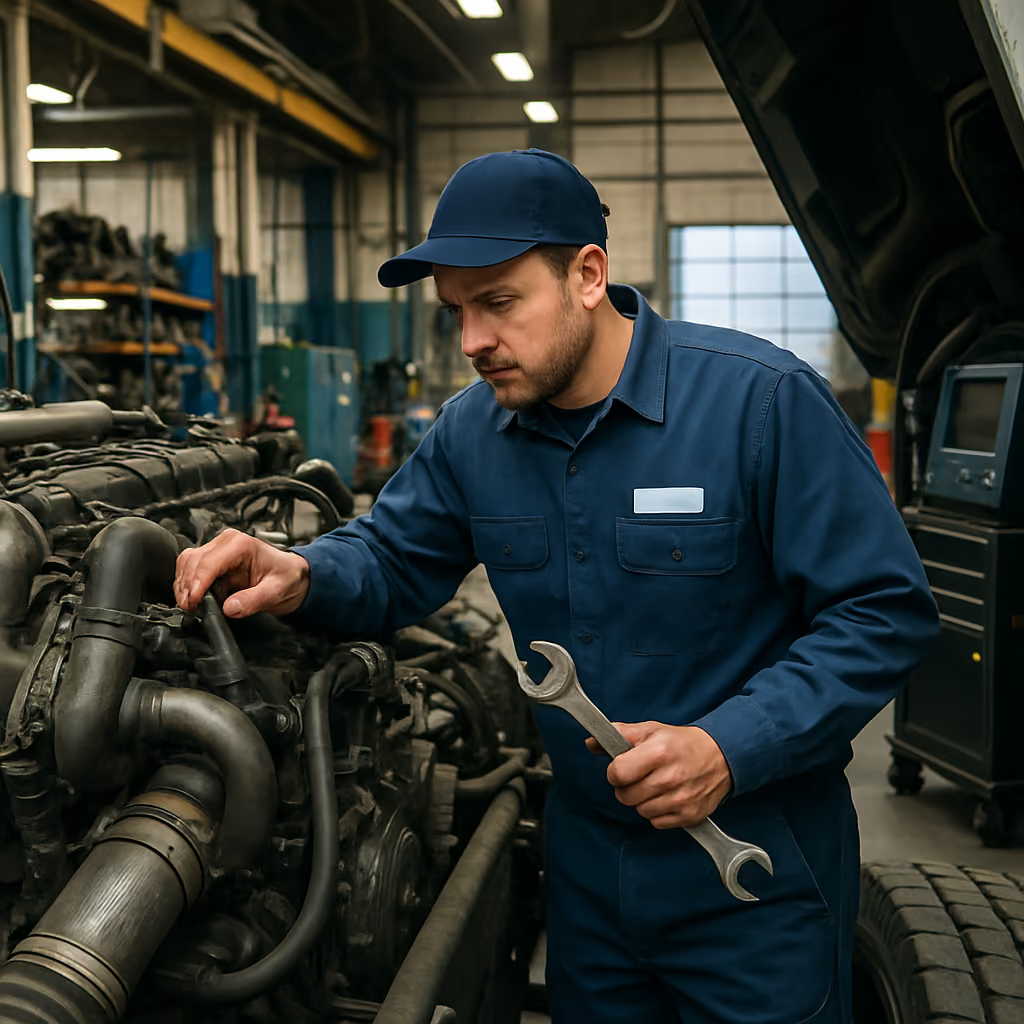
Diesel technicians (also called diesel mechanics) repair and maintain anything that runs on diesel fuel, like semi-trucks, buses, construction equipment, agricultural machinery, emergency vehicles. You diagnose problems, fix what's broken, and keep these machines running.
What diesel technician work actually involves
What you work on:
- Semi-trucks and tractor-trailers
- Buses (school buses, transit buses, coach buses)
- Construction equipment (excavators, bulldozers, loaders)
- Agricultural machinery (tractors, combines, harvesters)
- Emergency vehicles (fire trucks, ambulances)
What you actually do:
- Diagnose engine, transmission, and electrical problems using computer diagnostic tools
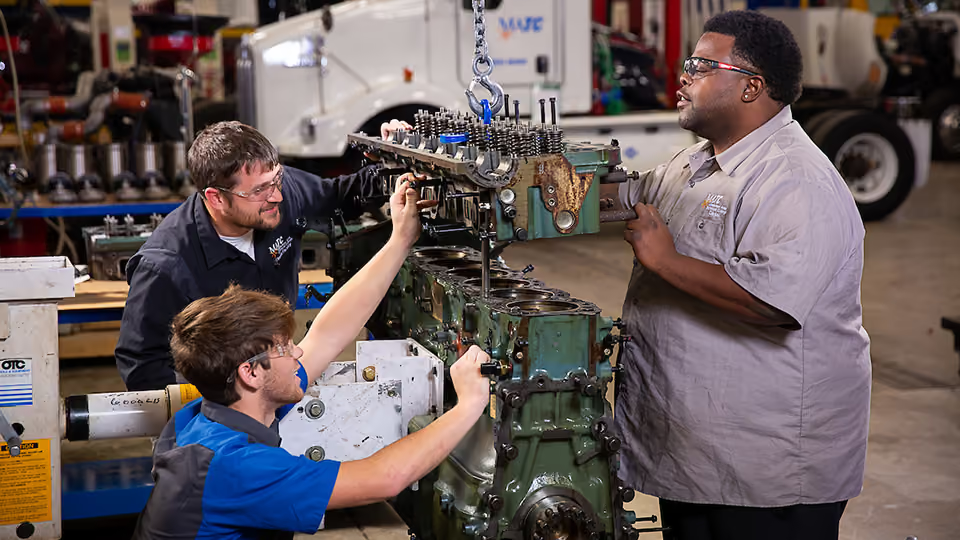
- Repair or rebuild diesel engines, transmissions, and brake systems
- Perform preventive maintenance (oil changes, inspections, fluid checks)
- Replace worn parts and components
- Test drive vehicles to verify repairs
- Document all work for customer and DOT records
Where you work:
- Repair shops (independent shops or dealerships)
- Trucking company maintenance facilities
- Construction company yards
- Agricultural equipment dealers
- Government/municipal vehicle maintenance departments
What a typical day looks like: You clock in at the shop, check the work board to see which trucks or equipment are assigned to you, and get to work. Maybe you're diagnosing why a semi won't start (could be electrical, fuel system, or computer issue). Then you're rebuilding a transmission on a dump truck. Then performing a DOT inspection on a school bus.
It's physical work—you're on your feet all day, lifting heavy parts, working in awkward positions under vehicles. But it's also technical work. Modern diesel engines are controlled by computers, so you're reading diagnostic codes, using scan tools, and troubleshooting electrical systems as much as you're turning wrenches.
Is diesel right for you?
Diesel is a good fit if:
- You like figuring out how things work and solving mechanical puzzles
- You're comfortable with physical work and getting dirty
- You want clear career progression with increasing pay
- You're reliable and willing to show up every day
- You can pass a drug test and have (or can get) a driver's license
- You want to earn while you learn instead of spending years in school
Diesel might not be right if:
- You have physical limitations that prevent heavy lifting or prolonged standing
- You want office work or less physically demanding careers
- You don't have a Driver’s License or reliable transportation to get to work
- You're not interested in continuous learning (technology evolves constantly)
If yes, get free diesel technician training in Worcester County
Emerge Career is offering 30 spots for diesel technician training in Worcester County, Massachusetts. If you qualify, we'll train you for free, help you get certified, and connect you directly with diesel shops and trucking companies ready to hire.
Here's how it works:
- Fill out this quick application (takes 10 minutes): link
- Learn the basics online (on your own schedule)
- Get hands-on training in person
- We help you land a job
You must live in Worcester County to qualify. Only 30 spots available.
Apply for diesel training today → Application here.

Do diesel companies hire people with felonies?
Why diesel companies are hiring people with records
The trucking and logistics industry is booming. E-commerce boom means more delivery trucks. Infrastructure spending means more construction equipment. All of it runs on diesel. All of it breaks down. All of it needs trained mechanics.
1. The industry desperately needs you
The Bureau of Labor Statistics projects over 28,000 diesel technician job openings every year through 2032. Nearly every diesel repair facility in the country is struggling to find qualified technicians. When shops have bays sitting empty because they can't find mechanics, hiring managers start looking at candidates they might have passed over five years ago.
Many current diesel technicians are aging and retiring, and fewer new trainees are entering the workforce, leading to significant gaps. A report from the American Transportation Research Institute highlights that 65.5% of shops are understaffed in 2025, with nearly 19.3% of positions unfilled. Training new technicians is expensive and time-consuming, complicating efforts to fill vacancies.
In Massachusetts, the labor shortage is even more acute. Worcester County—a major hub for manufacturing, logistics, and construction—has dozens of diesel shops, trucking fleets, and equipment dealers competing for the same small pool of trained technicians.
This shortage works in your favor if you have a record. Employers care more about whether you can diagnose a bad injector or rebuild a transmission than what happened in your past—as long as you can prove you're reliable and trained.
2. No state license required
Unlike trades that require state licensing (where your criminal record gets scrutinized by a licensing board), diesel techs don't need state licenses. The industry uses ASE certifications to verify skills, and a valid driver’s license. ASE doesn't care about your criminal history.
You take tests that prove you know diesel engines, brakes, electrical systems, etc. Pass the tests, get certified. No background check. No licensing board review.
This removes a major barrier that people with records face in other skilled trades.
3. Massachusetts pays diesel techs well
The national median salary for diesel technicians is around $57,000. In Massachusetts, it's closer to $76,000 due to higher cost of living and strong demand—especially in Worcester County, which is a major hub for logistics, manufacturing, and construction.
Real salary progression:
- Shop helper: $35,000-$42,000 (entry level, no experience)
- Certified diesel tech: $50,000-$65,000 (with ASE certs, 1-3 years experience)
- Experienced technician: $70,000-$85,000 (multiple certs, 5+ years)
- Master tech/shop foreman: $90,000+ (leadership or specialized skills)
Many shops pay "flat rate"—you get paid per job completed, not hourly. Faster, more skilled techs make significantly more money.
4. You can start earning quickly
Unlike careers that require years of school, diesel mechanics offers fast entry points:
- Shop helper roles (no experience required—you learn while earning)
- Entry-level tech positions (with basic training or certifications)
- Apprenticeships (get paid while you train)
You can be earning money within months, not years.
5. Job security is real
Trucks and equipment don't maintain themselves. As long as we have construction, agriculture, and trucking (which isn't going anywhere), we need diesel mechanics.
This work can't be outsourced overseas or easily automated. Every local economy needs diesel techs.
Get free diesel technician training in Worcester County
Emerge Career has 30 scholarship spots for diesel technician training in Worcester County, Massachusetts.
If you qualify, we'll train you for free, help you get certified, and connect you directly with diesel shops and trucking companies ready to hire.
Here's how it works:
- Fill out this quick application (takes 10 minutes): [Application link]
- Learn the basics online (on your own schedule)
- Get hands-on training in person
- We help you land a job
You must live in Worcester County to qualify. Only 30 spots available—apply now.
Thank you! Your submission has been received!
Case Studies.
AI-proof careers in industries with critical labor shortages.
This is a “win-win.” Many formerly incarcerated individuals have trouble finding work upon release, which can drive them back into crime.
.avif)
The data is also showing us that our investments in Emerge Career are paying immense dividends, in real second chances and wealth creation for some of our city’s most disadvantaged communities.
.avif)