HVAC Technician Jobs
What HVAC technicians do, what the trade pays, and which employers hire people with records.
.avif)
Do HVAC companies hire felons in MA?
Why HVAC companies are hiring people with records
The numbers tell the story. Virginia's Department of Corrections tracked graduates from their HVAC training programs and found that only 5.6% returned to prison—helping Virginia maintain the lowest recidivism rate in the country at 23%. Programs in other states report similar results.
Employers are paying attention. When your industry is desperate for workers and the data shows that people coming out of HVAC training programs stay out of trouble and show up for work, it changes the hiring conversation.
In Massachusetts specifically, the clean energy sector needs to fill over 38,000 jobs in the next six years. According to the state's clean energy center, nearly 90% of clean energy employers report difficulty finding workers. That includes HVAC technicians working on heat pumps, geothermal systems, and energy-efficient building systems.
The Massachusetts opportunity: clean energy jobs
Massachusetts is investing heavily in clean energy, and HVAC work is at the center of it. The state needs heat pump installers, geothermal technicians, and energy efficiency specialists to meet climate goals, cutting greenhouse gas emissions in half by 2030 and reaching net zero by 2050.
Training programs across the state are specifically recruiting from populations underrepresented in the existing workforce, including people with criminal records. Organizations like Emerge Career are not only training people for these jobs, but we’re working directly with employers to help place students after the program.
The skilled trades are one of the few career paths where your hustle, your hands, and your willingness to learn matter more than your resume. HVAC companies need people who show up, work hard, and can learn the technical skills. If that's you, you have a real shot.
State licensing requirements vary widely
In Massachusetts:
- No absolute ban on licensing for people with felonies
- Licensing boards consider the type of crime, how long ago it happened, and evidence of rehabilitation
- Generally, you need significant time since your release—often five years or more
- Completing a recognized training program helps your case
See if you qualify by applying here: ___
Looking for free HVAC training in Massachusetts?
Emerge Career offers FREE HVAC training for people building careers in the skilled trades. If you qualify, we'll train you for free, help you get certified, and connect you directly with employers who are ready to hire.
Here's how it works:
- Fill out this quick application (takes 10 minutes): link
- Learn the basics online (on your own schedule)
- Get hands-on training in person
- We help you land a job
Apply for Emerge Career’s FREE HVAC training program today →

Should you get a HVAC job in MA?
What is HVAC?
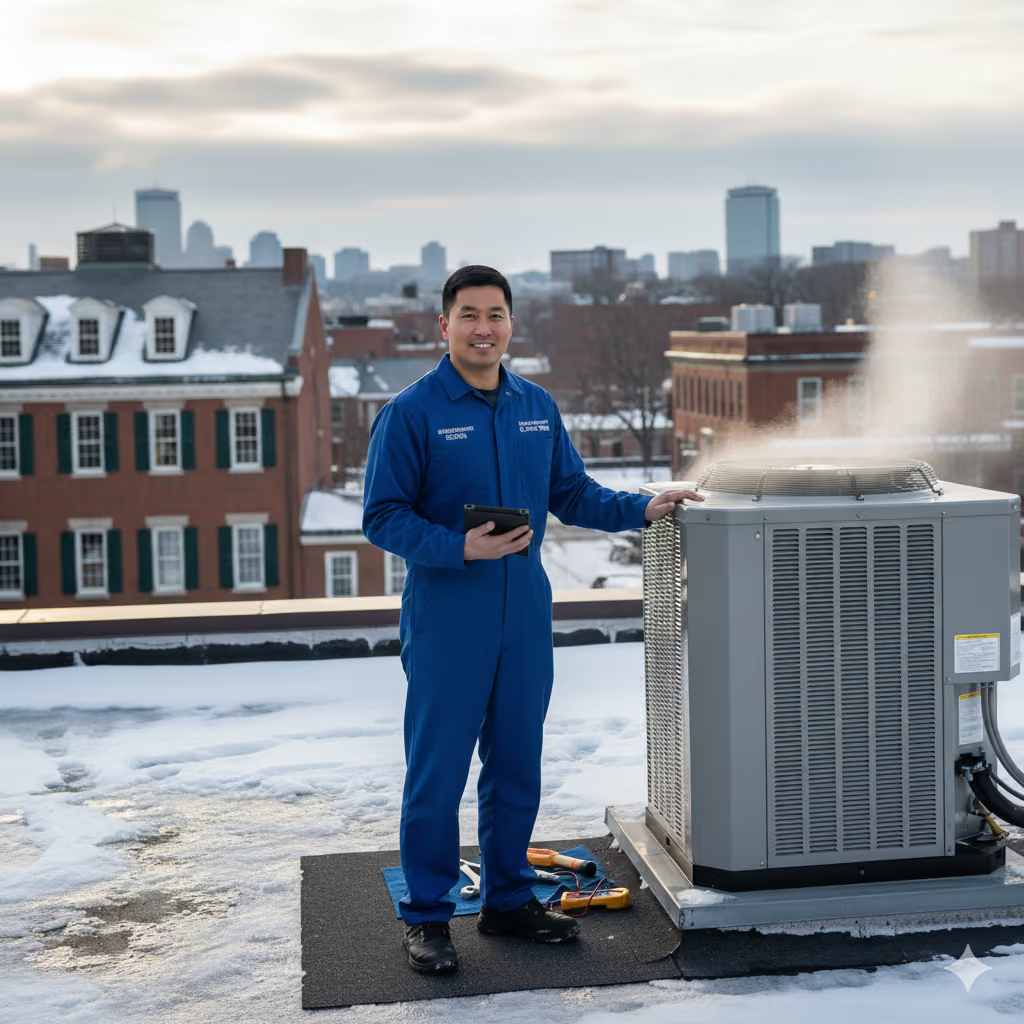
HVAC stands for Heating, Ventilation, and Air Conditioning. HVAC technicians install, repair, and maintain the systems that keep buildings comfortable—furnaces, air conditioners, heat pumps, ventilation systems, and thermostats.
What you actually do:
- Install new heating and cooling systems in homes and businesses
- Connect HVAC equipment to fuel, water, or refrigerant sources
- Perform routine maintenance, changing filters, cleaning ducts, or refilling refrigerants
- Install, connect and adjust thermostats, humidistats, timers
- Diagnose problems, testing electrical circuits and connections
- Read blueprints and follow technical specifications
- Use power tools, hand tools, and diagnostic equipment
Where you work:
- Industrial facilities
- Data centers
- Commercial (offices, schools, hospitals) and residential homes (crawl spaces, attics, basements
What a typical day looks like:
You start your morning at the shop or directly at a job site. You might spend the day installing a new air conditioning unit in someone's house, troubleshooting why an office building's heat isn't working, or doing seasonal maintenance on multiple systems. You're driving between jobs, working with your hands, problem-solving, and talking to customers.
It's physical work. You're lifting equipment, climbing ladders, and working in tight spaces. You're also using your brain—electrical systems, refrigerant chemistry, airflow calculations, and diagnostic tools all require technical knowledge.
Why HVAC is a solid choice for people with records
1. The industry needs you
HVAC companies across the country need over two million workers in the coming years. In Massachusetts alone, the clean energy sector—which includes HVAC work on heat pumps and energy-efficient systems—needs to fill 34,000 jobs in the next six years.
The demand for qualified HVAC professionals often outstrips the supply. When employers can't find enough workers, they start looking at candidates they might have passed over before. That includes people with criminal records.
2. Massachusetts law is on your side
Massachusetts has some of the strongest fair chance hiring laws in the country. Employers can't ask about your criminal history on initial job applications ("ban the box"), and they have to consider the nature of your offense, how long ago it happened, and what you've done since. Plus, many HVAC companies understand the importance of rehabilitation and community support. This gives you a real shot to prove yourself based on your skills and training before your record enters the conversation.
3. You can earn while you learn
HVAC work is a skills-based industry, prioritizing practical skills, technical knowledge, and a strong work ethic. Many roles can be learned through vocational training programs like what Emerge Career offers, apprenticeships, and on-the-job experience, rather than solely relying on traditional academic qualifications.
Unlike careers that require four years of college before you can start working, HVAC offers multiple entry points:
- Helper/apprentice roles (no experience required)
- Entry-level technician positions (with basic training)
- Licensed technician roles (with certification and experience)
You can start earning money quickly in a helper role while you build toward higher-paying licensed positions. With experience and further training, technicians can advance to supervisory roles, specialize in certain areas, or even start their own businesses.
4. The pay is real
According to the U.S. Bureau of Labor Statistics, HVAC technicians can earn a median salary of around $73,000 per year.
5. Hard to outsource, always in demand
Every building needs heating and cooling. Systems break down, new construction needs installations, and old equipment needs replacing. This work happens locally—it can't be shipped overseas or automated away. Even during economic downturns, people still need their heat fixed in winter and their AC working in summer.
Is HVAC right for you?
HVAC is a good fit if:
- You like working with your hands and solving problems
- You're okay with physical work in all conditions
- You want a career with clear advancement (helper → apprentice → journeyman → master)
- You're reliable and willing to show up every day
HVAC might not be right if:
- You have physical limitations that prevent lifting, climbing, or working in tight spaces
- You are uncomfortable in high temperature conditions
- You can’t handle night shifts well or wish to have free weekends
- You want office work or a less physically demanding career
- You can't commit to the training and certification process
- You don't have reliable transportation (at least initially)
Your next steps
Emerge Career offers a FREE HVAC training program. If you qualify, we'll train you for free, help you get certified, and connect you directly with employers who are ready to hire.
If HVAC sounds like a fit, apply for Emerge Career’s FREE HVAC training program today!
Thank you! Your submission has been received!
Case Studies.
AI-proof careers in industries with critical labor shortages.
This is a “win-win.” Many formerly incarcerated individuals have trouble finding work upon release, which can drive them back into crime.
.avif)
The data is also showing us that our investments in Emerge Career are paying immense dividends, in real second chances and wealth creation for some of our city’s most disadvantaged communities.
.avif)