CDL Truck Driving Jobs
What a Class A trucking career actually looks like: the routes, the pay, the carriers hiring people with records, and how to land a first job with no experience.
What Jobs Can You Get with a CDL Class A License? Salary, Hours, and Career Paths
A CDL Class A opens more doors than most four-year degrees. The average starting salary for Emerge graduates is $77K. No student loans. No unpaid internships. And the career paths from here are wider than most people realize.
The Class A license is the top-tier commercial driver's license. It lets you operate any combination vehicle with a gross weight rating above 26,001 pounds, which covers the majority of trucking and heavy vehicle jobs in the country. What you do with it from there depends on what kind of life you want to build.
Over-the-Road (OTR) Trucking
This is what most people picture when they think CDL. Long-haul routes, cross-country freight, days or weeks on the road.
OTR pays well. Nationally, Class A drivers earn $60K to $95K, with top earners clearing six figures. In the New York metro area, averages run closer to $80K. Major carriers like J.B. Hunt, Swift, and Schneider hire aggressively and often take new CDL holders right out of training.
The tradeoff is time. OTR drivers are typically out 2 to 3 weeks at a stretch, home for a few days, then back out. It works well for people without caregiving obligations or who want to stack income fast. Many drivers use OTR as a launchpad: drive hard for a year or two, build experience, then pivot to a local or regional route.
Time to first paycheck: Fast. Some carriers will hire you before you finish training.
Local and Regional Delivery
If you want to sleep in your own bed every night, local delivery is the move. Think FedEx Freight, XPO, UPS Freight, Sysco, and dozens of regional carriers.
Pay ranges from $55K to $85K depending on the employer, route, and metro area. Hours are more predictable: early mornings are common (4 or 5 AM starts), but you're home by afternoon or early evening. Some routes are Monday through Friday. Regional runs might have you out for 2 to 3 days at a time, but never more than that.
This is the most common path for Emerge graduates. It combines strong pay with a schedule that lets you live a normal life.
Time to first paycheck: 1 to 4 weeks after getting your CDL, depending on the employer's onboarding process.
Tanker and Hazmat
This is where the money starts climbing. Hauling fuel, chemicals, or other hazardous materials requires additional endorsements on your CDL (a tanker endorsement, a hazmat endorsement, or both). Those endorsements involve extra written tests and a TSA background check for hazmat.
The extra barrier to entry is exactly why it pays more. Tanker/hazmat drivers earn $65K to $100K nationally. Experienced drivers in high-demand areas regularly clear $100K.
Companies like Kenan Advantage Group, Coastal Plains Trucking, and CP Energy Transportation are always looking. The work is steady because fuel and chemicals move regardless of economic cycles.
Time to first paycheck: A few months after your CDL, once you've earned your endorsements and found a carrier willing to train you on tanker operations.
Municipal and Government Jobs
This is the path people sleep on. City and state agencies need CDL holders, and the benefits packages are hard to beat.
MTA (Bus Operator): The New York MTA starts bus operators around $29/hour, scaling to $41/hour by year six. With overtime and differentials, total compensation often exceeds $90K. You also get a pension, full health insurance, and paid time off. The MTA runs a civil service exam process, so there's a wait, but the job security is real.
DSNY (Sanitation Worker): New York's Department of Sanitation starts workers around $45K to $48K, but pay scales to over $92K by year 5.5. With overtime (especially during snow season), the average experienced sanitation worker takes home around $117K. Top earners clear $150K. Add the pension, and this is one of the best total compensation packages available to someone without a college degree in New York City.
Other municipal CDL jobs include school bus drivers, city maintenance vehicle operators, and water/wastewater utility drivers. These vary by city and county but consistently offer stability, benefits, and retirement plans that the private sector rarely matches.
Time to first paycheck: Longer. Civil service exams, background checks, and hiring lists mean 6 to 18 months from application to start date. Plan accordingly.
Owner-Operator
This is the entrepreneurial path. You buy or lease your own truck, find your own loads (or contract with a carrier), and run your own business.
The gross revenue numbers look massive: owner-operators commonly gross $200K to $350K per year. But the net is a different story. After fuel, insurance, truck payments, maintenance, and taxes, most solo owner-operators take home $60K to $90K. Some do much better. Some don't survive the first two years.
This is not a year-one play. It requires at least 1 to 2 years of driving experience, significant capital or good financing, and the discipline to run a small business. But for drivers who build toward it, it's the highest-ceiling path on this list.
Time to first paycheck: 2 to 3 years from CDL, realistically. You need experience and capital first.
How to Think About This
The CDL Class A is a platform, not a destination. Your first job won't be your last. The most common progression looks something like this:
- Get your CDL and land a local or OTR job immediately
- Drive for 1 to 2 years, build experience, save money
- Pick up additional endorsements (tanker, hazmat, doubles/triples) to unlock higher-paying roles
- Move into specialized freight, municipal work, or owner-operator status
The starting line is the same for everyone. Where you go from there is up to you.
Emerge Career is a free CDL Class A job training program in New York City. 89% of our students graduate. 92% get placed in jobs. The average starting salary is $77K. If you or someone you know is interested, apply here.

Intro to Trucking: What a Truck Driving Career Is and Why It's Worth It
72% of America's freight moves by truck, but there is a shortage of drivers. Here's what the job is, what it pays, and how to start in NYC for free.
Free CDL Class A scholarship supported by the NYC Mayor's Office
If you are based in New York City, Emerge Career offers 100% free training for your Class A CDL, supported by the Mayor's Office of Criminal Justice's Next Mile NYC program. Online/in person study materials, trucking school, and job placement, all 100% free.
Live in NYC with a history of arrest, probation, parole, incarceration, or pre-trial diversion? Check the eligibility requirements and apply — it takes 10 minutes.
What the job is
You drive a commercial truck, usually a tractor-trailer, moving freight between warehouses, ports, and stores. There's various routes for different lifestyles:
Over-the-road - Most openings for new drivers. Travel across the country and see new places. Spend weeks out.
Regional - Drive in a set region (e.g. "Northeast Region"). Explore New York and beyond while still being home most weekends.
Local - Home every night, drive local to your state/city. Stay close to your family every day.
Why it's worth it
No degree or prior work experience needed. As long as you come in ready to learn, you can succeed as a truck driver.
Real pay. Next Mile NYC graduates earn a median salary of $75,000 a year. Industry standards are: $50–60K starting, $70–90K with experience, $100K+ as an owner-operator. Most companies provide health insurance, 401(k), and PTO.
Fast entry. 3–4 months of training. Our fastest student: 42 days.
Job security. Many carriers have been short on drivers for years.
Room to climb. Endorsements (Hazmat, Tanker, Doubles/Triples) raise pay. Many drivers go on to own their truck and there's various entrepreneurial avenues.
How you get in: the CDL
The license is a Commercial Driver's License. The top license is the Class A — it covers tractor-trailers and opens the most jobs at the highest pay. Steps:
1. ~40 hours online studying for the permit test (Emerge offers free study materials, various other free study materials available as well).
2. Pass the knowledge test at the DMV for your Commercial Learner's Permit (CLP).
3. ~120 hours behind the wheel at a local trucking school.
4. Pass the CDL road exam.
You'll also need a DOT physical and drug screening.
Ready to start? If you're in NYC, check the eligibility requirements and apply — it takes 10 minutes, and the training costs you nothing.
Free Job Training Programs in NYC: What's Actually Worth Your Time
There are hundreds of "free job training programs" in New York City. Google it and you'll get a list from a city agency page that hasn't been updated since 2023, a library guide with 40 phone numbers and no context, and a handful of program websites that all say the same thing: "free training, career support, job placement assistance."
None of that tells you whether the program works.
So here's a different kind of guide. I'm going to walk you through the major categories of free training in NYC, who funds them, what they actually train you to do, and the one question you should ask every single program before you enroll.
The question
Does this program publish its job placement rate?
Not "we help with job placement." Not "career services available." A number. What percentage of people who started this program ended up in a job in that field? And what do those jobs pay?
If a program can't answer that, or won't, that's information.
How NYC's free training landscape breaks down
The city's free programs cluster into four broad categories: commercial driving and transportation, tech, healthcare, and construction trades. The funding, the program structures, and the outcomes vary wildly across them.
Commercial driving (CDL)
CDL training puts you behind the wheel of a commercial truck or bus. The training is short (weeks, not months), the jobs pay well, and demand for drivers has been high for years.
Programs to know:
Emerge Career (Next Mile NYC) -- Funded by the Mayor's Office of Criminal Justice (MOCJ). Free CDL Class A training for justice-involved and housing-insecure NYC residents. Self-paced online permit prep, then in-person driving instruction through partner schools citywide. Publishes outcomes: graduates have earned average starting salaries of $80K, with some reaching six figures. The program grew from a 20-person pilot to serving hundreds of participants. Eligibility requires justice system involvement and NYC residency.
Red Hook on the Road (Brooklyn Workforce Innovations) -- Free four-week CDL program: one week classroom, three weeks behind the wheel. Open to unemployed New Yorkers. Trains roughly 25 people per month. Graduates get placed into school bus, coach bus, Access-A-Ride, and truck driving jobs. Two years of post-placement career coaching included. BWI is one of the most respected workforce orgs in the city.
Commonpoint (Bronx) -- DYCD-funded CDL program in the Bronx for ages 18-40. Includes free CDL license, paid work experience, and job placement assistance.
SBS Workforce1 Industrial and Transportation Career Center -- The city's own pipeline. SBS partners with training providers to offer no-cost CDL and commercial driving courses through the Workforce1 system. You'll need to register as a Workforce1 member.
Tech
Tech training programs have exploded in NYC over the past decade. Most are bootcamp-style: full-time, several weeks to a few months, focused on getting you a certification and into an entry-level role.
Programs to know:
Per Scholas -- Headquartered in the South Bronx, now in 25+ cities. Free full-time training in cybersecurity, software engineering, cloud DevOps, data engineering, and more. Per Scholas is one of the few programs in the city with independent, federally funded research backing its outcomes. An MDRC study found that participants earned significantly more than a control group. The organization reports that over 80% of graduates find jobs within a year. They've trained over 30,000 people nationally. The bar to entry includes an assessment exam and interview. This is a rigorous program, not a rubber stamp.
NPower -- Free tech training for young adults (18-25) and military veterans. Programs in cybersecurity, cloud computing, and IT. Operates in NYC and nationally.
Pursuit -- Free, intensive software engineering fellowship based in Long Island City. Longer commitment (about a year) with a post-placement income share agreement. Strong alumni network and employer partnerships.
Healthcare
Healthcare is the largest employment sector in NYC. The free training options here are plentiful, but the range in quality is wide.
Programs to know:
1199SEIU / CHCA (Cooperative Home Care Associates) -- Free HHA/PCA training through the union and its affiliated agencies. CHCA runs a four-week dual PCA/HHA training program in the Bronx that leads directly to employment. This is one of the most established healthcare pipelines in the city.
SBS Workforce1 Healthcare Career Center -- Operates in partnership with the New York Alliance for Careers in Healthcare (NYACH). Offers no-cost CNA, HHA, and other healthcare credential programs. Available across the five boroughs.
Commonpoint (Queens and Bronx) -- Runs CNA and EKG/Phlebotomy training through DYCD funding for ages 18-40. Includes paid work experience and job placement.
Selfhelp Community Services -- Free HHA and PCA training in English, Spanish, and Russian, with jobs offered to graduates directly through Selfhelp's home care operations.
The reality of healthcare training in NYC: many of the free HHA programs are run by home care agencies that will train you for free on the condition that you work for them after certification. That's not necessarily a bad deal. But it means your "free training" comes with strings. Ask about them upfront.
And know what you're signing up for economically. HHA starting wages in NYC sit around $19/hour. That's a living, but it's a tight one in this city. CNA and phlebotomy certifications open slightly higher-paying doors in clinical settings.
Construction trades
Construction training in NYC is shaped by two forces: the city's building boom and Local Law 196, which requires Site Safety Training (SST) cards for workers on large job sites.
Programs to know:
Construction Skills (CSKILLS) -- Pre-apprenticeship program that's been running since 2001. Places NYC residents into union apprenticeships through the Building and Construction Trades Council. Has placed over 2,500 people. 90% of participants come from communities of color across the five boroughs.
SBS Construction Site Safety Training -- Free 40-hour SST training for NYC residents 18+. This is the baseline credential you need to work on most large construction sites in the city.
Building Skills NY -- Partners with LaGuardia CC, Bronx CC, and City Tech on Construction Career Accelerator classes. Free training in skilled trades through a DOL-supported initiative.
Nontraditional Employment for Women (NEW) -- Prepares and places women in careers in construction, utility, and maintenance trades. One of the only programs in the city specifically designed for women entering the trades.
Helmets to Hardhats and various union apprenticeship programs -- If you're a veteran, there are direct pathways into union construction apprenticeships. Most pay you while you train.
How the money works
Free training programs in NYC are funded through a patchwork of city, state, and federal sources. Knowing who's paying matters because it affects who's eligible and how the program is structured.
MOCJ (Mayor's Office of Criminal Justice) -- Funds reentry-focused programs. Eligibility typically requires justice system involvement.
SBS (Small Business Services) -- Runs the Workforce1 system and Individual Training Grants (ITGs). Broad eligibility: NYC residents looking for work or earning under $91K/year.
DYCD (Department of Youth and Community Development) -- Funds youth and young adult programs, usually ages 18-24 or 18-40 depending on the contract.
WIOA (Workforce Innovation and Opportunity Act) -- Federal money that flows through state and local workforce boards. Funds ITGs and many of the programs listed above.
Employer-sponsored -- Some programs (especially in healthcare and tech) are funded directly by the employers who will hire graduates.
What to actually ask before you enroll
Five questions. Any good program should answer all of them without hesitating.
- What percentage of people who start this program finish it?
- What percentage of graduates get a job in this field within six months?
- What's the average starting salary or hourly wage?
- Is the program full-time? Can I work while enrolled?
- What happens after I graduate? Is there career coaching, job placement, follow-up?
If a program gives you vague answers, deflects to testimonials, or says "it depends," keep looking. The programs that work know their numbers and share them.
The bottom line
NYC has real, well-funded programs that train people for real jobs. The problem isn't supply. It's navigation. The city's workforce system is fragmented across agencies, boroughs, and funding streams, and the information online is a mess.
This guide isn't exhaustive. Programs change, new cohorts open, eligibility shifts. But the framework holds: pick a vocation with clear demand, find a program with published outcomes, and ask the hard questions before you commit your time.
If you're considering CDL training and you're eligible, Emerge Career is actively enrolling for Next Mile NYC. The application takes less than 10 minutes.
Jonathan Pierre is a Program Manager at Emerge Career, a free CDL training program funded by the NYC Mayor's Office of Criminal Justice. He runs growth and recruitment operations across New York City.

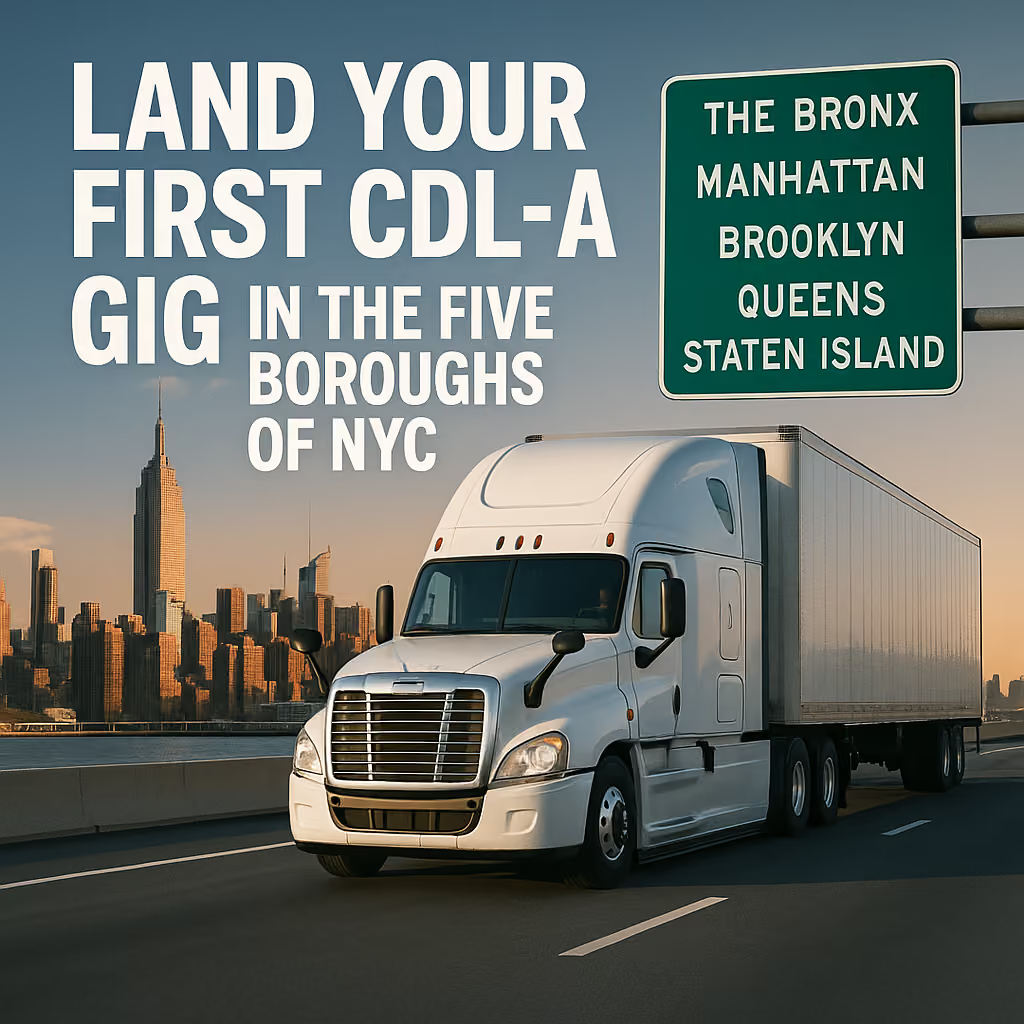
Land Your First CDL-A Gig In The Five Boroughs Of NYC
NYC’s trucking scene at a glance
- 71,270 heavy-truck and tractor-trailer jobs were on the books across the New York–Newark metro in 2023, and demand has only ticked up with e-commerce and supermarket delivery growth. bls.gov
- Thanks to the city’s Fair Chance Act, most employers can’t ask about your criminal history until after they’ve made a conditional job offer—so your skills get the spotlight first. nyc.gov
8 “second-chance” carriers that hire right here in NYC (or just across the Hudson)
1. FreshDirect 📍 Bronx, NY
Grocery e-commerce giant with Bronx yard; hires CDL-A rookies & reviews records case-by-case. See their open jobs here.
2. Baldor Specialty Foods 📍 Hunts Point, Bronx
Refrigerated, mostly day-cab routes; confirmed “yes” to felon applicants on Indeed Q&A. See their open jobs here.
3. US Foods 📍 Perth Amboy, NJ (easy Staten Island bridge hop)
Food-service shuttle & route work; employees report felony hires if charges are older/sealed. See their open jobs here.
4. Sysco 📍 Jersey City, NJ & Central Islip, NJ
Similar to US Foods, with paid training for new grads. See their open jobs here.
5. Ward Trucking 📍 Kearny, NJ
LTL Services (local routes); Overnight Transport; Trucking, Transport, and Supply Chain Logistics; & Brokerage. See their open jobs here.
6. R+L Carriers 📍 Elizabeth, NJ
Nightly line-haul & regional lanes; background check policy reviewed case-by-case.. See their open jobs here.
7. Schneider National 📍 North Bergen, NJ
Their recruiters routinely work with applicants who have older convictions. See their open jobs here.
8. Knight Transportation 📍 Carlisle, PA (OTR freight swings through NYC weekly)
East-coast terminal network, with a proven track record of being a 2nd chance employer. See their open jobs here.
Hottest CDL-A titles hiring around NYC
- OTR Driver – still the fastest path to a paycheck for brand-new grads.
- Food-Service Route Driver – local 2–4 a.m. starts, home daily.
- LTL City P&D Driver – predictable borough-to-borough runs.
- Port Drayage Driver – short-haul containers from Port Newark/Red Hook.
Quick wins you can knock out today
- Apply in batches of ~10 roles. Emerge Career grads who shot-gunned apps landed offers in as little as seven days.
- Message your coach the minute your CDL prints—coaches can fast-track you to partner recruiters who already know you cleared background hurdles.
- Leverage the Career Network Nope—just text or email your coach for warm intros to alumni at Baldor, Schneider, and more.
Emerge Career grads have landed orientation dates just after licensing by following the exact playbook above. Let’s make you the next success story.

OTR vs Regional vs Local Truck Driving
You're likely aware that there are several different types of truck driving jobs available. The three most common types are Over The Road trucking (OTR), Regional trucking, and Local Trucking.
At first glance, the differences between OTR, regional, and local truck driving may seem straightforward. OTR truck drivers spend more time on the road, while local drivers stay close to home, right? Well, it's not always that simple. In fact, there are several differences between these types of truck driving that may surprise you.
In this blog post, we'll explore the different types of trucking jobs available and provide tips on which type might be best for you. We'll also cover some key aspects of each type of job that are not often discussed in other resources. So read on as we learn more about the fascinating world of OTR, regional, and local truck driving!
What Does OTR Mean in Trucking?
Over-the-road trucking (OTR), also known as long-haul trucking, involves driving long distances across the country, often for several weeks at a time.
Truck driving isn't just a job – it's a way of life. As an OTR driver, you have the freedom and independence to explore the country, experiencing its diverse landscapes and cultures firsthand. OTR truck driving typically pays more than regional or local truck driving. OTR drivers are often paid per mile, so the more miles they drive, the more money they can make. One of the biggest advantages of OTR trucking is that you spend less time at sites, facilities, and docks and more time turning miles.
OTR drawbacks
When it comes to OTR trucking, you're in for a wild ride. You'll be spending a lot of time away from home, dealing with different time zones, and facing extreme weather conditions like snow and ice. Plus, you'll be driving on unfamiliar roads and highways, which can be stressful and challenging. And if that wasn't enough, you'll also have to deal with language barriers and cultural differences in different regions, making communication with customers and shippers a bit of a hurdle. But hey, if you're up for the challenge, OTR trucking can be a thrilling and rewarding career path. You'll need to be adaptable, resilient, and skilled to succeed, but if you're cut out for it, you'll be in for one heck of an adventure.
Who OTR is good for
Despite the unique challenges that come with OTR trucking, it's a great option for people who love adventure, enjoy exploring new places, or want to experience the freedom of the open road. As an OTR driver, you'll get to see the country in a way that most people never will. You'll travel through different states and regions, experiencing the unique cultures and landscapes that make America so diverse. Plus, if you're someone who values independence and autonomy, OTR trucking can be a dream come true. You'll be able to make your own decisions, set your own schedule, and enjoy the freedom that comes with being your own boss on the road. Many companies allow you to bring family members along for the ride which can make it a great way to spend quality time together while earning a living.
And let's not forget about the financial rewards. OTR drivers typically earn more money than local drivers, which can be a significant advantage for those who are looking to build a solid financial future. So, if you're someone who's up for an adventure, values independence, and wants to earn a good living while seeing the country, OTR trucking could be the perfect fit for you.

What is Regional Truck Driving?
As a regional driver, you'll stay within a specific region of the country, like the Midwest or Northeast. One of the best things about regional truck driving is that you'll spend more time at home than OTR drivers. You'll still hit the road for a few nights each week, but you'll usually make it back home for the weekend or every few days. That means you can still see your family and friends regularly and maintain a work-life balance.
Regional trucking drawbacks
However, there are also some drawbacks to regional trucking that drivers should be aware of. For one, regional drivers may not earn as much as OTR drivers, as they typically cover fewer miles. Additionally, drivers may still have to deal with city traffic and congested highways, which can be stressful and time-consuming. Finally, while regional trucking does offer more time at home, drivers may still have to spend several nights away from home each week, depending on their specific route and schedule.
Who regional trucking is for
Regional truck driving offers a balance between the adventurous lifestyle of OTR trucking and the stability of local driving. While it may not offer the same financial rewards as OTR trucking, regional trucking can be a great option for those who want to be closer to home and still earn a good living. Plus, you'll have a better chance of developing relationships with regular customers and shippers in your region, which can help to make the job more enjoyable.
Of course, it's not all about the job - you have to consider your personal life too. If you want to be closer to your family and friends and don't want to spend weeks on end on the road, regional truck driving might be the perfect fit for you. But if you're the adventurous type and want to see the whole country while earning a good living, OTR trucking might be a better option.
In the end, it's all about what works best for you.
What is Local Truck Driving?
Local truck driving is a fantastic option for drivers who want to be close to their families and maintain a regular work schedule. You'll be driving within a certain radius of your home, which means you won't be away from home for extended periods. You'll make deliveries and pickups to businesses and customers in your area, making several stops throughout the day. You may even develop a rapport with the people you see regularly, which can make the job more enjoyable. Additionally, local drivers don't have to deal with the same extreme weather conditions or long periods of time away from home that OTR or regional drivers do.
Local truck driving pros and cons
One of the most significant benefits of local truck driving is that you'll spend more time at home. This can be particularly crucial for drivers with families or other responsibilities that require them to be present. Local drivers also have the advantage of a predictable schedule, which can help them better plan their personal lives. However, keep in mind that local drivers may not earn as much money as OTR or regional drivers, as they typically cover fewer miles. Local drivers may also have to deal with traffic and other obstacles that can make driving in urban areas stressful and time-consuming.
In summary, local truck driving can be an excellent option for those who prioritize stability, predictability, and spending time with family and friends. However, it may not offer the same financial rewards or sense of adventure as OTR trucking. Ultimately, the choice between OTR, regional, and local driving depends on whether you want to spend most of your time on the highway or make frequent stops and assist with loading and unloading
Choosing which type of truck driving position
Choosing which type of truck driving position to pursue can be a tough decision, but with a bit of research and self-reflection, you can find the perfect fit. Start by thinking about your lifestyle preferences: are you a homebody or a road warrior? If you want to spend more time with family and friends, local truck driving may be the right choice for you. But if you crave adventure and independence, regional or over-the-road trucking might be a better fit.
OTR vs. Regional vs. Local: Financial aspects
Next, take a look at the financial aspects. Compare pay rates, benefits, and opportunities for growth in each type of truck driving. Keep in mind that different positions may have varying costs associated with them, such as travel expenses, equipment costs, and maintenance fees.
OTR vs. Regional vs. Local: Physical & mental demands
Physical and mental demands are also important to consider. Long-haul trucking can be physically demanding and require extended periods of concentration and alertness. Make sure you're prepared for the rigors of the job, both physically and mentally.
OTR vs. Regional vs. Local: Cargo type
Cargo type is another factor to think about. Do you want to transport specialized cargo, like hazardous materials or oversized loads, or are you content with more standard cargo? Different types of cargo can present unique challenges, so make sure you choose a role that aligns with your skills and interests.
OTR vs. Regional vs. Local: Seek advice
Whether you're just starting out or considering a change in your career, talking to someone who has been there can be incredibly helpful. Talking to experienced truck drivers is a great way to get an idea of what to expect in the industry. They have a wealth of knowledge and can provide valuable insights into the different types of truck driving jobs available. So, don't be afraid to reach out to experienced truck drivers and ask for their advice.
Remember, there is no one-size-fits-all answer, and the key is to find a role that aligns with your values and interests. With the right mindset and a bit of research, you can set yourself up for a successful and fulfilling career as an “all over the road” driver.
Pros and cons of truck driving
Choosing the right type of truck driving position is a big decision, but with the help of experienced drivers and some research into the various types available, you can find one that fits your lifestyle. OTR trucking offers adventure and independence while local trucking jobs provide stability and predictability. Regional trucking combines both elements in an attractive way for many people. Consider all aspects such as pay rate, benefits, cargo type, physical demands, the mental focus required, and other factors to make sure you’re making the best choice for yourself or your family. Whatever you decide, remember that the trucking industry is an essential part of the economy and offers a wide range of career opportunities. With the right mindset, determination, and willingness to adapt, you can enjoy a successful and fulfilling career as a truck driver.
We hope you've enjoyed this blog post and that it's given you a new perspective on the world of truck driving. So hit the road, keep your eyes on the horizon, and drive safely!
Ready to Start Your Trucking Journey?
If you're an individual with a history of criminal justice involvement including: incarceration, probation, parole, diversion programs looking for a new beginning, then Apply for your Free Scholarship Today.

How To Get A CDL Class A Job With Little to No Experience
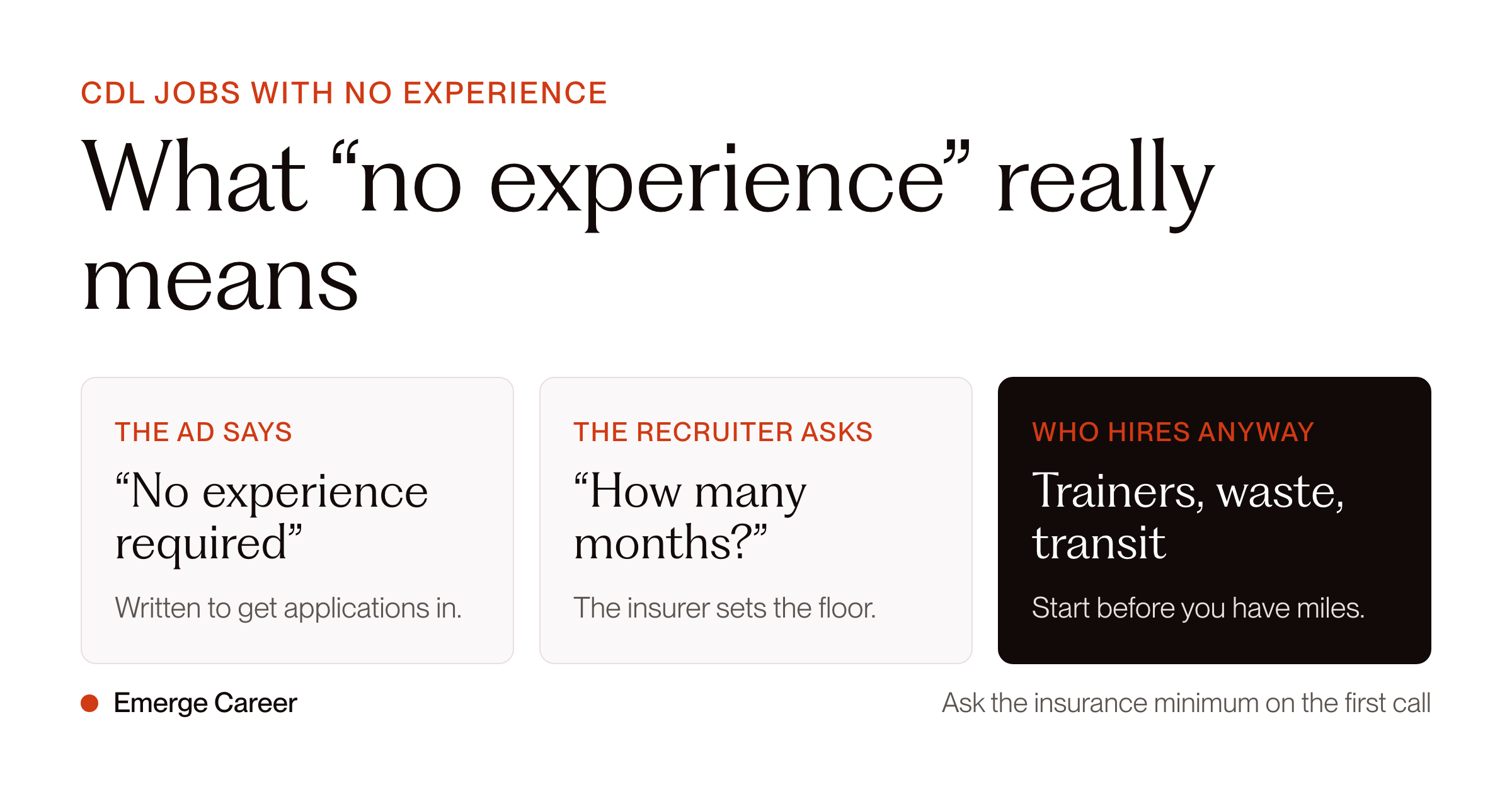
If you just got your CDL A and you’re stressing out about landing that first job — you’re not alone. A lot of new drivers think, “No one’s going to hire me without experience.” But that’s not true.
There are more entry-level opportunities in trucking now than ever before, especially with the labor shortage across the industry.
At Emerge Career, we’ve helped tons of students land jobs right after getting their CDL. Here’s exactly how to do it — from finding the right jobs to making yourself stand out.
The Good News: Trucking Needs You
The trucking industry is short of tens of thousands of drivers. According to the American Trucking Associations, the shortage could hit 80,000+ in the next few years. A lot of older drivers are retiring, and new drivers are needed to fill the gap — especially for local routes and regional runs.
That means companies are hiring entry-level drivers — and many will even train you.
Step 1: Know What Type of Entry-Level Job You Want
Before you start applying, think about what you want:
- OTR (Over-the-Road): Long-distance, gone for days/weeks at a time. Higher pay, but not for everyone.
- Regional: Home weekly, driving within your state or surrounding states.
- Local: Home every night, often delivery or route-based (e.g., Pepsi, Sysco, Amazon).
New drivers often think they have to start OTR — but that’s not always true. Many local and regional employers are open to recent grads if you show you’re reliable.
Step 2: Filter for the Right Jobs
When searching online, use specific keywords:
- “CDL A no experience required”
- “Will train the right candidate”
- “Entry level truck driver”
- “Paid CDL training” (if you still don’t have your license yet)
Where to look:
- Indeed and ZipRecruiter (use the right filters)
- TruckerPath (great filters for entry-level and no experience)
- CDLJobs.com – Choose “Student” or “Recent Grad”
- Driver Pulse App (Tenstreet) – Add “0–3 months experience” in your profile
- Facebook groups: Tons of leads and active recruiters posting daily
Step 3: Apply to the Right Companies
These companies are known for hiring new CDL A drivers and providing paid training or mentoring programs:
🛻 Western Express
- Hires recent CDL grads
- Known for getting drivers started fast
- Some accounts are home weekly or daily
🥤 PepsiCo
- Local delivery (CDL A required)
- Routes vary, but many start you with helper roles
- Stable hours, strong benefits
🚚 C.R. England
- Big training fleet
- Pairs you with a mentor first 1–2 months
- Gets you experience quickly
🚛 TMC, Prime Inc., Roehl, Knight Transportation, U.S. Xpress
- All offer structured training for new CDL A holders
- Some require team driving or time OTR to start, then allow home-based jobs later
Pro tip: Apply to multiple companies at once — don’t wait around for one to get back to you.
Step 4: Make Yourself Stand Out (Even With No Experience)
Here’s what makes a difference:
✅ Clean MVR – A spotless or minor-violation driving record shows you’re safe and reliable
✅ Consistent work history – Even non-driving jobs show your ability to stick to a schedule
✅ CDL endorsements – Add hazmat, tanker, or doubles/triples to increase job options
✅ Professionalism – Be polite, responsive, and organized. If you ghost a recruiter? They’ll ghost you back.
Step 5: Don’t Panic if You Get Rejected
Some jobs will say “entry-level” and then still ask for 6 months of experience. That’s frustrating, but don’t let it discourage you. Keep applying.
Most students we work with apply to 10–15 jobs before landing the right fit.
Also — use your time to build experience:
- Consider local delivery jobs with box trucks to build time behind the wheel
- Take temp or seasonal driving gigs (holidays, warehouse routes)
- Volunteer to ride along with someone in your network
Every mile counts.
If You’re an Emerge Career Student — Let Us Help You Get Hired
We know which companies hire new grads right now. Your coach can:
- Match you with our hiring partners
- Get you in front of recruiters fast
- Review your resume and application
- Help you practice interview questions
You don’t have to guess — we’ve already done the work to find out what companies are hiring near you.
Final Thoughts: Your First CDL Job Won’t Be Perfect — But It’ll Get You on the Road
Think of your first job as your launchpad. It gets you experience, confidence, and most importantly — a paycheck.
Once you’ve got 3–6 months of safe driving under your belt, your options open up even more. Better pay. Better schedules. Better routes.
So keep applying. Follow up. Stay ready. And don’t be afraid to ask for help — because you’re not in this alone.
Let’s get you hired.
%20-%20Emerge%20Career%20-%20Square.avif)
How to Find CDL Jobs Near You (That Aren’t Just on Indeed)
If you’re looking for a CDL job near you, the first place most people go is Indeed. And while that’s not a bad starting point, there’s a whole lot more out there if you know where to look.
We’ve helped thousands of students land their first CDL job at Emerge Career, and the biggest difference-maker is knowing how to find the right job — not just the first job you see.
Here’s how to go beyond the basic job hunt and really open up your options.
Start With the Big Job Boards (But Go Deeper Than You Think)
Yes, you should use Indeed, but most people just type in “CDL job” and hope for the best. You need to filter smart. Here’s how:
- Search “CDL A” + your city or zip code
- Use filters like “Entry Level,” “No Experience,” or “Hiring Immediately”
- Set up alerts so jobs come to your email as soon as they’re posted
- Read the fine print — if they require 6–12 months of experience, it’s not for you yet
But don’t stop there. Try these CDL-specific boards too:
- TruckingTruth Job Board – A lot of company recruiters post here directly
- CDLJobs.com – Cleaner interface, lots of paid training gigs
- TruckersReport – Forum-style with job leads and community advice
- Tenstreet (Driver Pulse App) – Lets recruiters come to you once you create a profile
Use Facebook & Reddit to Get the Inside Scoop
Some of the best leads don’t come from job boards — they come from other drivers. Facebook and Reddit are great for this:
Facebook groups to check out:
People post job openings, recruiter contacts, and give honest reviews of companies (which is super important when you’re new and don’t want to get burned).
Reddit has a few solid communities too:
- r/Truckers – General advice and rants, but lots of wisdom if you search
- r/CDL – New drivers helping new drivers
Post a question or search your city to see if anyone’s hiring locally.
Show Up In Person — It Works More Than You Think
If you live near a major road, highway, or industrial area, chances are there are trucking companies nearby that don’t even post online.
Take a stack of printed resumes and drive to:
- Truck yards
- Local delivery depots (like Pepsi, Sysco, or Amazon)
- Food distribution warehouses
- Ready-mix concrete and construction supply yards
Just walk in and ask:
“Hi, I just got my CDL and I’m looking for local work. Are you hiring, or is there a recruiter I can talk to?”
Even if they’re not hiring, they might point you to someone who is. These kinds of “old-school” efforts can set you apart in a world where most people are just clicking Apply.
Go to Your Local Job Center or Workforce Board
Every state has job centers that work directly with local employers. These are totally free to visit, and many of them are connected with trucking companies who need drivers.
Ask them:
- Do you have any current CDL job openings?
- Are there any local employers who partner with your office?
- When’s the next job fair?
- Do you know who’s hiring new CDL grads?
You can find these centers by Googling:
“[Your city] American Job Center” or “[Your county] workforce development board”
Let Recruiters Come to You
Some platforms make it easy to set up a profile and let recruiters reach out to you. This can be a big time-saver.
Try these:
- Driver Pulse (by Tenstreet) – Used by most major trucking companies
- TruckerPath – Create a driver profile and get alerts from nearby carriers
- Rig on Wheels – Especially good for students who are still in school
If You're an Emerge Career Student — Use Your Coach
Your coach can:
- Match you with hiring partners we already work with
- Find direct recruiter contact info for companies near you
- Help you avoid scams or companies with bad reputations
- Recommend local employers based on your location and needs (home time, pay, benefits, etc.)
You’re not in this alone — we do this every day and we’ve got your back.
Final Thoughts:
If you’re serious about getting hired quickly, cast a wide net. Apply online. Show up in person. Join communities. Ask questions. And if you’re a student at Emerge Career, talk to your coach.
Getting your CDL is a big first step — now let’s land you that job.

How to Secure a Pre-Offer Letter in Trucking
Starting a career in trucking can feel intimidating—especially if you have a felony or other background that can make employers hesitate. The truth is, many people get their CDL, only to discover that the hardest part is actually landing that first job.
That’s why we recommend starting with a pre-offer letter.
What’s a Pre-Offer Letter?
A pre-offer letter is more than just interest—it’s a written commitment from an employer saying:
👉 “We will hire you once you finish your CDL training. We’ve reviewed your background, we’re aware of your record, and nothing precludes you from working with us.”
This changes everything. Instead of finishing training and hoping someone takes a chance, you know up front that a company (or an owner-operator) is ready to bring you on.
Why Start With the Job Search?
Most people think CDL training comes first and job hunting comes second. But for individuals with more challenging records, flipping that order makes more sense.
- You avoid investing time and money only to find doors closed.
- You gain peace of mind that your background has already been considered and cleared.
- You stay motivated—because you’re training for a job that’s waiting for you.
At Emerge, we’ve seen this approach open doors for students who otherwise might have been overlooked.
Why Owner-Operators Are the Key
The biggest success stories we’ve seen come from students connecting with owner-operators—independent truckers or small fleet owners.
Here’s why they’re a game-changer:
- They hire directly. No layers of corporate red tape.
- They’re more flexible. Many are open to second-chance hiring and look at the person in front of them, not just a record.
- They mentor. You’re not just getting a job, you’re learning from someone who’s been on the road.
How to Find Them
- Tap into local networks—friends, family, or community members often know drivers.
- Connect in online spaces like TruckersReport or Facebook trucking groups.
- Visit CDL schools, truck stops, and industry meet-ups where owner-operators recruit.
Be Honest From the Start
When you talk to an owner-operator (or any employer), be upfront:
- Share your background briefly.
- Make it clear you’re serious about building a career.
- Show how you’ve put in the work to get ready.
This honesty often builds trust and makes them more comfortable putting their commitment in writing.
The Bottom Line
If your background makes it harder to land your first trucking job, don’t wait until after CDL school to start looking. Secure a pre-offer letter first.
It’s not just a piece of paper—it’s proof that someone knows your story, understands your background, and is still saying: “Yes, we will hire you once you finish training.”
That’s the confidence you need to move forward—and the foundation for a successful career on the road.

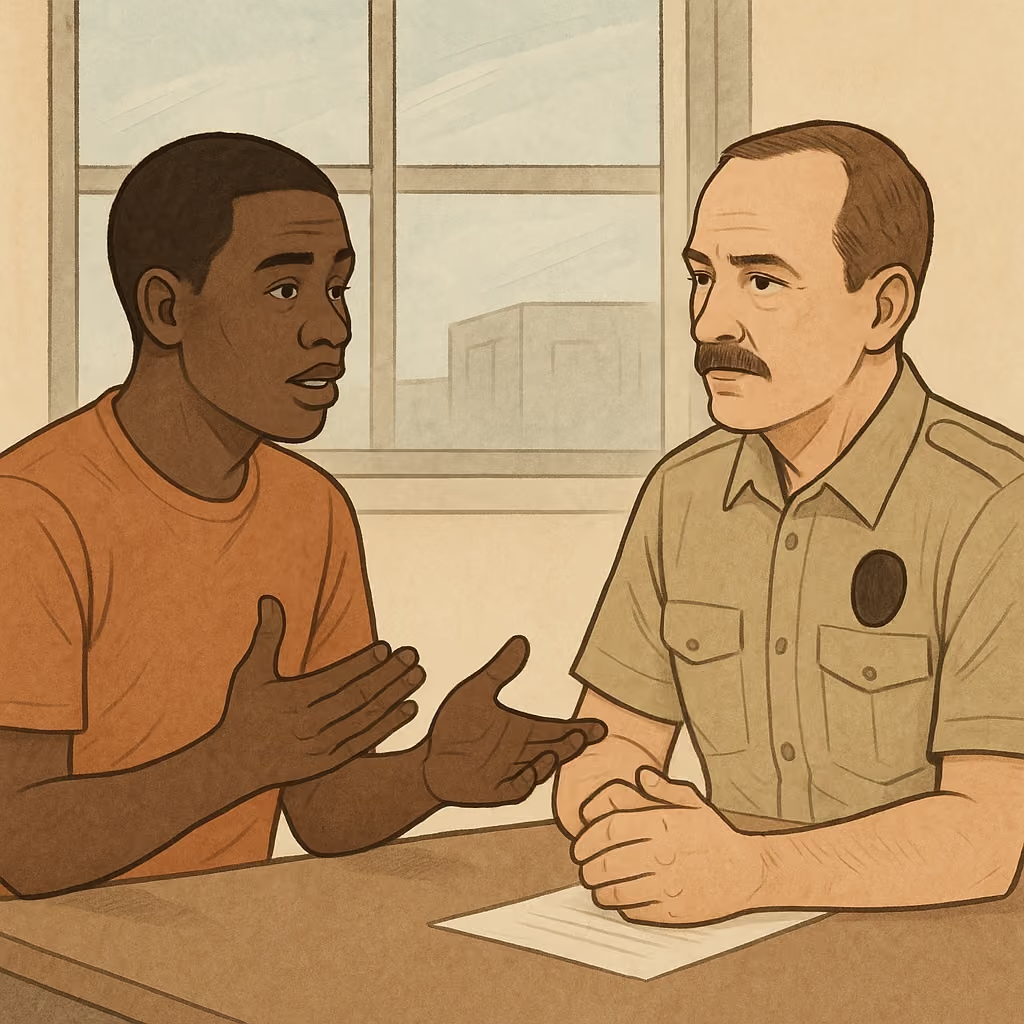
How to Talk to Your Probation or Parole Officer About Over-the-Road CDL Opportunities
Step 1: Understand What Over-the-Road (OTR) Driving Is
Before you talk to your officer, make sure you understand what you’re asking for:
- OTR drivers usually travel across state lines and are away from home for several days or weeks at a time.
- These jobs often pay more than local driving positions.
- OTR jobs are widely available, even for people with limited work history or a criminal record.
Step 2: Explain Why This Matters for Your Future
Your officer wants to see you succeed. Here’s how to frame it:
“This job isn’t just about money. It’s about building a future. Getting an OTR job would help me stay focused, earn a stable income, and build long-term career skills. It gives me a real shot at independence.”
You can also mention:
- The structure and routine of OTR work
- How it reduces the risk of falling back into old patterns
- That you’ll be working hard, staying busy, and staying out of trouble
Step 3: Acknowledge the Challenge and Be Ready with Solutions
Traveling for work while on supervision can be tricky. Show your officer you’re thinking ahead:
“I know being away from my reporting area could be a concern. I’m committed to staying in touch and following all rules. I’m willing to work with you to make a plan.”
Offer options like:
- Phone check-ins or digital check-ins while you’re on the road
- Sharing your driving schedule in advance
- Regular reporting when you’re home
Step 4: Emphasize the Limitations Without It
Sometimes, officers don’t realize how much limiting travel can shrink your options.
You might say:
“Without the ability to go OTR, I’d have far fewer job options, and the pay would be much lower. It could take me much longer to get on my feet. This is one of the best paths I have.”
Make it personal. Share what the extra income could mean for you:
- Getting stable housing
- Supporting family
- Saving for a car or other goals
Step 5: Ask for Their Support, Not Just Permission
Frame the ask as a partnership:
“I’m asking for your support to take this step toward a better future. I want to make this work the right way—with your help.”
Let them know this isn’t just a job—it’s your turning point.
Final Tips
- Be respectful, not defensive. This is a negotiation, not a confrontation.
- Bring written info. Share a flyer or job description from the employer if you have one.
- Follow up. If they ask for time to think about it, check in respectfully and ask what else you can provide.
Remember: You’re Advocating for Your Future
You’ve done the work to get qualified. Now it’s about showing your officer that this opportunity is worth fighting for—and that you’re ready to handle the responsibility.
If you need help preparing for the conversation, reach out to your coach or case manager. You don’t have to do this alone.
Looking for a real second-chance? Apply for an Emerge Career program today.

11 Massachusetts Fleets Where a New CDL Meets a New Chapter
State-of-the-road facts
- The Bay State employed around 32,890 heavy-truck drivers in 2023.
- Massachusetts’ expanded CORI “Ban-the-Box” law keeps conviction questions off most first-round applications.
Eleven local fleets giving rookies and returning citizens a fair shot
1. Sysco 📍 Boston
Paid trainee program; employees confirm felony hires on a case-by-case basis. See open jobs here.
2. US Foods 📍 Boston
Similar to Sysco; older convictions frequently approved. See open jobs here.
3. R+L Carriers 📍 Wilmington
Has a track record of being a second chance employer. See open jobs here.
4. Ward Trucking 📍 Westfield
Has a track record of being a second chance employer. See open jobs here.
5. Werner Enterprises 📍 Worcester
One of the largest trucking companies in the USA and Mexico with a record of bring a second chance employer. See open jobs here.
6. Knight Transportation 📍 Plainville
Many regional routes avaialble. See open jobs here.
7. Swift Transportation 📍 Multiple Locations in MA
A top national carrier that's a regular second chance employer. See open jobs here.
8. Republic Services 📍 Statewide
No-experience bonus: CDL Driver-Trainee program pays you while you earn the license—perfect for brand-new grads. See open jobs here.
9. Wind River Environmental 📍 Marlborough
Septic & grease-traps local routes and promotes from within. See open jobs here.
10. Boston Concrete 📍 Boston & Lowell
Small ready-mix outfit that hires on attitude and MVR, not years behind the wheel—open driver postings pop up regularly. See open jobs here.
11. Bay State Sewage & Disposal📍 Lakeville
Family-owned pump-truck fleet. See open jobs here.
Hottest Bay-State CDL-A roles today
- Food-Service Shuttle & Route – early start, home daily, union bennies.
- Night LTL Line-Haul – doubles pay premium + predictable out-and-back runs.
- Boston Local Grocery & Beverage – Stop & Shop, Shaw’s, etc.
- Intermodal Port of Boston – hourly chassis pay, minimal deadhead.
- Bulk Septic / Environmental Services – Wind River & Bay State need CDL pump-truck drivers year-round.
Your two-day action plan
- Blast out 10 apps (start with the table above).
- Email your Emerge Career coach the minute they’re sent—your coach will share our Massachusetts partner spreadsheet and line up warm recruiter intros at Sysco, Republic Services, and Wind River.
- Keep practicing backing & alley-dock while you wait for calls—confidence shows in every road test.
Fast fact: Emerge Career learners who combine bulk applications with coach-led introductions average two solid offers in under 10 days.

California Carriers That Give Second Chances
California trucking snapshot
- Over 204,000 CDL-A jobs were active statewide in 2023—by far the nation’s largest driver workforce. bls.gov
- California’s own Fair Chance Act (AB 1008) bars most employers from asking about convictions until after they’ve offered you the seat. calcivilrights.ca.gov
10 second-chance or no-experience-friendly fleets with California terminals
1. Gardner Trucking 📍 Ontario & Fontana
SoCal dry-van & port drayage with a track record of being a second chance employer. See their open jobs here.
2. Swift Transportation 📍 Lancaster & Otay Mesa
Company-paid training, accepts many felony records > 10 yrs. See their open jobs here.
3. Knight Transportation 📍 Tulare & Mira Loma
Will consider applicants with an old DUI/felony; solid west-coast reutation. See their open jobs here.
4. Werner Enterprises 📍 Stockton & Jurupa Valley
Track record of being a second chance employer. See their open jobs here.
5. Schneider 📍 Fontana & West Sacramento
Dedicated accounts such as Target & Lowe’s + intermodal in LA Basin routes. Track record of being a second chance employer. See their open jobs here.
6. R+L Carriers 📍 Pomona & Commerce
LTL line-haul routes & team runs. Has a track record of being a second chance employer. See their open jobs here.
7. Sysco 📍 Riverside & Fremont
Local & regional food-service routes, paid ride-along training. See their open jobs here.
8. US Foods 📍 La Mirada & Livermore
Local & regional food-service routes, paid ride-along training. See their open jobs here.
9. CRST Riverside 📍 Riverside
Team OTR routes avaiable. Has a track record of being a second chance employer. See their open jobs here.
10. Knight-Swift Intermodal (Harbor) 📍 Wilmington
Port of LA/LB drayage—great foot-in-door for newbies.. See their open jobs here.
Scorching CDL-A job titles in CA
- Port/Drayage Driver – big money for TWIC-card holders.
- Dedicated Retail Driver – Target, Home Depot, Costco keep routes hopping.
- Reefer OTR – CA produce seasons = steady miles year-round.
- Tanker/Hazmat (fuel, bulk wine) – premiums for endorsements.
Action steps
- Shoot for 12–15 apps your first weekend out of school—volume is king.
- Text your Emerge Career coach to unlock our California partner sheet (over 8 employers who already said “yes” to second-chance talent).
Stack endorsements—a HazMat or TWIC can bump you into higher-pay lanes quickly.
Emerge Career grads have landed orientation dates just after licensing by following the exact playbook above. Let’s make you the next success story.

Your Colorado Fresh-Start Roadmap: 7 Front-Range Fleets Saying ‘Yes’ to Brand-New CDL-As & Second Chances
Why the Centennial State is a quick-launch pad
- Roughly 27,500 heavy-truck drivers were on Colorado payrolls in 2023—and retirements create openings every week. bls.gov
- The Colorado Chance to Compete Act (HB 19-1025) bars most employers from asking about convictions on an initial application, giving your skills center stage. leg.colorado.gov
- Flatbed, tanker, and mountain-reefer freight all surged in 2024 thanks to housing starts, oil-field work, and year-round produce runs.
Seven fleets to call first (plus why they’re record- or rookie-friendly)
| Fleet | HQ / Yard | Reason they’re worth your first résumé push |
|---|---|---|
| Navajo Express | Denver | Listed on national second-chance rosters; 140-truck refrigerated fleet with paid finishing school. hirefelons.org |
| JBS Carriers | Greeley | Protein giant running national and regional lanes; appears on multiple felon-friendly lists. hirefelons.org |
| Groendyke Transport | Commerce City | Award-winning tanker carrier; accepts older convictions case-by-case. hirefelons.org |
| Reddy Ice | Statewide route work | Indeed Q&A confirms “felon friendly” CDL roles delivering packaged ice. indeed.com |
| Western Express | Denver terminal | Famous for second-chance hiring and six-month refresher program. indeed.com |
| Transpro Burgener | Fort Collins | Rocky-Mountain bulk hauler; hires brand-new grads into a driver-mentor track. indeed.com |
| Hill Bros. (Navajo partner) | Denver drop lot | Will review felonies ≥10 yrs old; regional dry-van lanes keep you home weekly. |
Hot Colorado endorsements & niches
- X (tanker/hazmat) = instant bump on the booming fuel & asphalt lanes.
- Mountain-flatbed chains = steady raises every winter.
- Frac-sand sets around Weld & Garfield Counties.
Three quick wins you can tackle today
- Batch-apply to every fleet above—don’t “wait to hear back” before moving on.
- Lock in endorsements (T/Doubles or X/Hazmat) before your first recruiter call.
- Text your Emerge Career coach with “CO list please.” They’ll unlock our private partner sheet and often land you an interview in <72 hours.
Emerge Career grads have landed orientation dates just seven days after licensing by following the exact playbook above. Let’s make you the next success story.
Thank you! Your submission has been received!
Case Studies.
AI-proof careers in industries with critical labor shortages.
This is a “win-win.” Many formerly incarcerated individuals have trouble finding work upon release, which can drive them back into crime.
.avif)
The data is also showing us that our investments in Emerge Career are paying immense dividends, in real second chances and wealth creation for some of our city’s most disadvantaged communities.
.avif)